Tanilo Errazuriz
Game Designer & Screenwritter


About Me
Portfolio
—✧—
About Me
I’ve always been good at playing games. Exceptional even. I’ve top 500’d multiple games and reached top 10 in both Heartstone’s and Magic The Gathering: Arena’s ladders. And this got me noticed when I was younger.My first boss, who at the time was the creative director of Brainz (the largest videogame company in Colombia that would later become Jam City), believed someone that was great at games would be great at making them and so he hired me as a game designer.

Unknowingly to me, this would carve my life moving forward. I slowly drifted away from filmmaking and screenwriting to dedicate myself almost entirely to making games.Now, after almost ten years of experience in game design and creative direction, I can say with confidence that my combination of an unbridled passion for games, a deep understanding of games and game systems, and an intuitive sense for what makes a story work, puts me in a unique position to create fun experiences.
Contact Me:
[email protected]
Projects


Evercraft (Mobile)
Mid-Level Game Designer
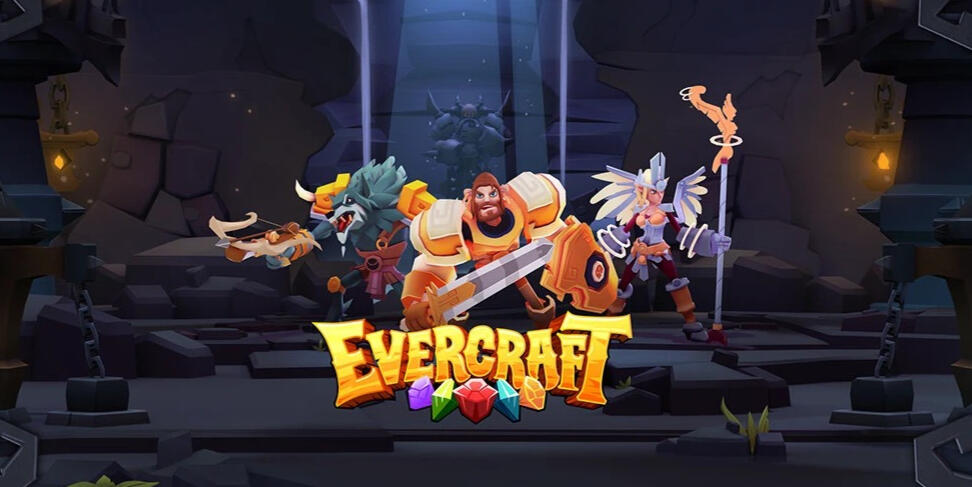
Overview
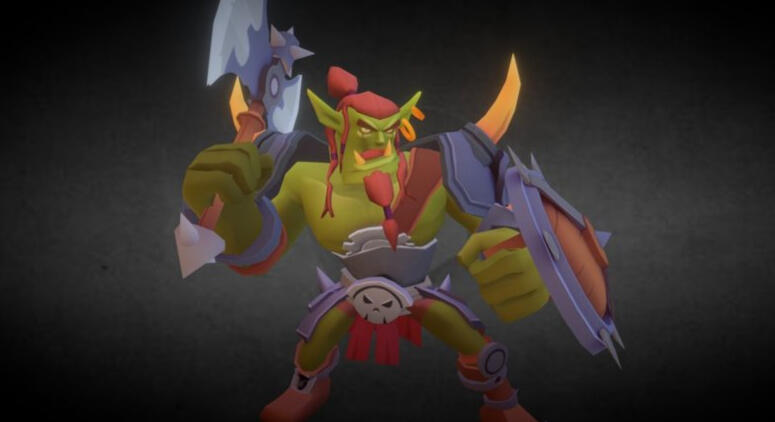
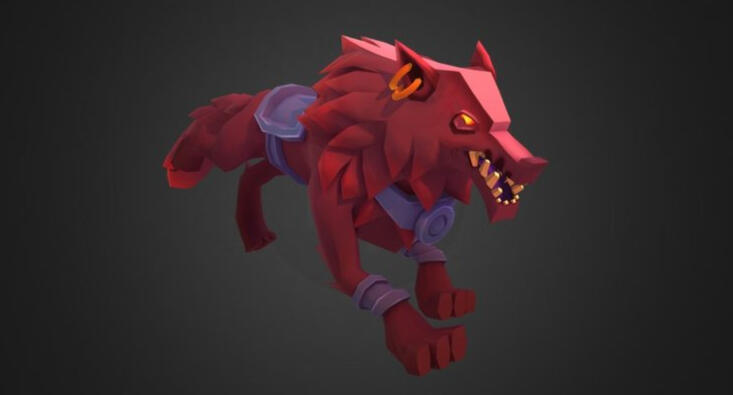
Evercraft was an unreleased sandbox RPG for mobile platforms where Players could combine Traits, both positive and negative, to create their Characters and fight in PvE and PvP battles (think of Summoners War with a combinatorial, character creation system).
Game Play
The core game loop in Evercraft was: Acquire (Farm/Buy) Traits -> Craft Heroes combining said Traits -> Fight PvE or PvP to unlock rarer Traits -> Repeat.
System Design
In Evercraft (my first experience in professional game development) I was responsible for (1) studying the mechanics and the pacing of similar mobile games (mainly Summoners War and Clash Royale) and (2) designing and balancing the Stat System for both Characters and Enemies, the different Traits Players combined to create their Characters, and the Abilities used by both Characters and Enemies.This work was mostly done using Excel Sheets alongside in-game testing in Unity.
What I learned
As my first foray into professional game development, Evercraft taught me the importance of iterative processes and, more importantly, the proper way to communicate with artists and programmers.
Forgotten Runiverse
Lead Game Designer / Creative Lead
Overview
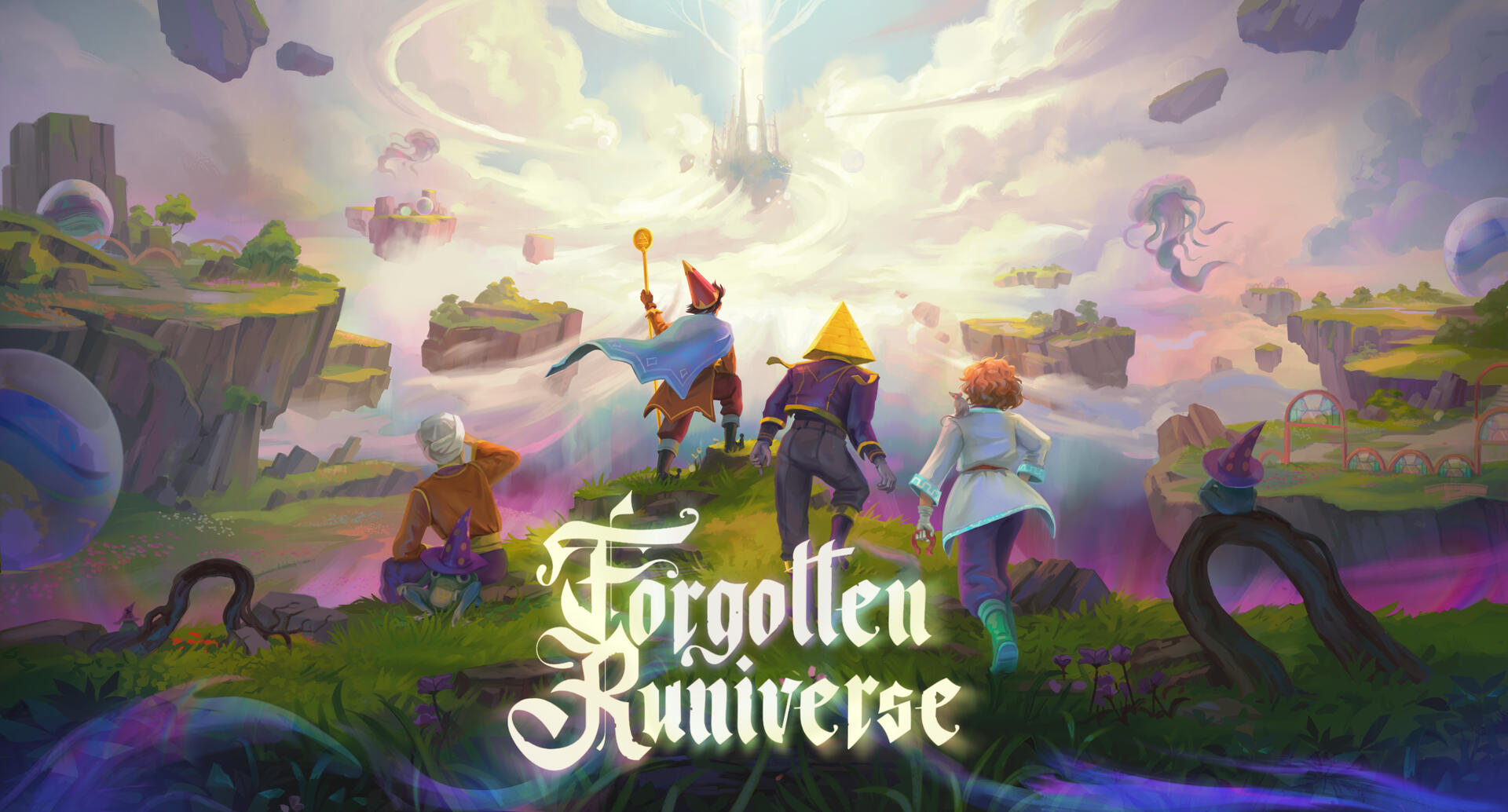
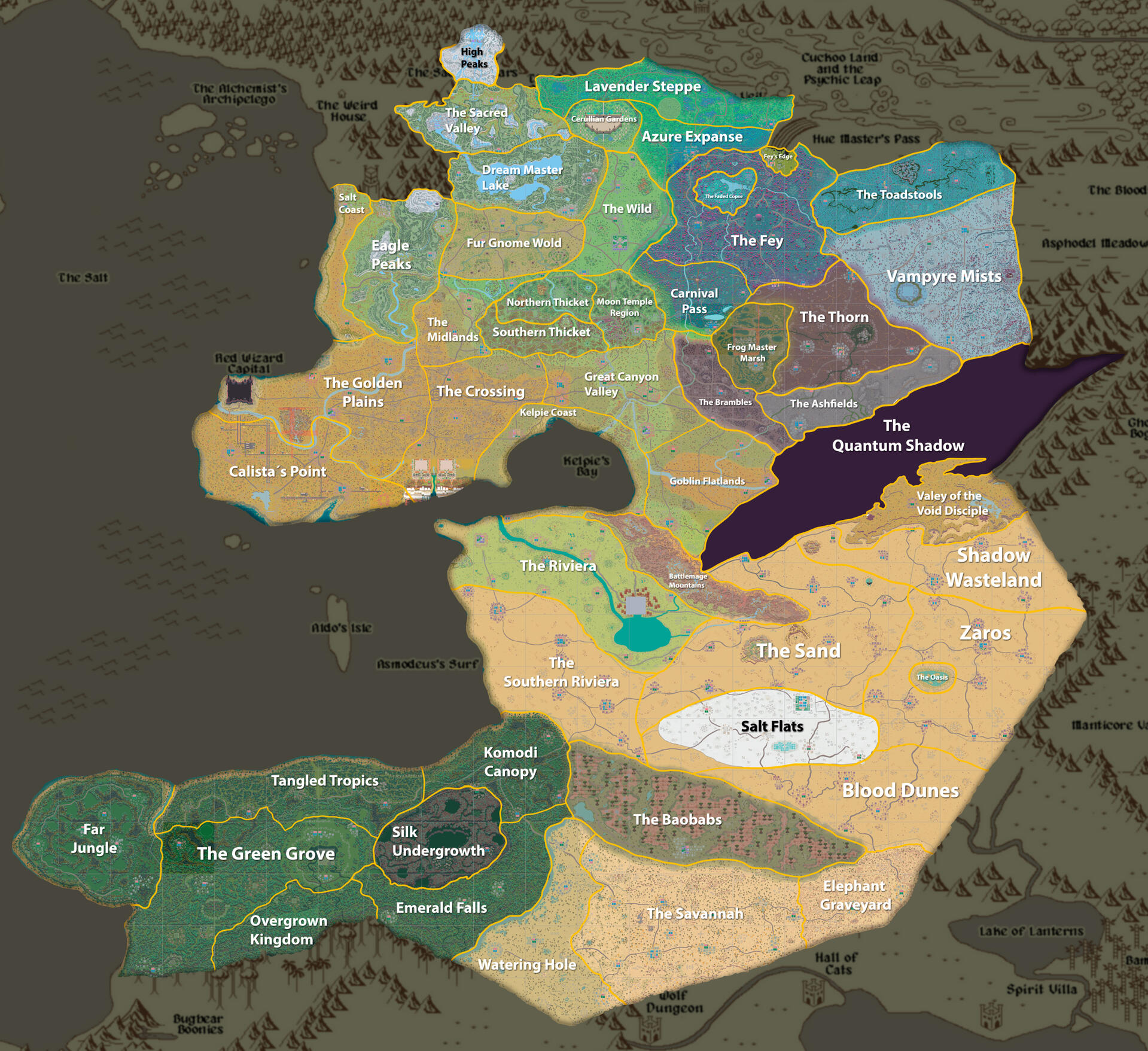
Forgotten Runiverse was a web-based pixel art MMORPG with blockchain integration in which Players could explore the largest pixel-art world ever made (over 180.000 km²) to complete Quests, delve into Dungeons and battle in PvP matches.
Gameplay
Like every MMO, Forgotten Runiverse had many systems that worked in tandem. And yet the core game loop was extremely simple: Fight Monsters + Gather Materials -> Forge Equipment/Enchant Crystals/Craft Decorations -> Sacrifice Items for Premium Currency -> Repeat.
What I Did
During the almost 4 years of development of the Runiverse, I acted first as sole Game Designer, establishing the design foundations for the game. Then, as the project grew in scope, I became the Creative Lead, overseeing the daily operations of a team of over 50 people and especially the efforts of the Design Team and the Sound Designer (16 people in total).
System Design
When I started working on Forgotten Runiverse I was given the following guidelines:- Build a game with the usual MMO Systems (Combat, Gathering, Equippable Items with incremental power) and with a Building System that emphasized Ownership (to account for the blockchain aspect of the game), with a Player-Driven Economy (Product Owners wanted a game where the economy was fed in its entirety by Player Activity), and with systems that maximized Community (to create a symbiotic system between Building Owners and Building Users).- Conceive systems that would integrate block-chain as seamlessly as possible.
I must confess that at first I was apprehensive of the whole idea (because of the blockchain mandates), but then I realized that it was such a huge opportunity that I had to view my misgivings as a challenge. And so I set to work.
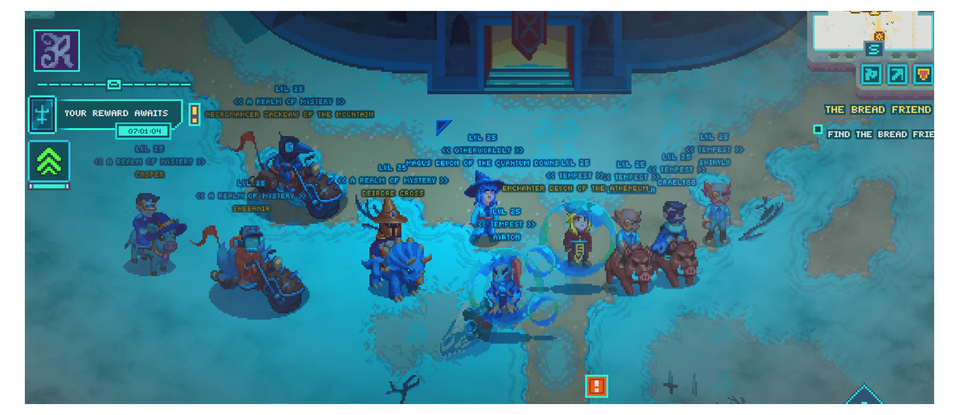
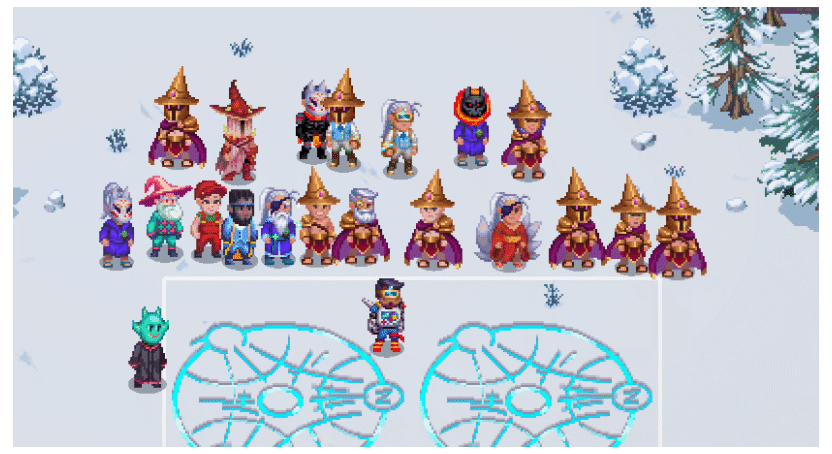
Combat
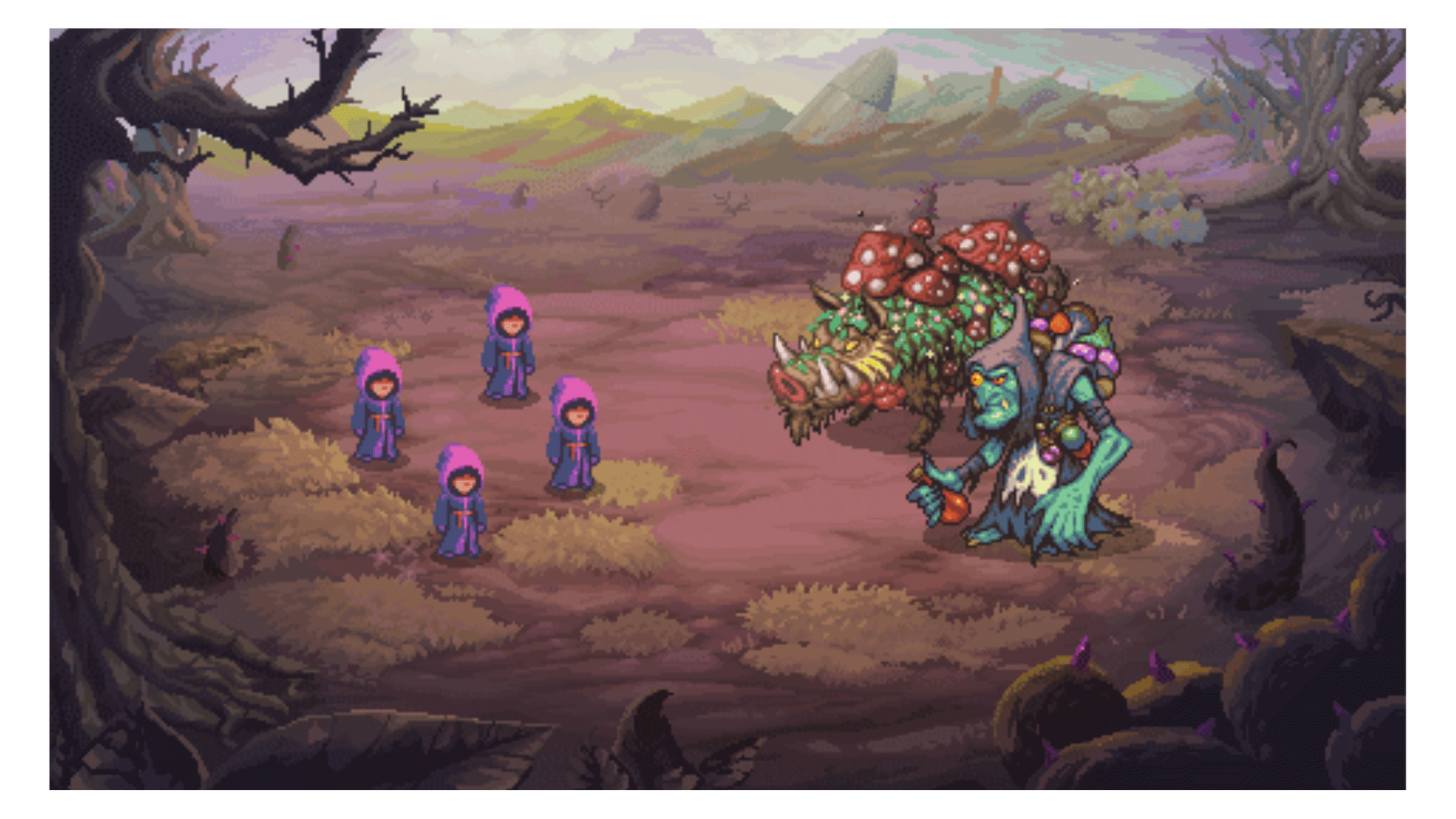
The first thing I designed for Forgotten Runiverse was the combat system. I asked myself, “What would be an original combat flow for a pixel art MMO?” And the answer lay in the favorite games of my childhood (Breath of Fire 3 and 4, Chrono Trigger, Final Fantasy 6 through 10 and other classic RPGs). Using them as reference I designed a 4vE Active Time Bar system that also conceived, from the get go, a PvP experience.
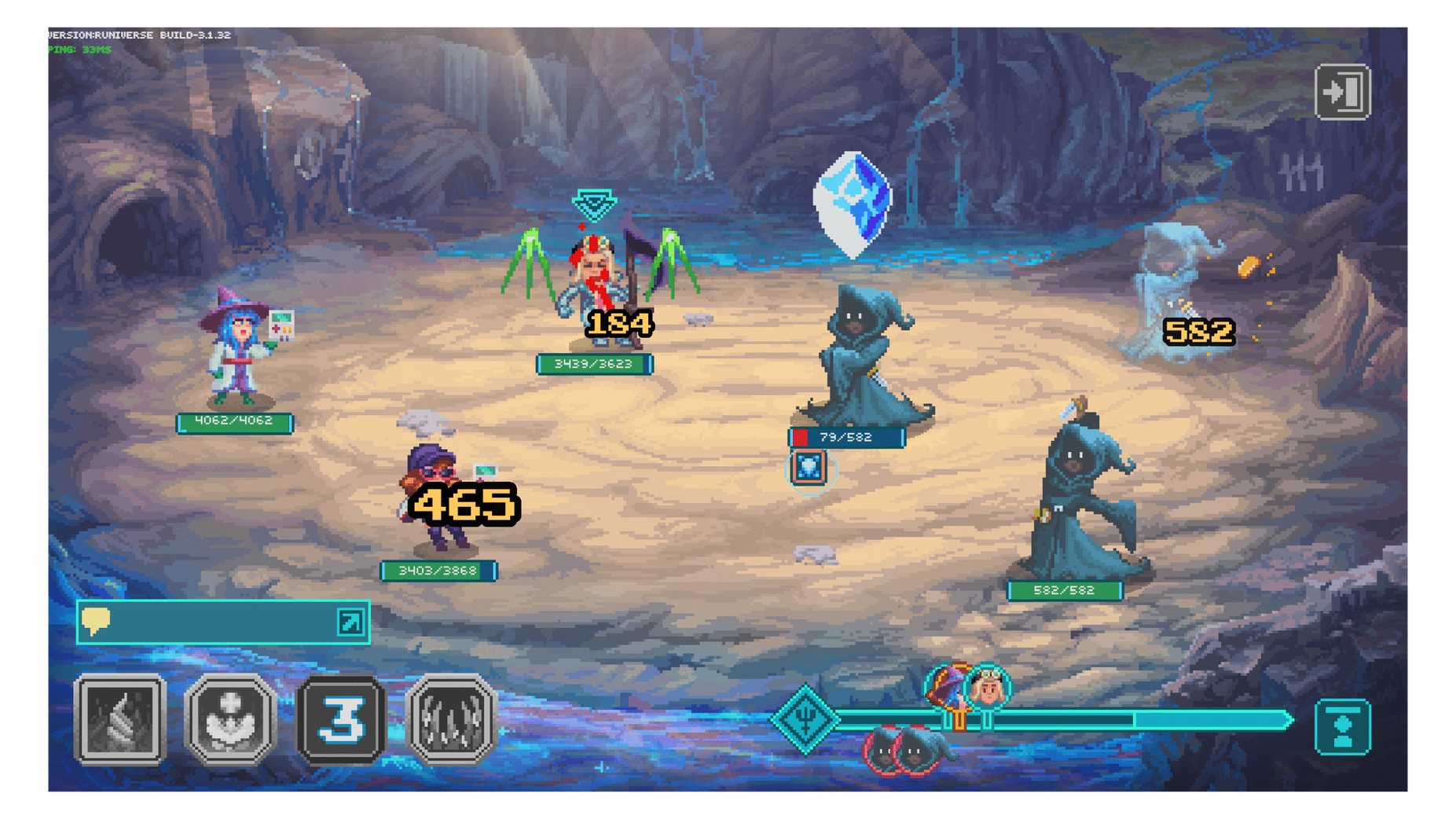
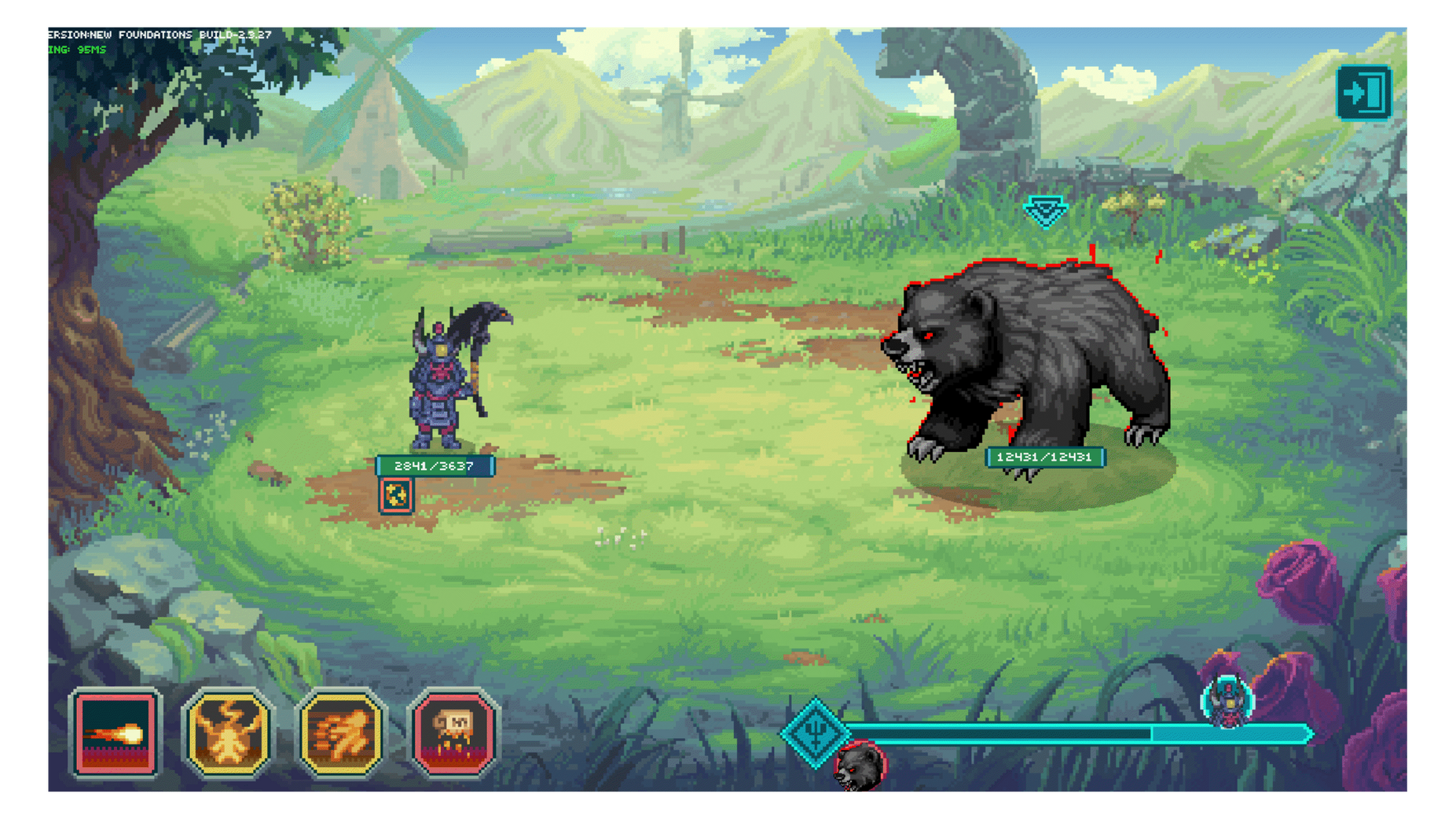
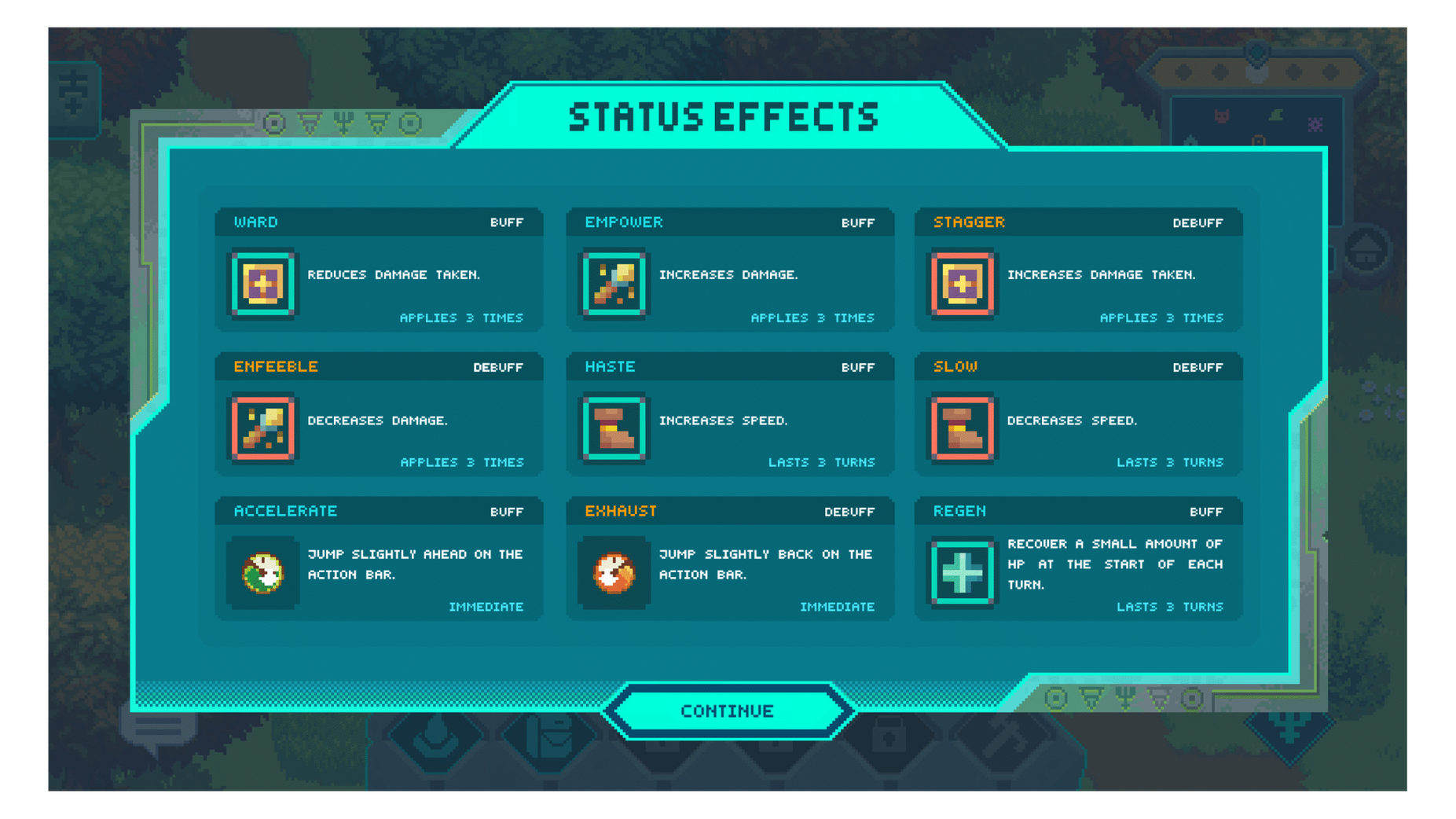
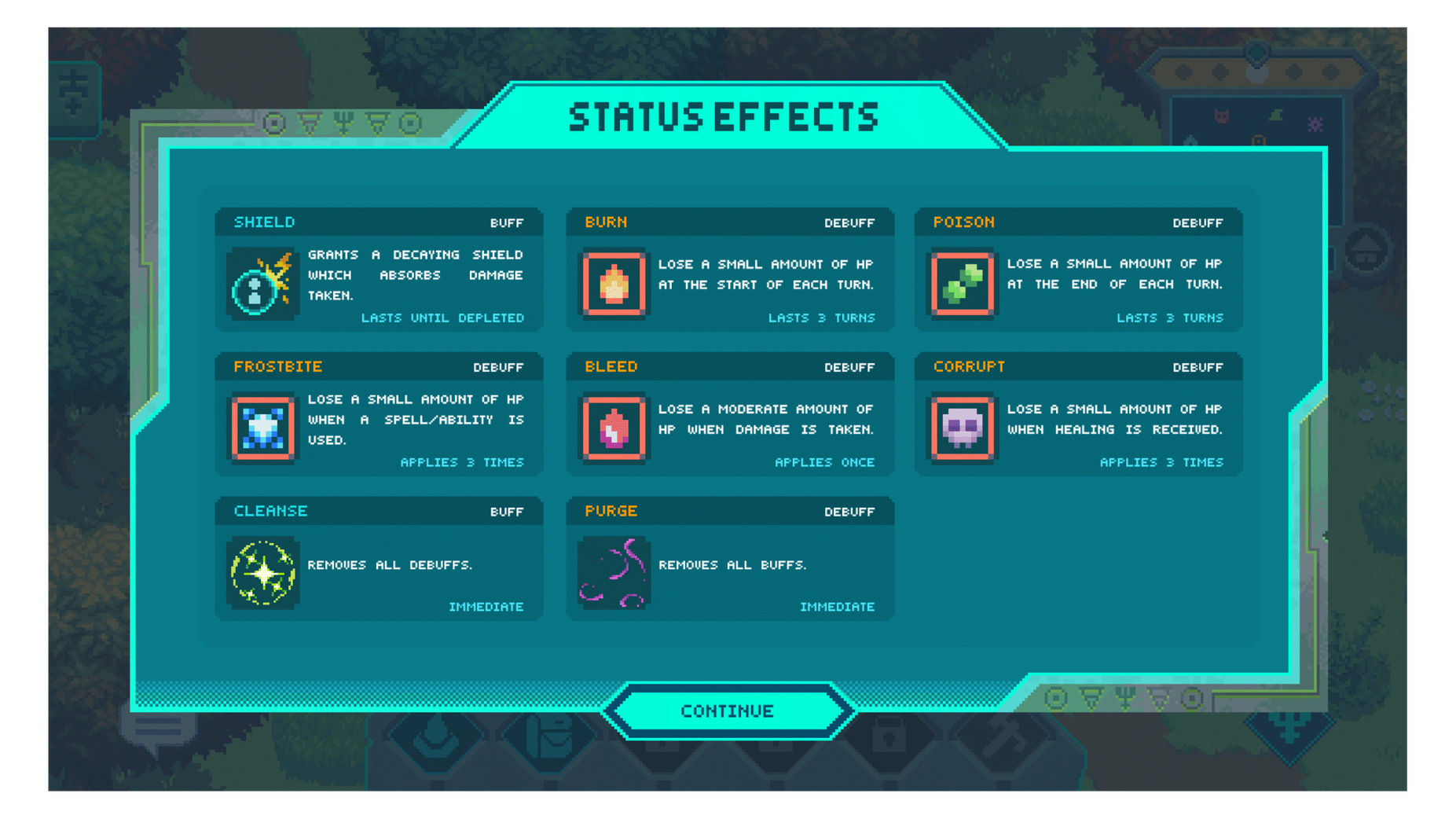
Designing this combat system included designing Player and Enemy Stats (alongside derived formulas like Damage, Healing, Speed, etc…), Status Effects, the Spells and Abilities System, and the Specialization System (our name for Classes in the game).
Click here for extra info.
After designing the base systems, my responsibilities shifted to updating and rebalancing formulas and supervising other designers as they created Specializations, Enemies, and Spells and Abilities.
Items and Buildings
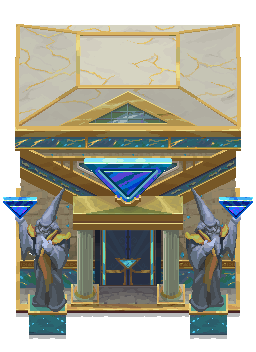
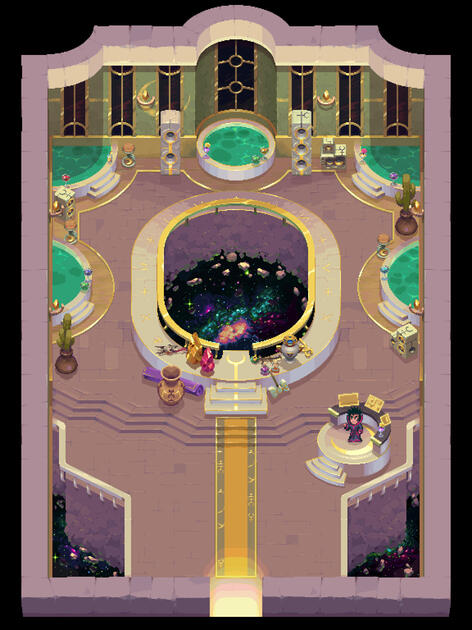
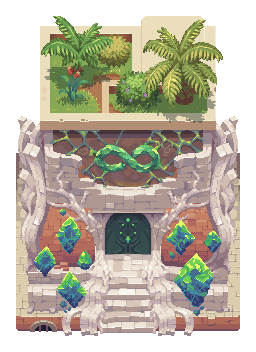
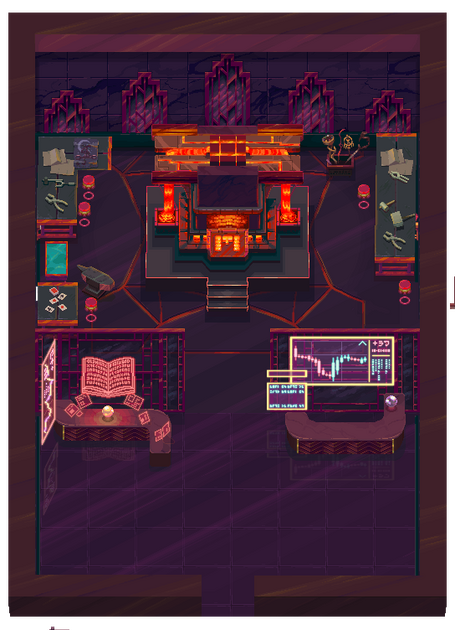
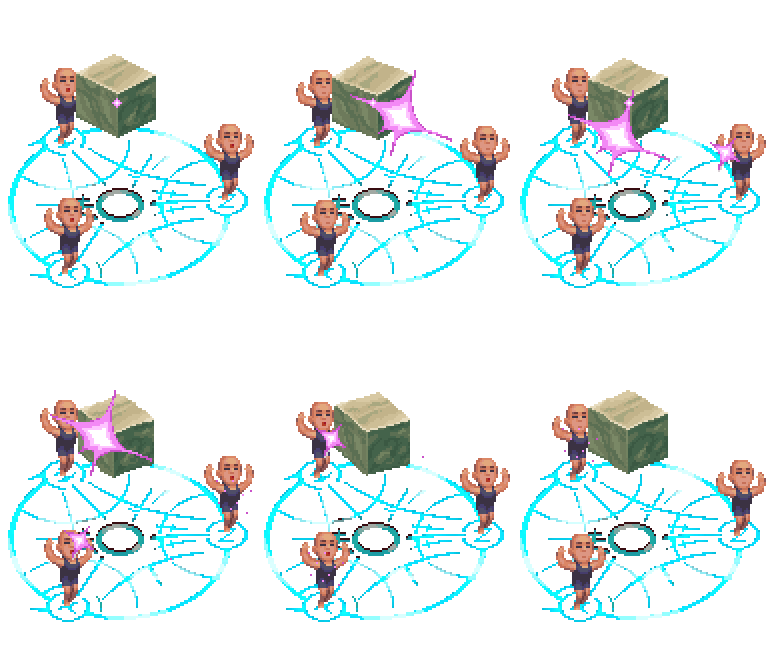
The last feature I want to mention in the Item/Building System is the Temple, a Service Building where Players could convert created items into Premium Currency. Originally, this building was designed around incentive-driven mini-games, which would have allowed Players to earn more premium currency if they completed certain challenges, but scope constraints forced us to rethink it into a more straight forward system.
Click here for extra info.
The last feature I want to mention in the Item/Building System is the Temple, a Service Building where Players could convert created items into Premium Currency. Originally, this building was designed around incentive-driven mini-games, which would have allowed Players to earn more premium currency if they completed certain challenges, but scope constraints forced us to rethink it into a more straight forward system.
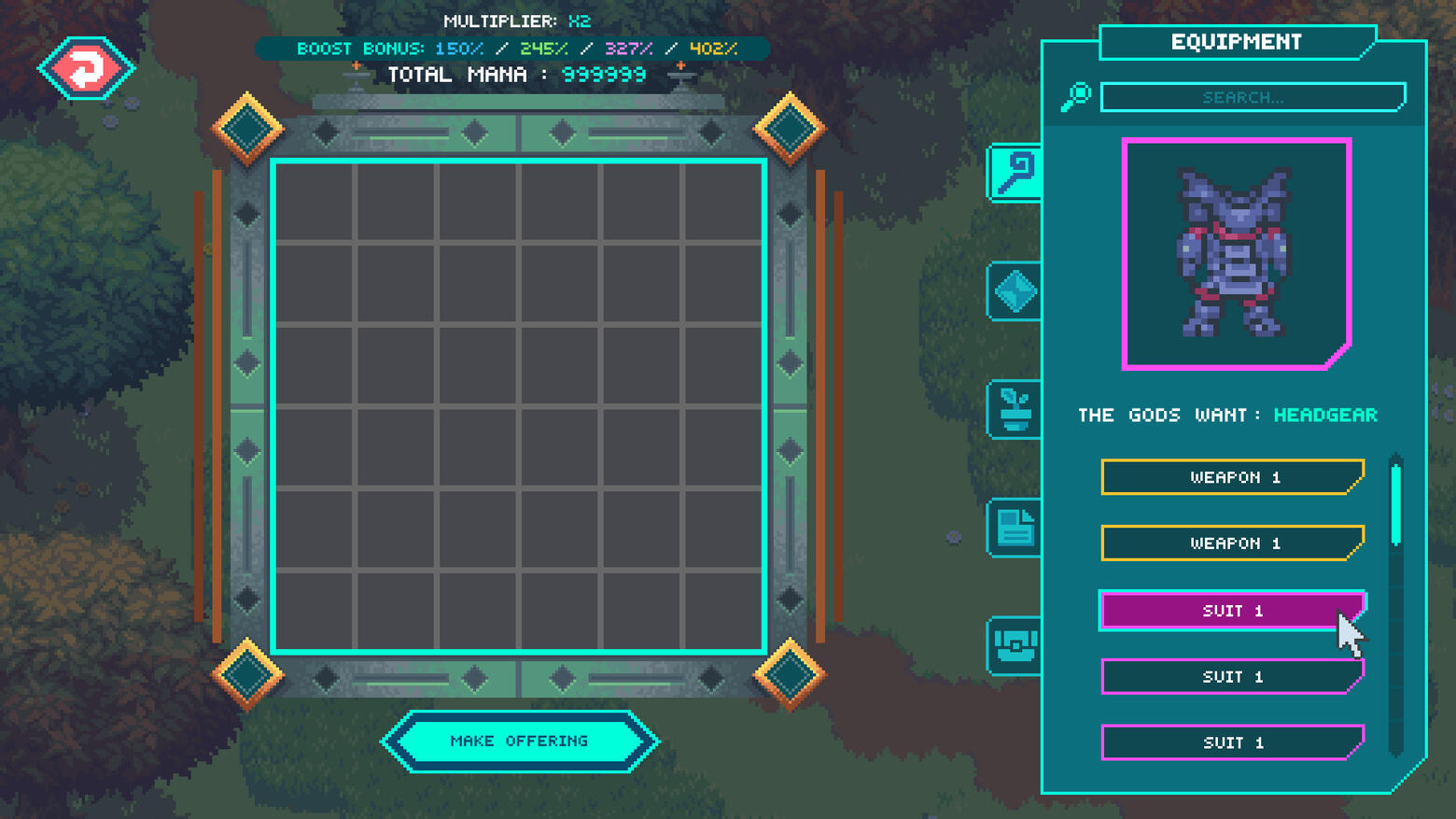
Mini-games
Of the many features left on the cutting room floor, so to speak, the ones I feel for the most are the mini-games. With the rest of the Design Team we came up with mini-games for most activities outside of Combat (Forging, Enchanting, Crafting, and every form of Gathering), but room for them was never open in the game’s production schedule and so they were left out. These mini-games were always simple and inspired by known game archetypes, like Match-3 or Tetris.
Click here for extra info.
Dungeons
Inspired by World of Warcraft and Zelda, I designed a Traversable Dungeons System with two interesting tweaks:- Injuries: Whenever a Player fell in battle, and if their Party was victorious, they would get an Injury that would impair them in the following fights.- Stories: Instead of just playing one Story per Dungeon, Players would have been able to unlock new Stories within that Dungeon, allowing Level Designers to reuse Art assets and most of their work. Unfortunately this feature was never used, as the development of new Quests became a priority for the Narrative Team.

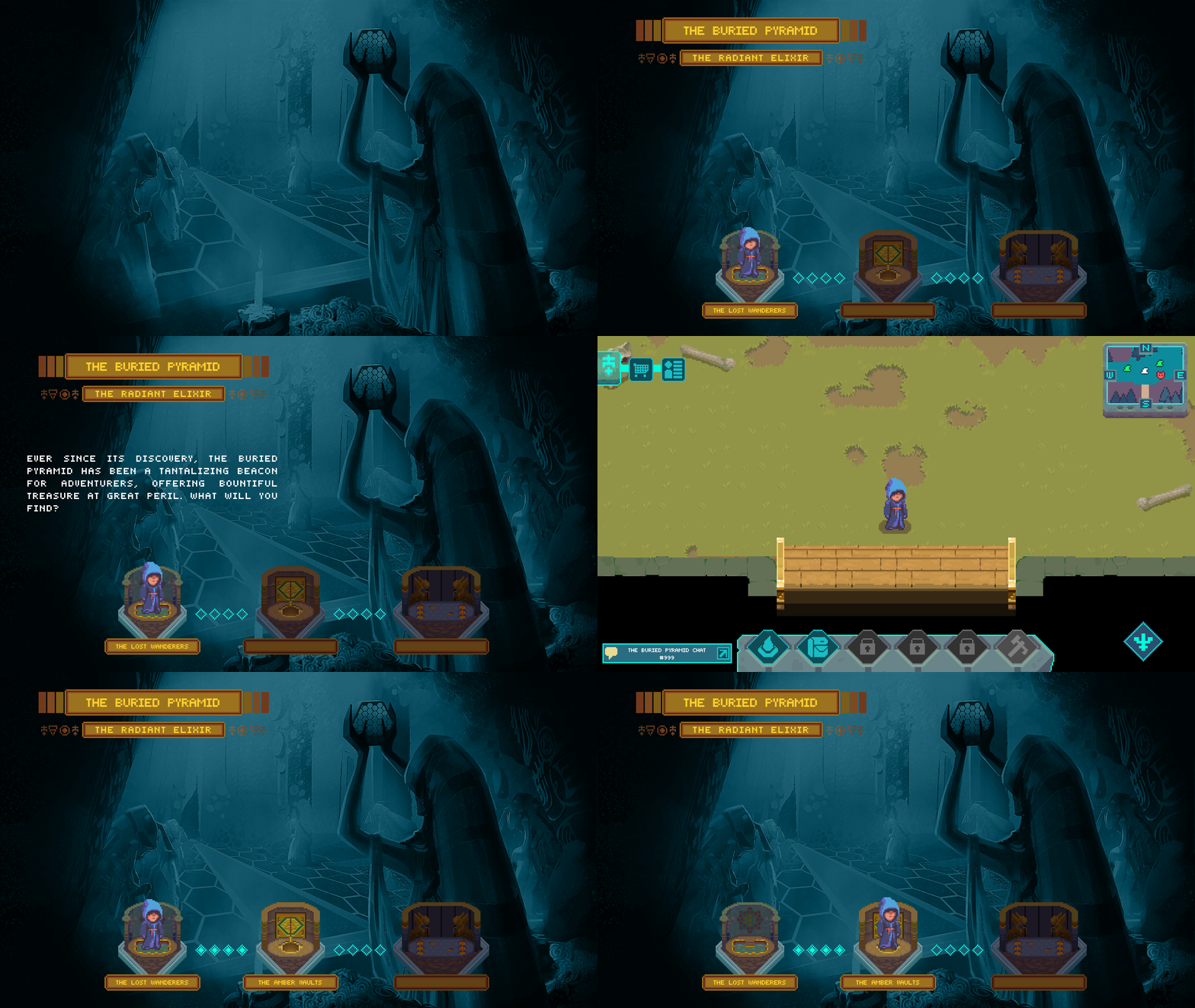
Narrative Design
In terms of narrative, I collaborated with the IP Owners of the game (Magic Machine) to create a cohesive story that would match the tone of their other projects (like their TV show and their comics).I also oversaw every written element of the game (from NPC Dialogues to Quests and Item Descriptions) and wrote some myself.
Click here for extra info.
Economy Design
The Economy design of the Runiverse had three stages of development.In the first stage, I was solely responsible for the design of Material Drop/Spawn Rates and Biomes. The key elements here were a Spiritual Material drop system for Enemies centered around the relationship between Enemy Families (Humanoids, Insects, Beasts, etc…) and Enemy Ranks (Standard, Elite, Boss), a Physical Material distribution per Biome that made sense ecologically and mechanically (I settled on seven Material families with seven Materials each to align with the IP’s focus on the number seven), and a Gathering Nodes spawn system that was pseudo-random to prevent bottable farming patterns.In the second stage, we hired an Economy Designer who took point on the design of the game’s economic flown and whom I supported as he defined the Material Drop rates for Plots (Player-owned parts of the map where Players could build Service Buildings and Gathering Stations, which emulated Gathering Nodes in the wild).
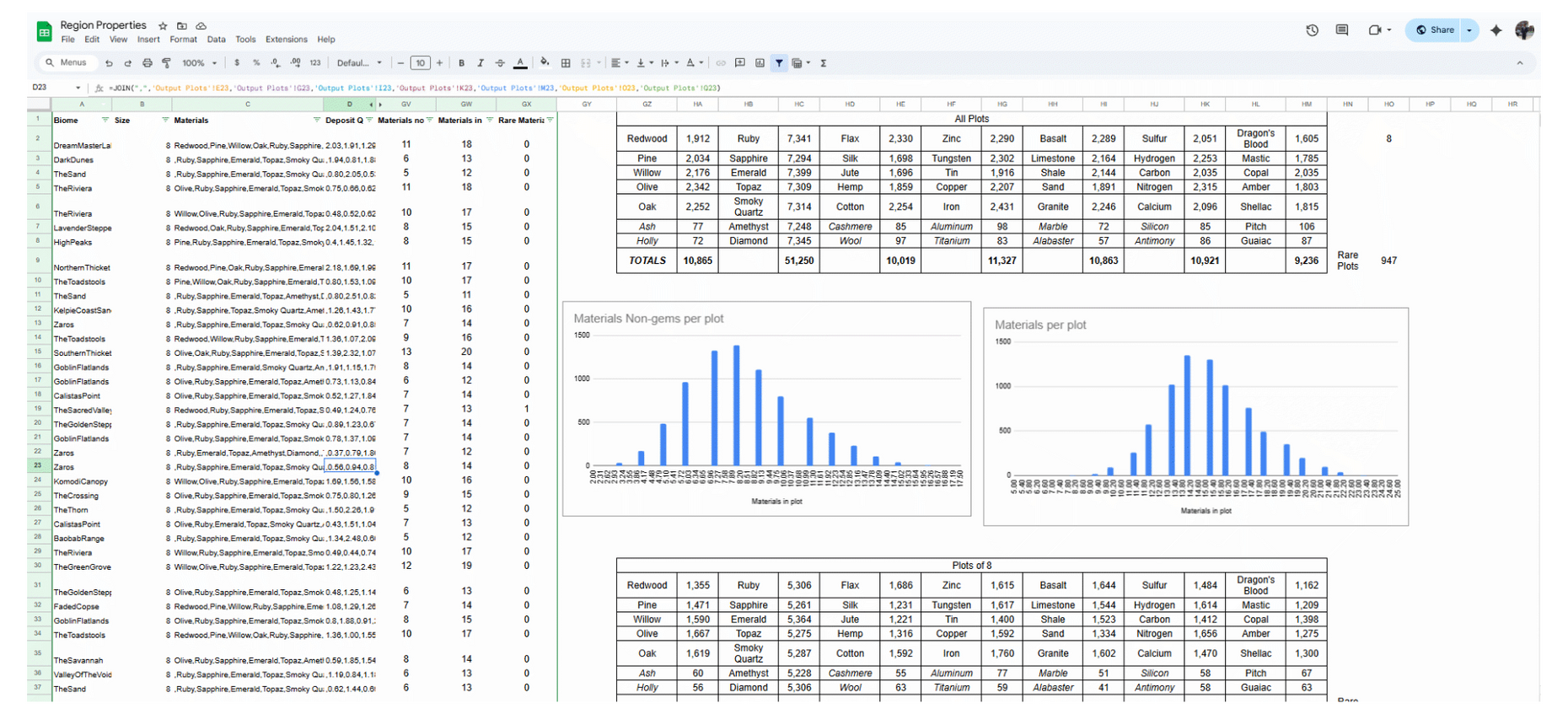
And in the last stage, the Economy Designer settled on initial values for store costs, play time vs rewards, etc… under the supervision of the Product Owner and I.
Art & Sound
The other axis of my work as Creative Lead involved two things: Overseeing Art Production and Sound/Music Design.
On the asset production side of development, I directed the team in the making of new Biomes, Cities, NPCs, and Gear for the game. This process usually involved me presenting a briefing to the Art Director or the Art Team and then following up on the evolution of the assets needed, from concept to final render.
Click here.
On the Sound Design side of development, I first worked with the Sound Engineer on determining what the tone and feel of the game was going to be before providing him with references, ideas and feedback every time a new track/sound was produced.By way of example, here are two exciting Dungeon Boss tracks.
Solar Farm Boss Track.
Pyramid Boss Track.
Tools
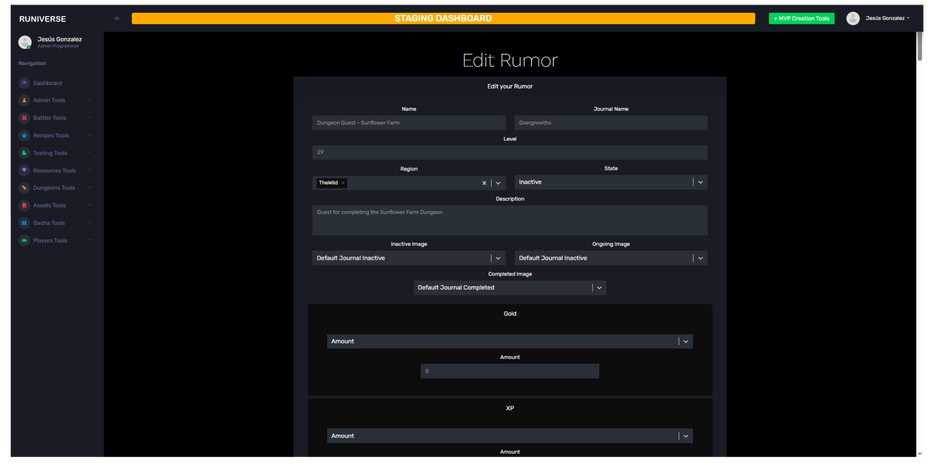
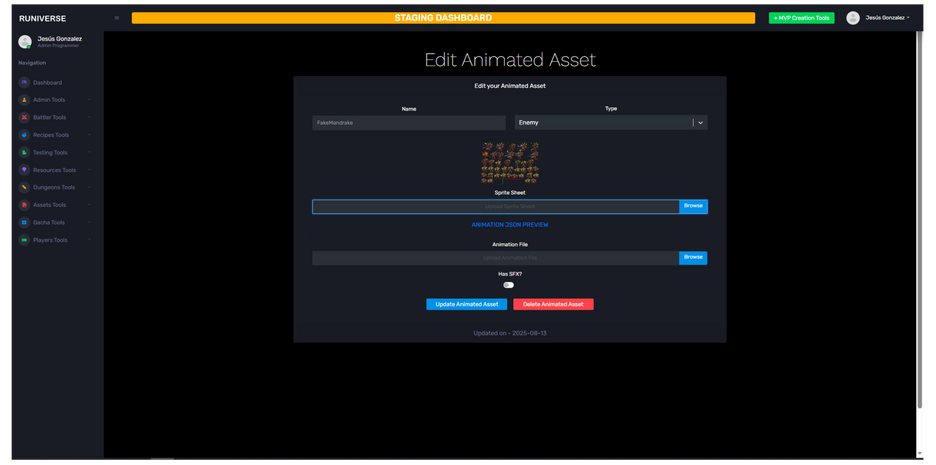
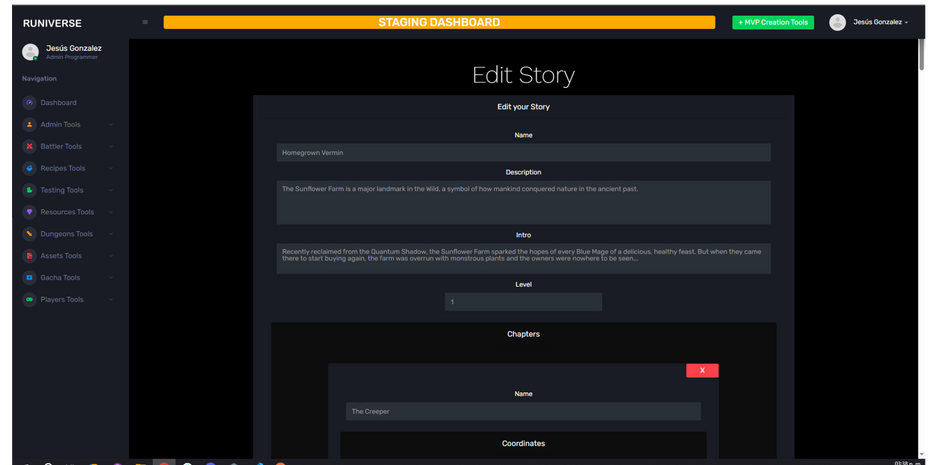
My final line of work was documentation for what ended up becoming the main tool designers and artists used to inject assets and content into the game; a World of Warcraft inspired Dashboard that centralized everything for the team.
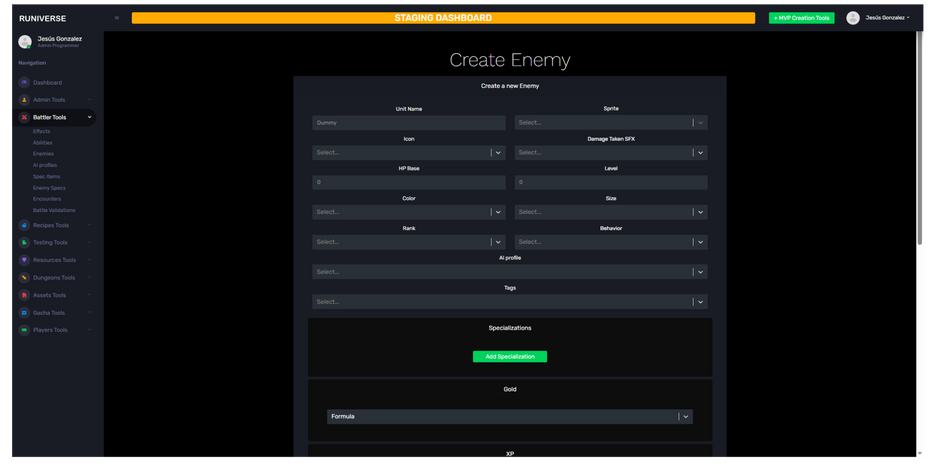
What I Learned
Forgotten Runiverse taught me countless things, but if I were to highlight some of them it would be that iterating on the foundations of the game is key to save effort down the line, that a game’s community should always be heard (for online games specially), and, most importantly, that leadership is all about building a sense of community within a team.
Scions of Destiny (Tabletop)
Game and Narrative Designer
Overview
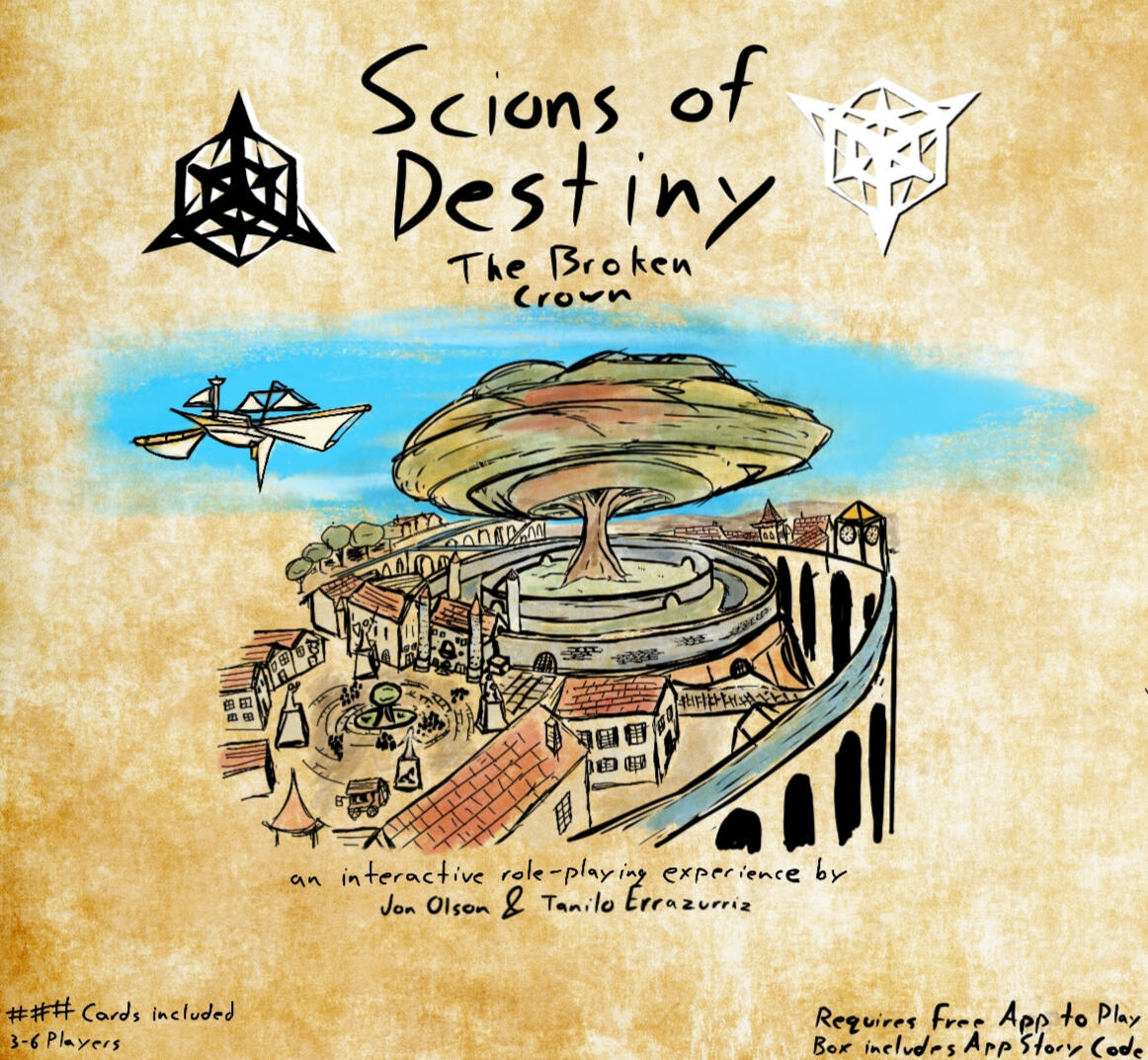
Scions of Destiny is an unreleased 3 to 6 Players, interactive, story-driven adventure tabletop game with a card-based combat system that aims to emulate the experience of RPGs like Dungeons and Dragons or Exalted without the prep time (think of a Multiplayer “Choose your own adventure” game with a card game intertwined).
Gameplay
Designed with the classic table-top RPG experience in mind, Scions of Destiny has a game loop that is closely similar; Players take turns reading the Story out loud and making joint choices -> Players engage in cooperative card-based combat -> Repeat.
What I did
Narrative Design
Narrative work on Scions of Destiny focused on three major components: Worldbuilding, Branching Narrative Design, and Text-Blocks.
Worldbuilding
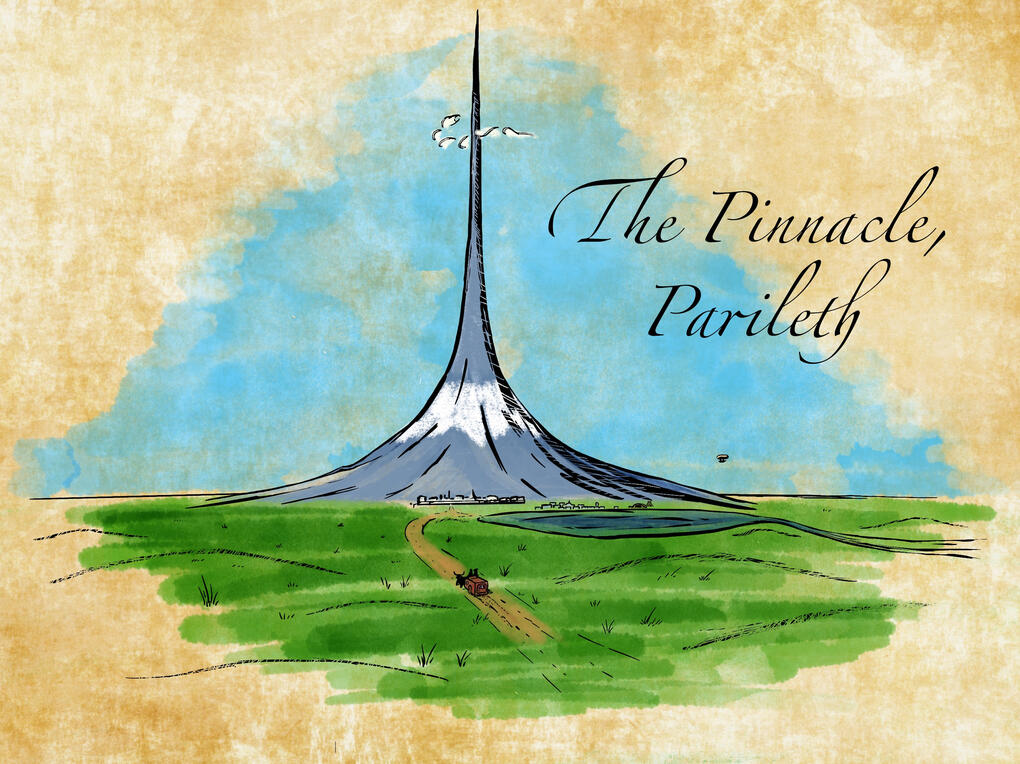
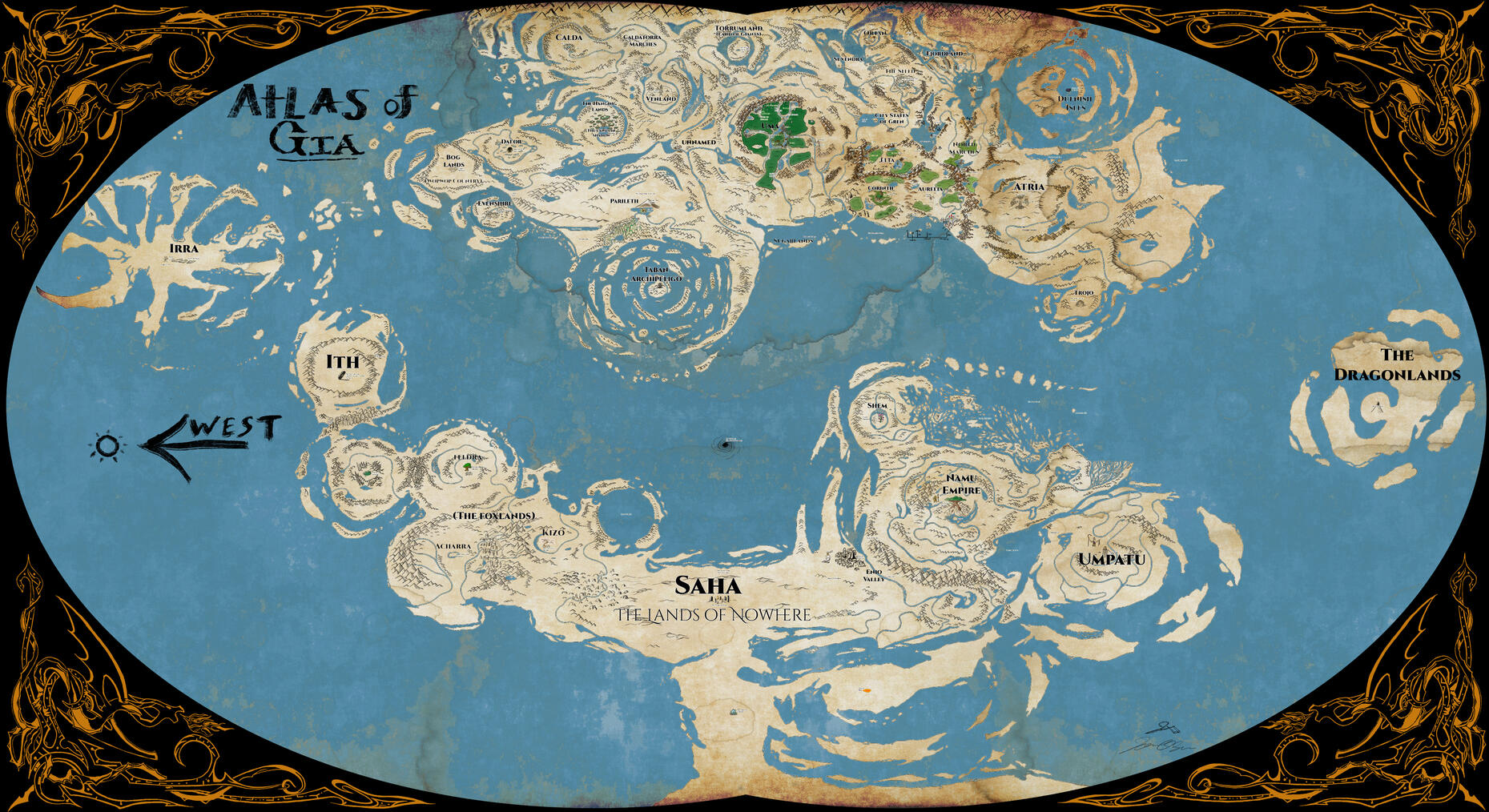
SoD was conceived as the first stepping stone in the establishment of GIA, an original world/IP with unique landscapes and climate patterns and a lore that spans over five thousand years. The most notorious aspect of GIA is its geography: Continents grow in outward concentric circles around Giasedras, "seeds" that contain the essence of divinity."Core Magic System that branches into local expressions." was our way of framing regional differences. The primary elements of magic are the same everywhere but manifest differently depending on the Giasedra (Elemental magic vs Symbiotic magic for example).In addition to the wide-scope worldbuilding, I worked alongside the game director on the backstories of the six main characters and the major villains.
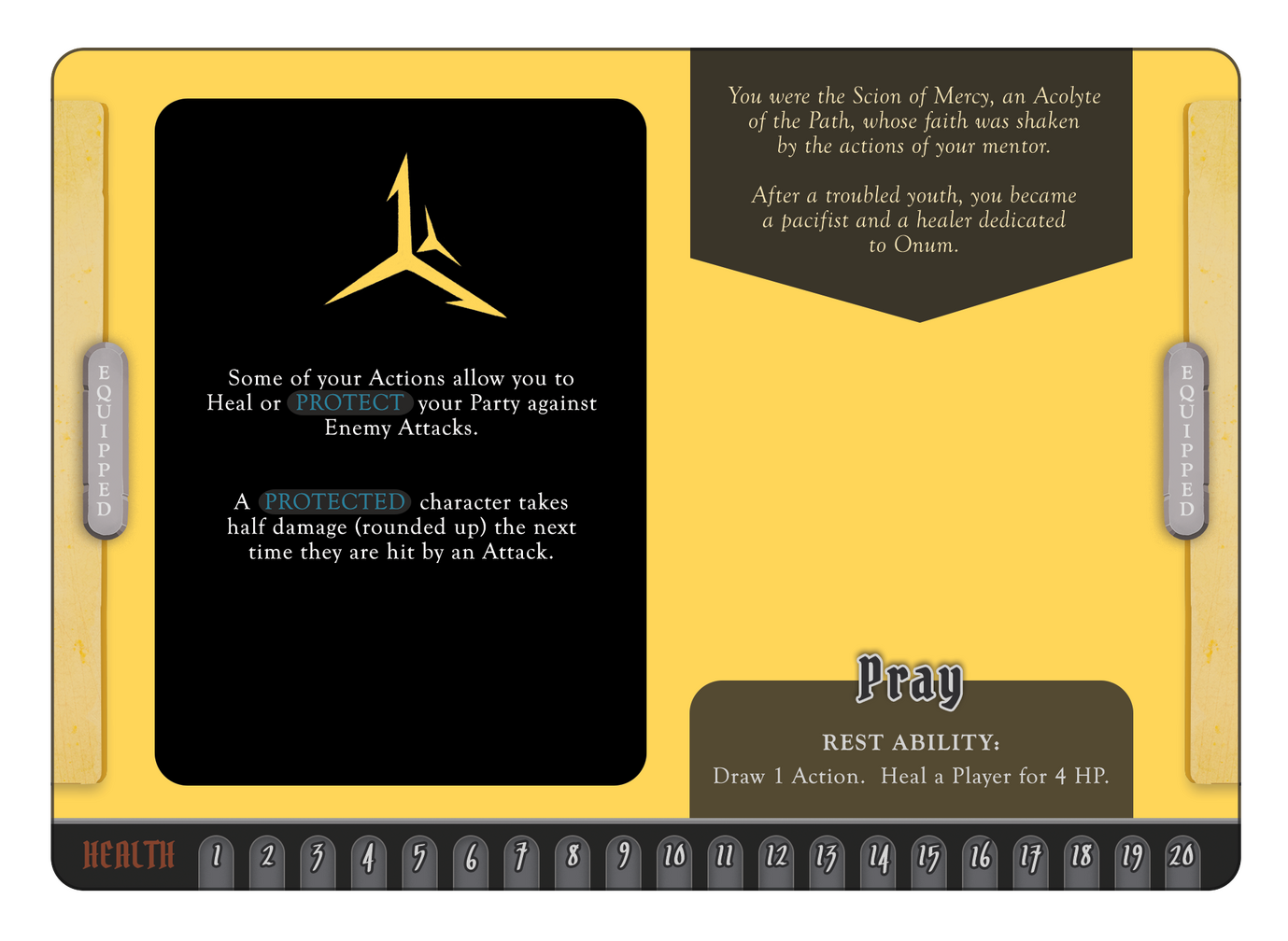
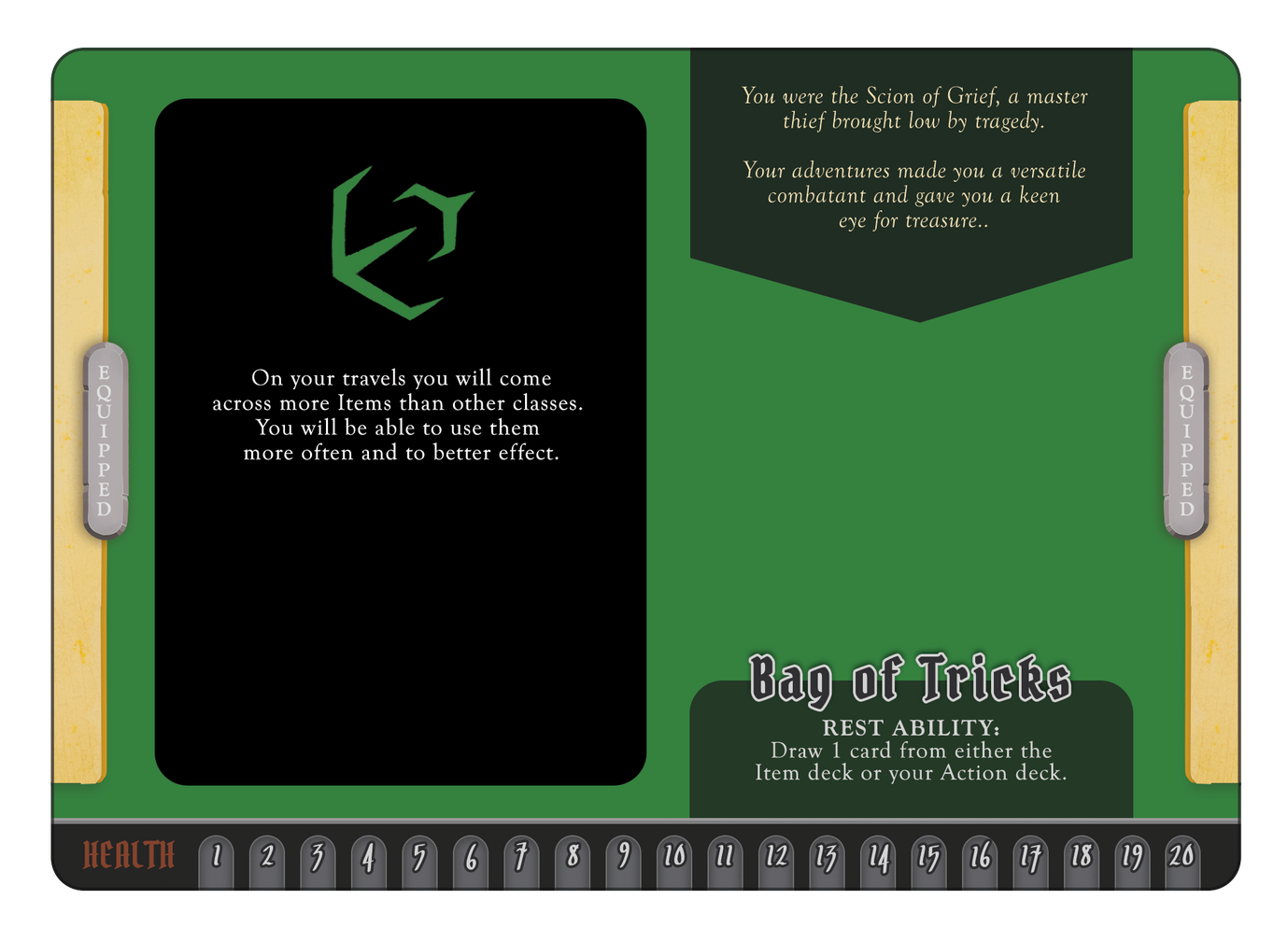
Sketches of Characters in their Character Sheet
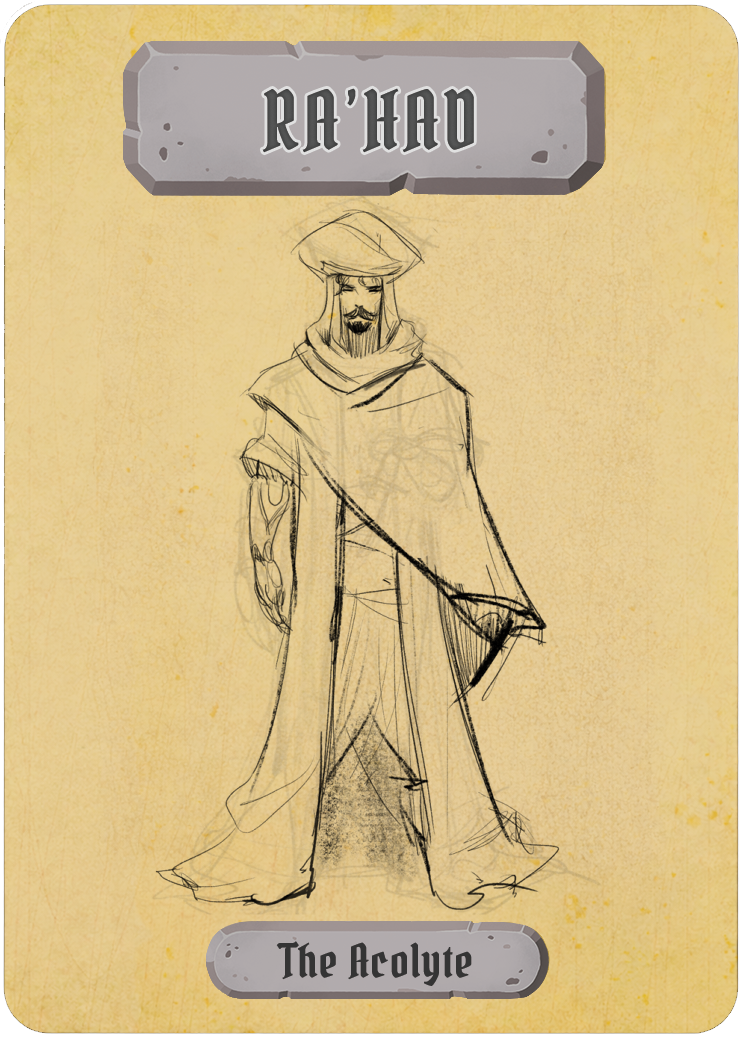
Early Sketch of Rahad's Character Card
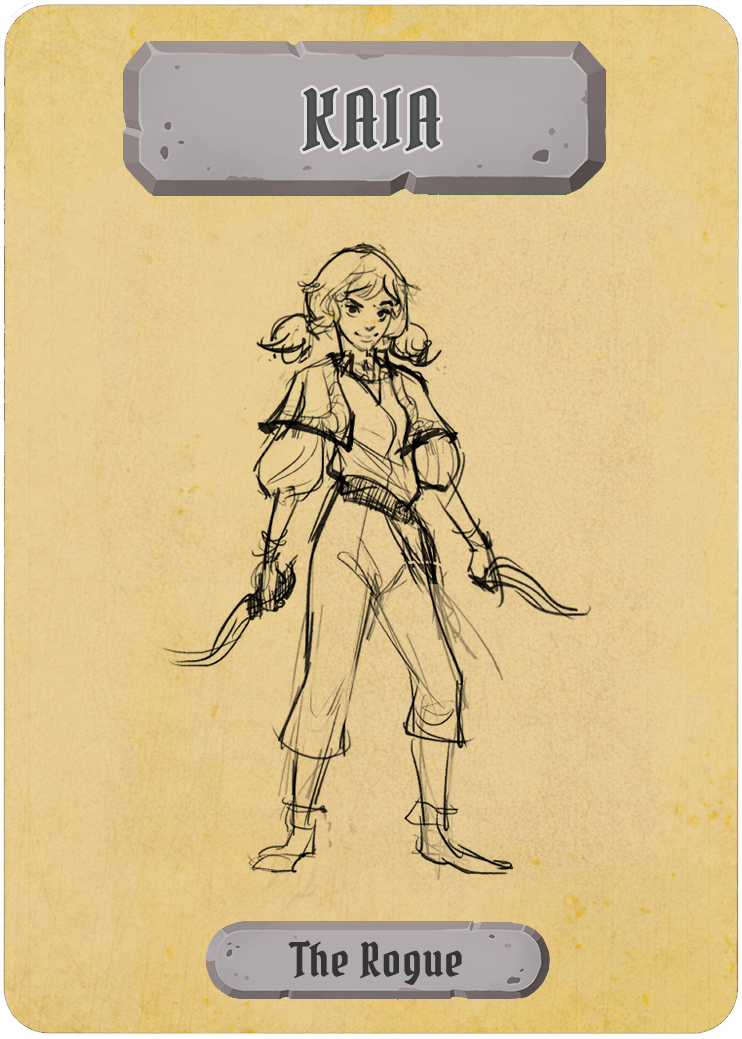
Early Sketch of Kaia's Character Card
Branching Narrative
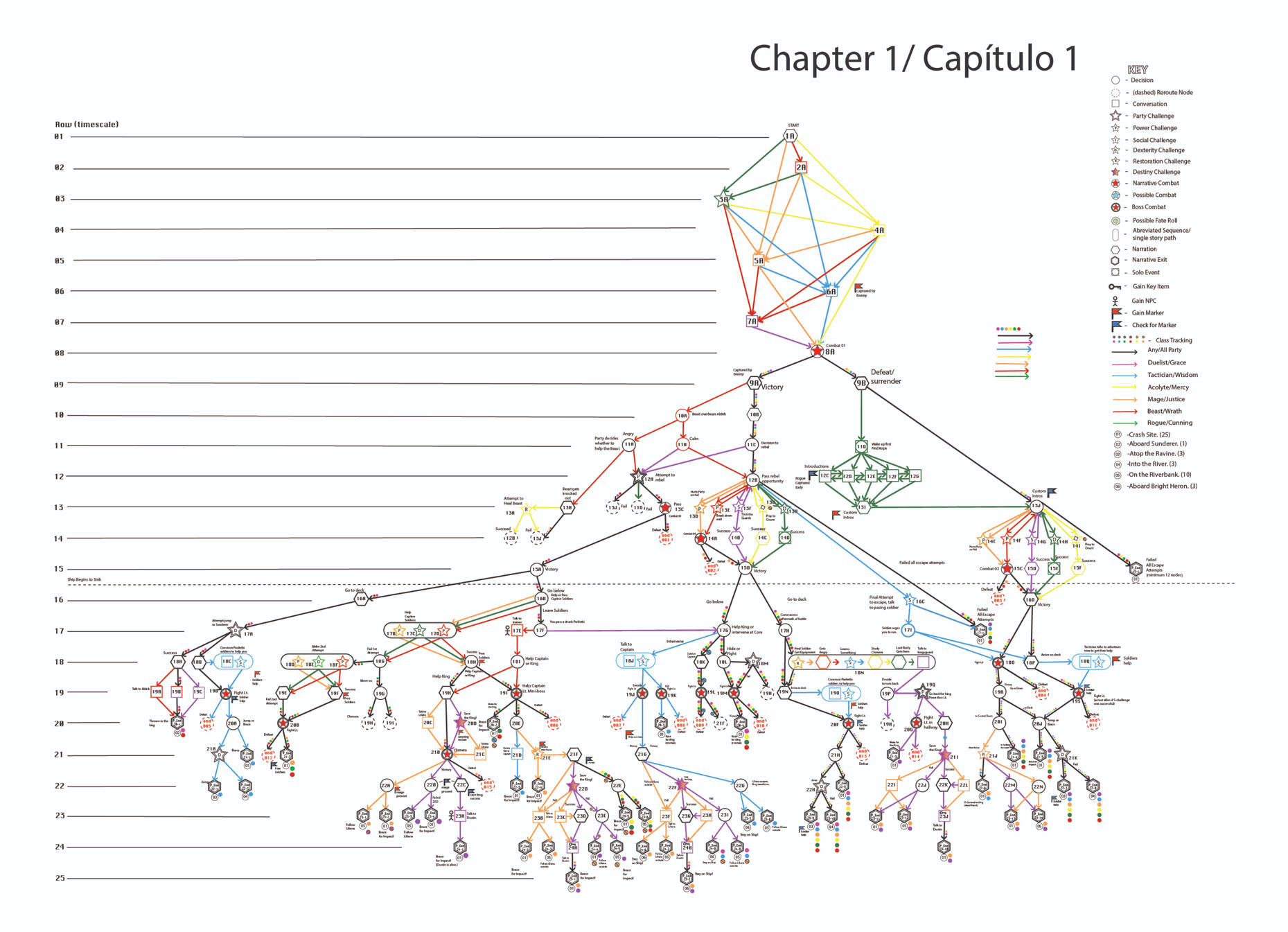
Scions of Destiny was conceived as a three act, twenty seven endings narrative for the above mentioned characters and villains. These characters and villains were grouped in trios (two characters and 1 villain) so that at the end of each act, depending on the Players’ choices, two of the characters' stories would get resolved (the level of depth in that resolution depended on the act cleared).Once the three act structure was set in place we began work on the different story beats and the minutiae of each Act and discovered that the story we had in mind was much larger in scope than what could fit in a book (by our estimates the full story would have been between 1500 and 2000 pages). Because of this, we shifted our design approach from a book to an App that Players would have on their phone.
Text Blocks
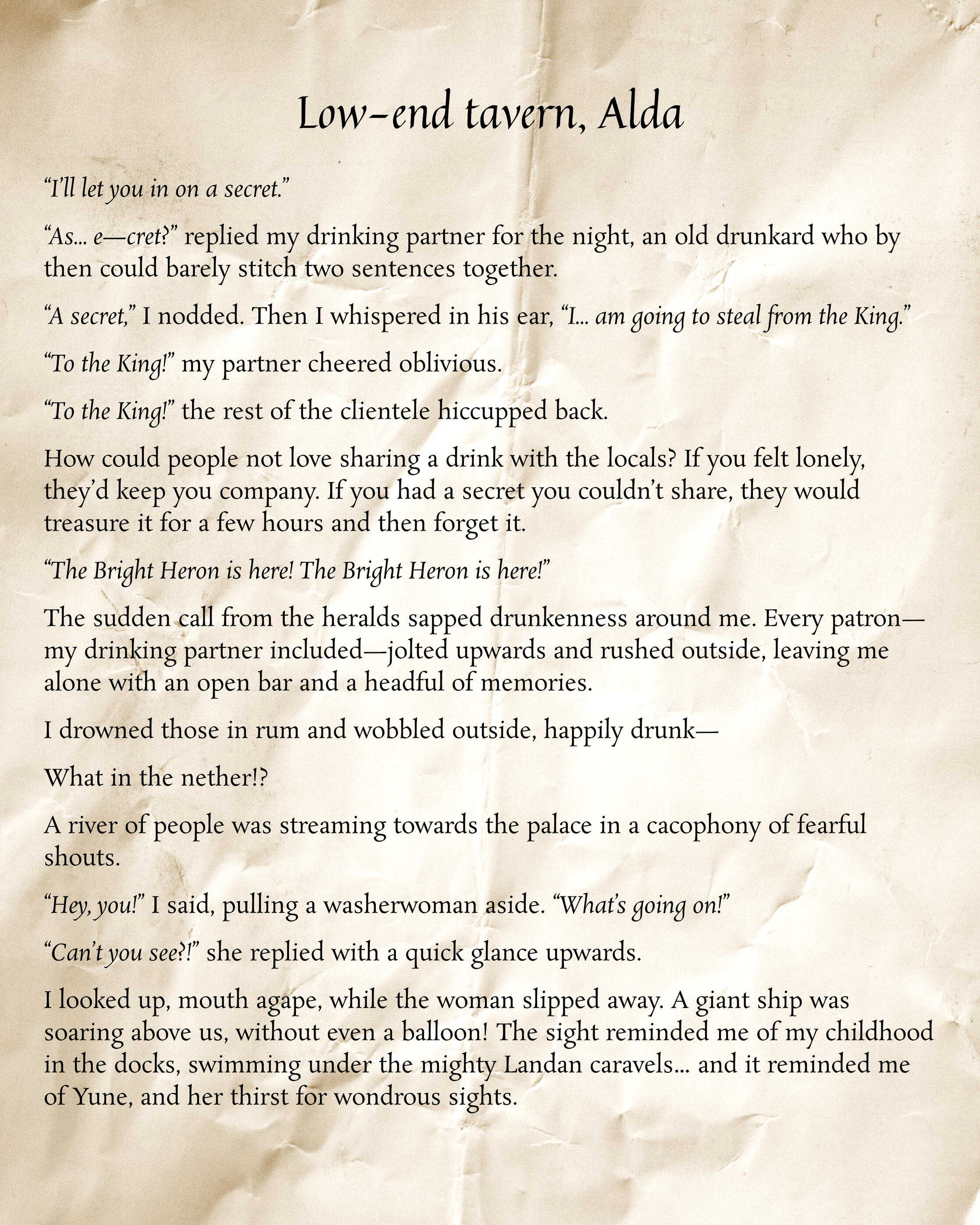
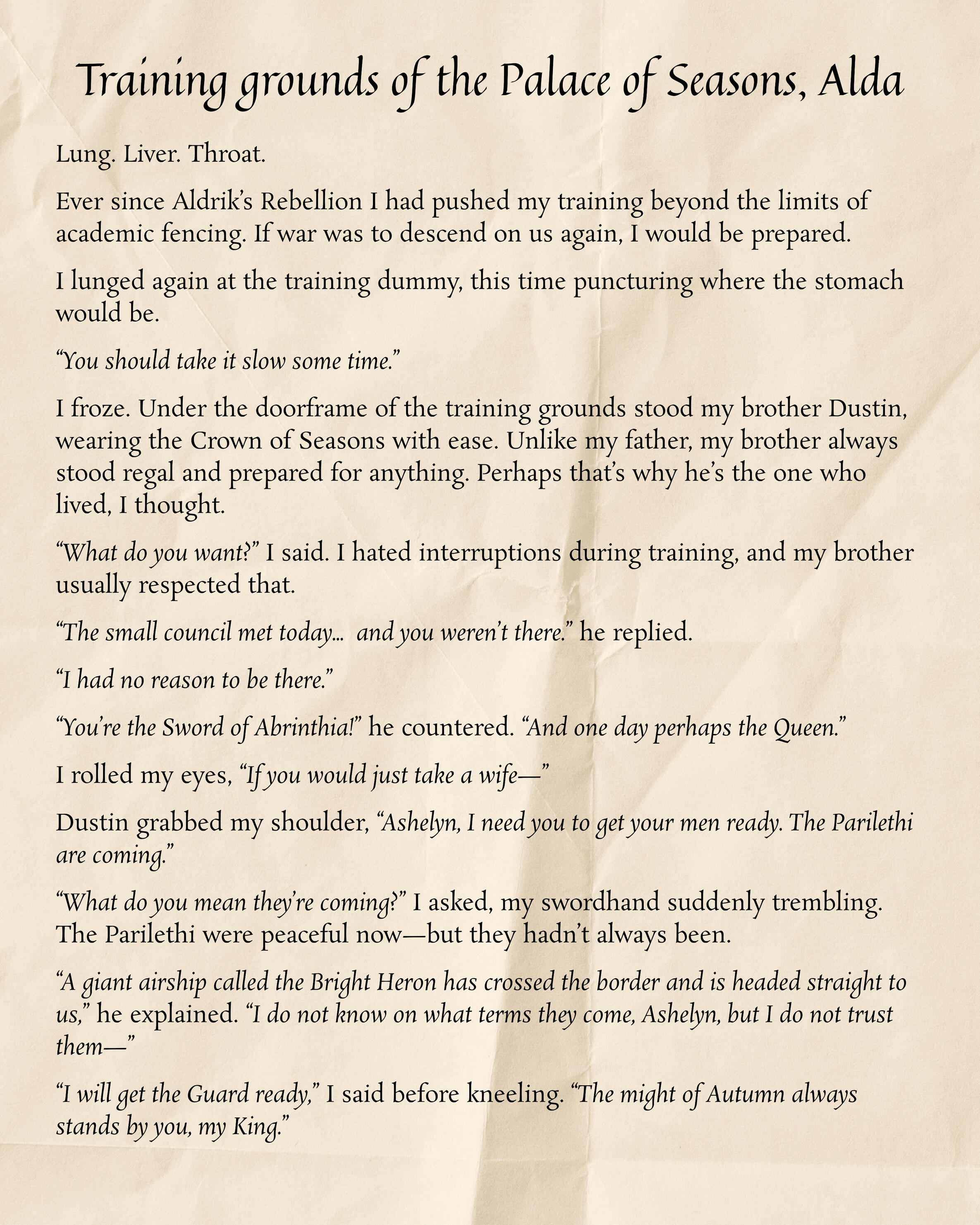
To make it so that no Player would have to read a massive chunk of text we broke down the story into Text Blocks with at most 250 words. This restriction was at first extremely hard to pilot in terms of writing but eventually it allowed us to concentrate key information and keep the story moving forward at all times.
A cool feature of the app was what we called “invisible text”. This text was only available to the person reading and would disappear after they were done (we used it to show a character’s inner thoughts or information their character would opt to keep secret from the rest of the party).
Game Design
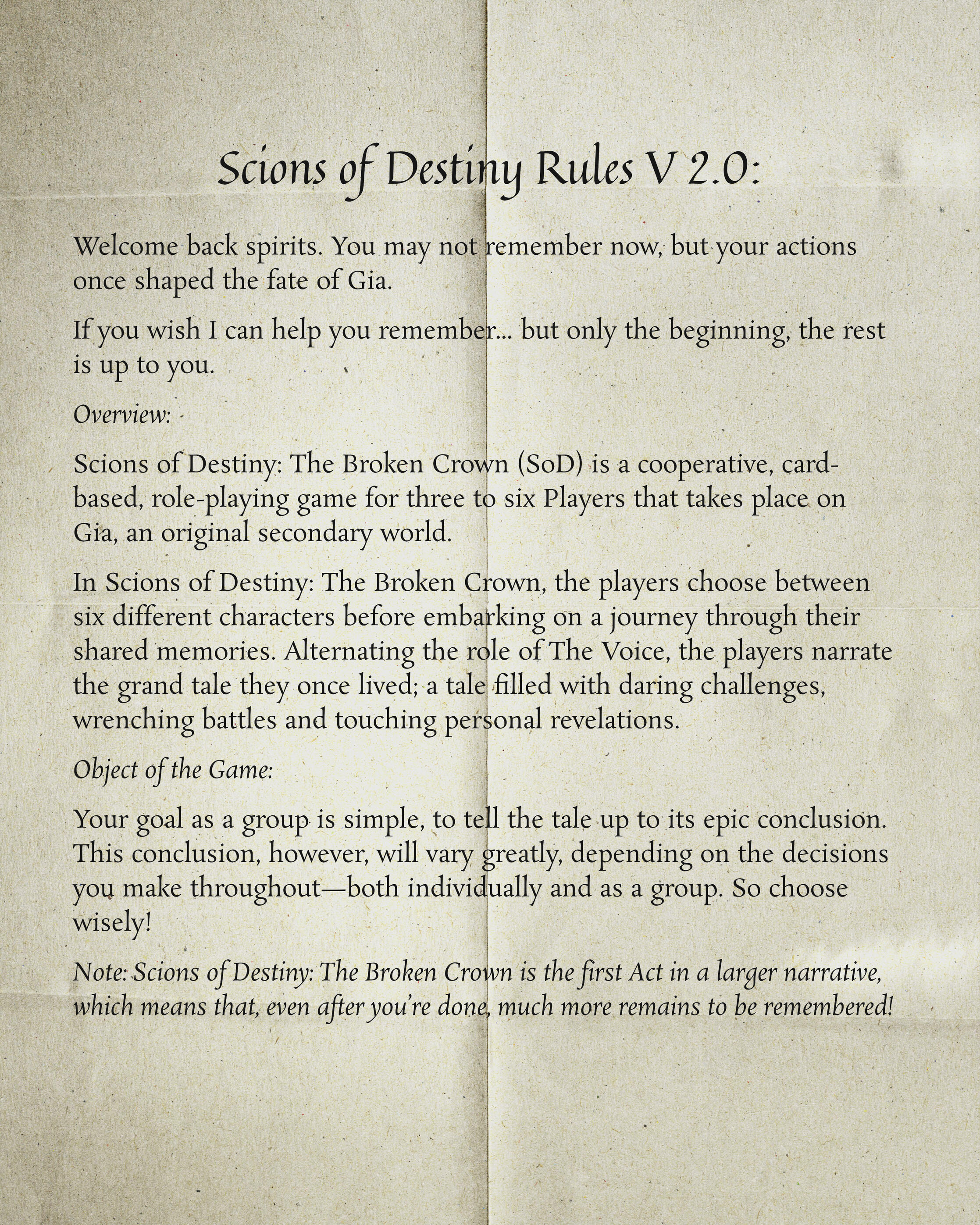
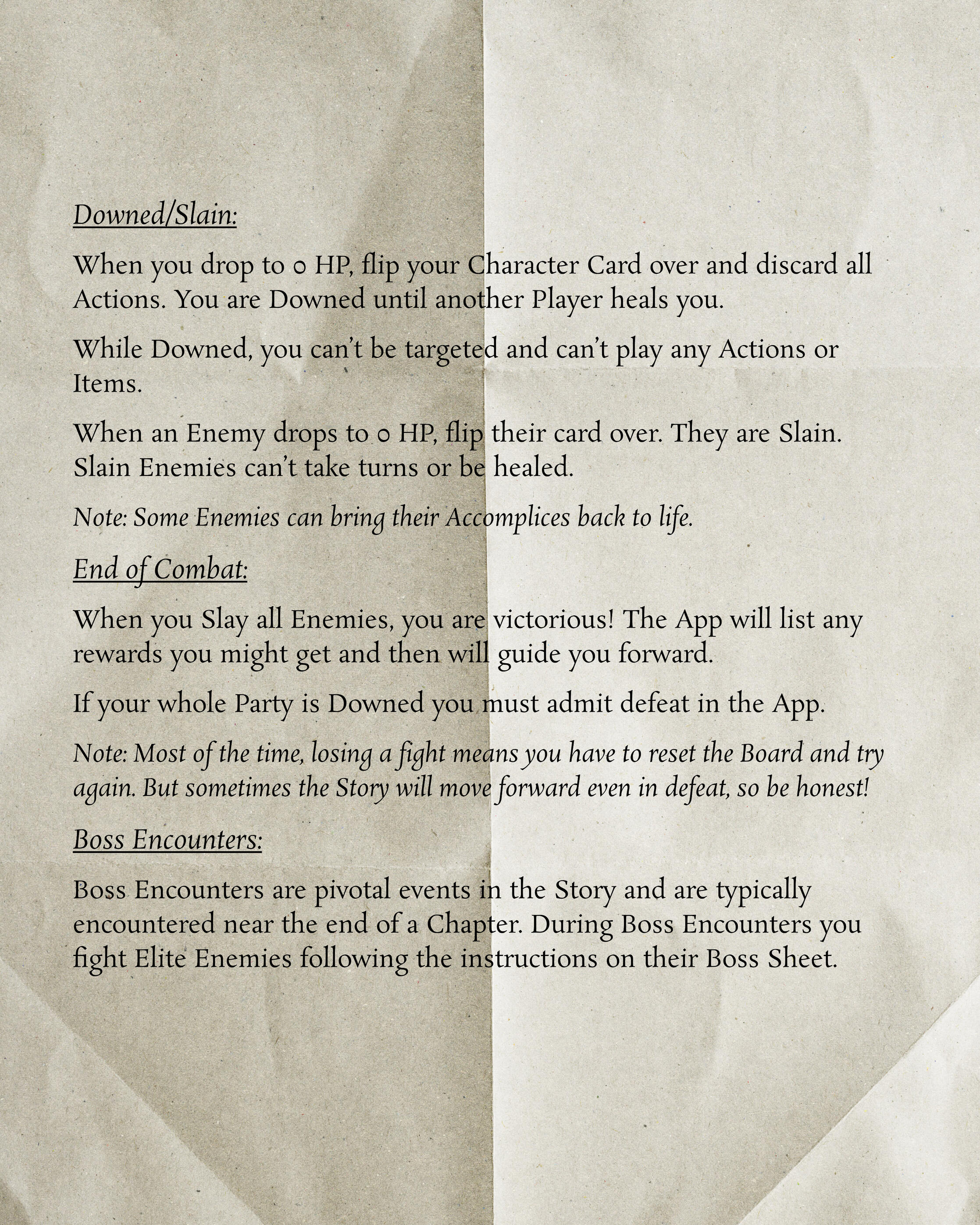
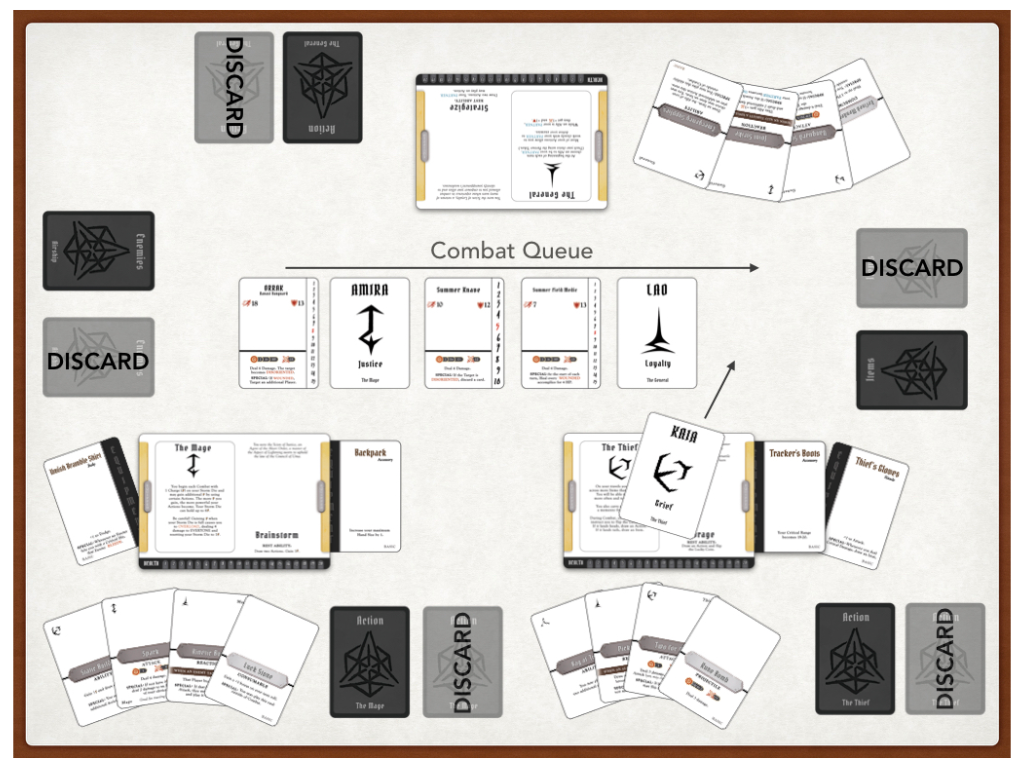
With the following two goals in mind, (1) evoking the play experience of D&D and Magic: The Gathering without the rule complexity and (2) bridging together literature and gaming, we started design on SoD and established three fundamental pillars; Pace of Play, Card Design, and Rulebook.
Pace of Play
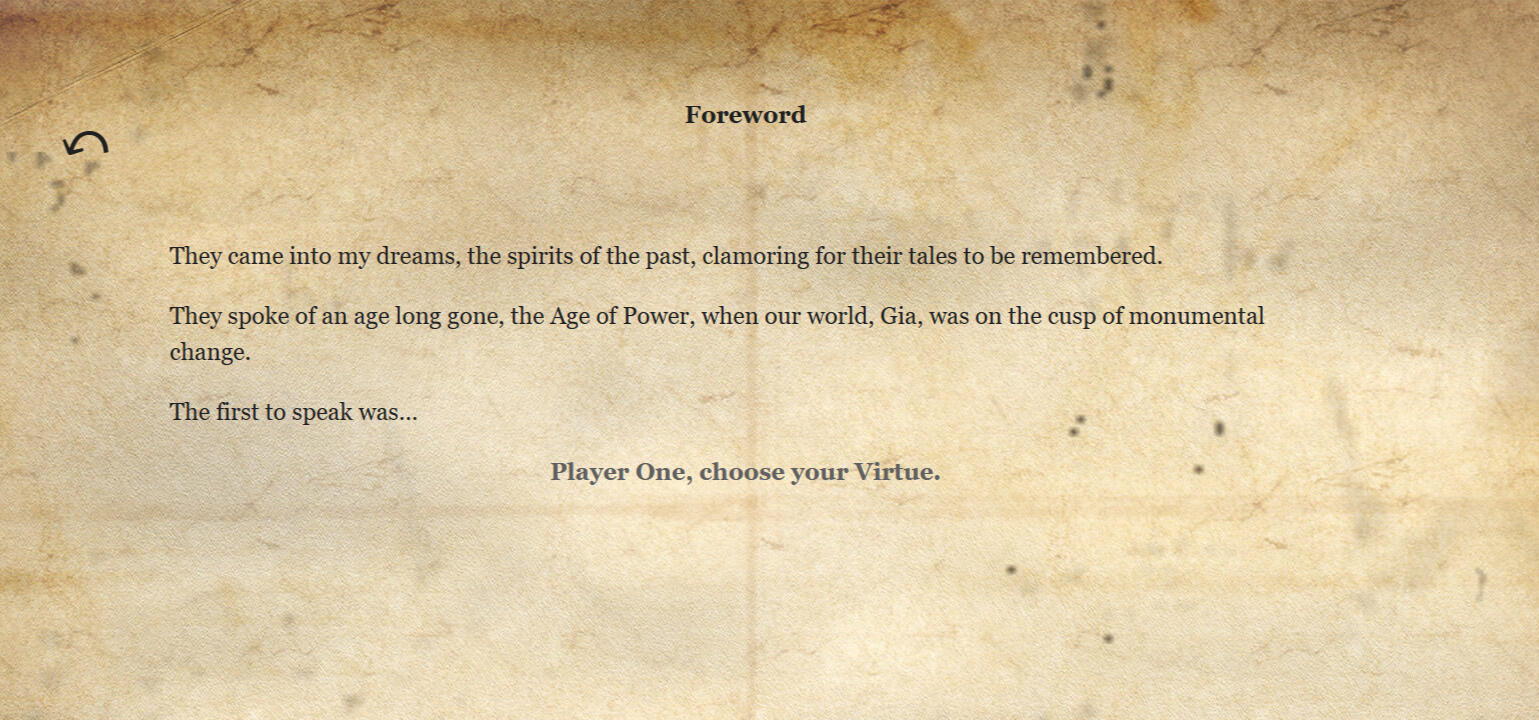
Starting—and then setting up—a roleplaying campaign is usually the beginning of the end. Schedules and more tend to stop the experience before it happens. That's why, with SoD, we wanted a game that you could play right out of the box.“No Writing!” was the core tenet here. Players would open the box, launch the App and then follow instructions and hold cards as they enjoy a riveting adventure in the world of Gia.
Card Design
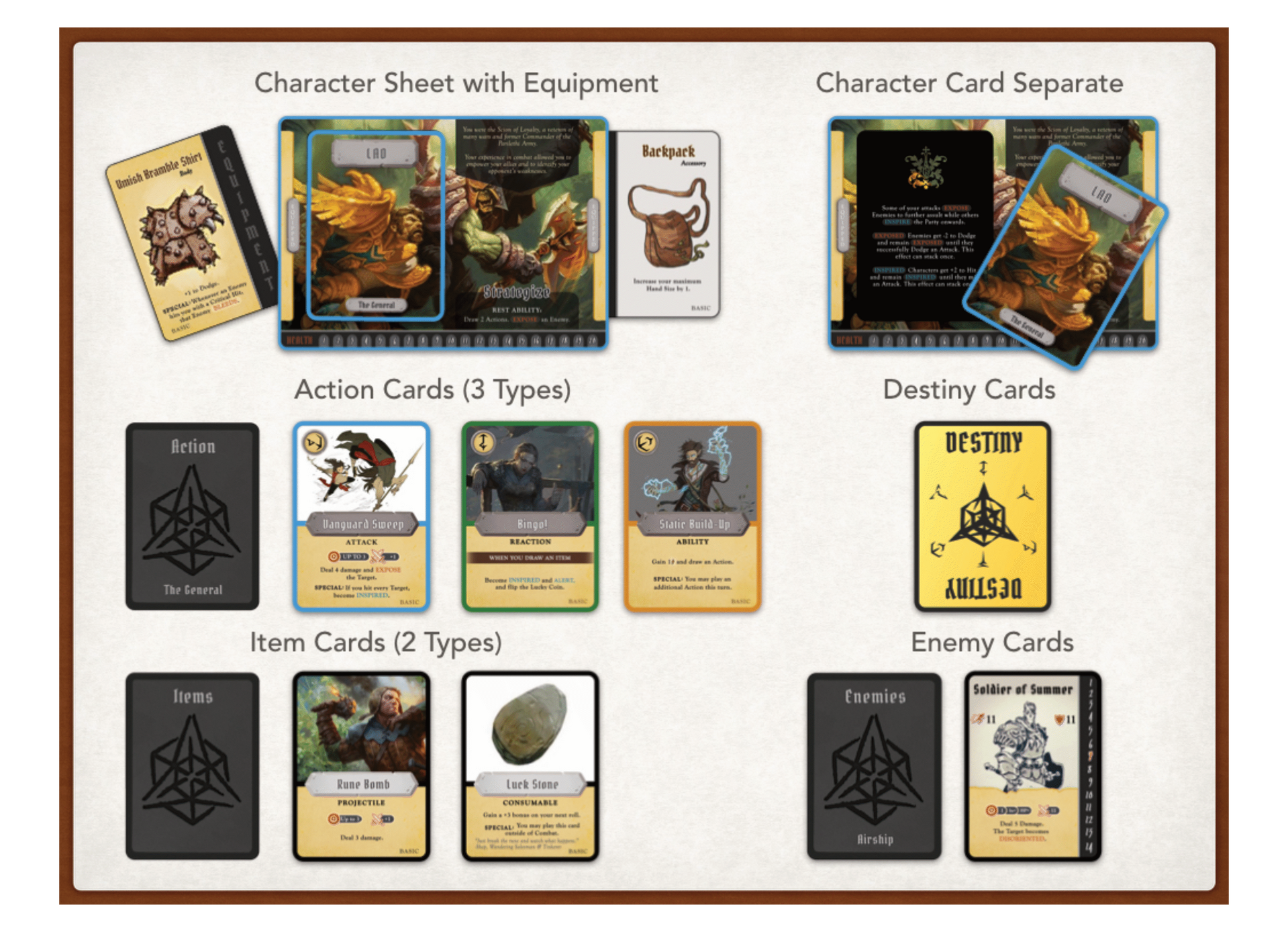
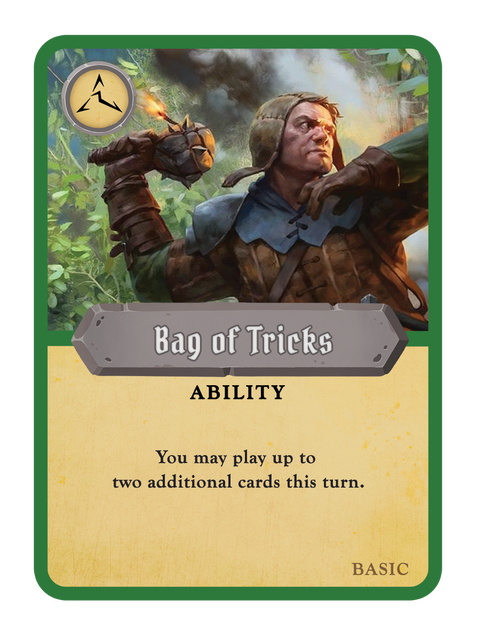
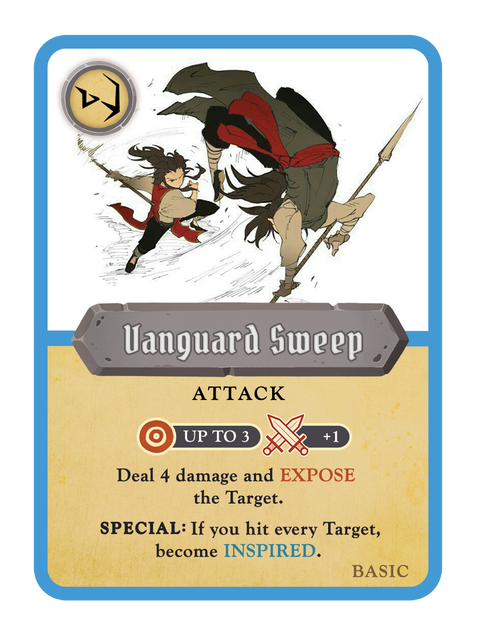
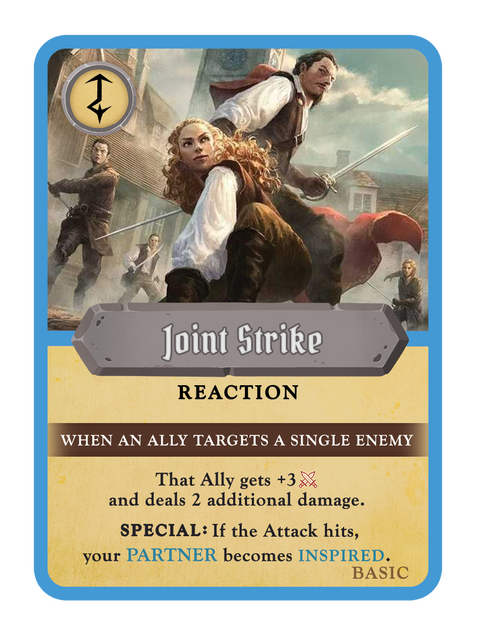
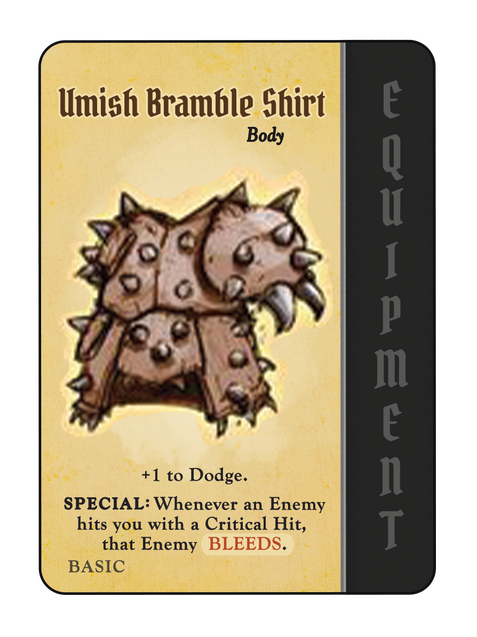
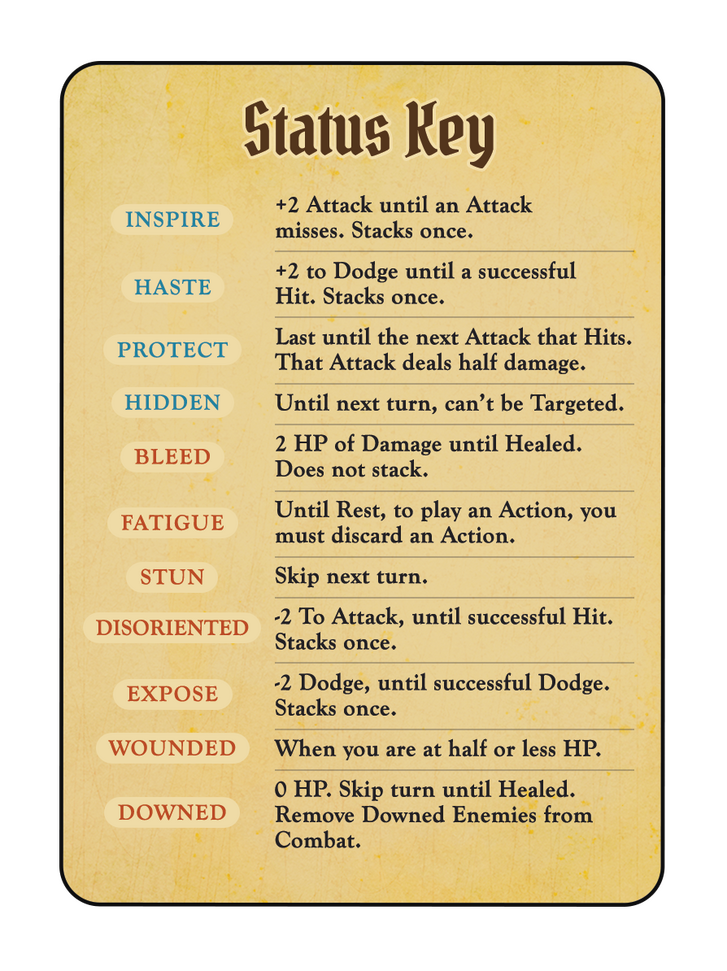
Games like MTG and D&D have a very steep learning curve. With SoD, we built a system that evokes the depth of those games without requiring the players to learn a million different mechanics and statistics. Our guide cards (Status and Priority Keys) contain any additional information that Players might require during combat.
Rule Book
The hardest thing to do (and our weak link) was the rulebook. Despite the simplicity of SoD’s mechanics, the rulebook turned out to be too long.Our saving grace was that the App allowed Players to forego the rulebook and learn as they played along.
Note: SoD is probably my favorite Game Design work so far. Though the game is far from finished (what’s available is a prototype in the hopes of additional funding), it bridges together my two favorite worlds; RPG and Fantasy Literature in a way that I believe would ease the access for those who’ve ever been curious about them.
What I Learned
Scions of Destiny taught me many things, but in particular it taught me the importance of testing and iterating on UI/UX and the value of studying the games that have left a great mark on you.
Gao & Blaze / Gao & Blaze Lite (Mobile)
Lead Designer
Overview
Gao & Blaze and Gao & Blaze Lite are educational games meant to teach young cellphone users about the dangers of data-sharing online. Gao & Blaze is the original version of the game, combining apparently harmless mini-games with an interactive text-based “adventure” (think of A Lost Phone with mini-games akin to those found in Florence). The Lite version eschews the text-based portion of the game in favor of a more condensed mini-game experience.
Gao & Blaze is currently available for Android..
Gameplay
Gao & Blaze is unique in terms of gameplay as the experience is (in a sense) two-games in one, with the game app actually transforming mid-way through the experience into a different app.
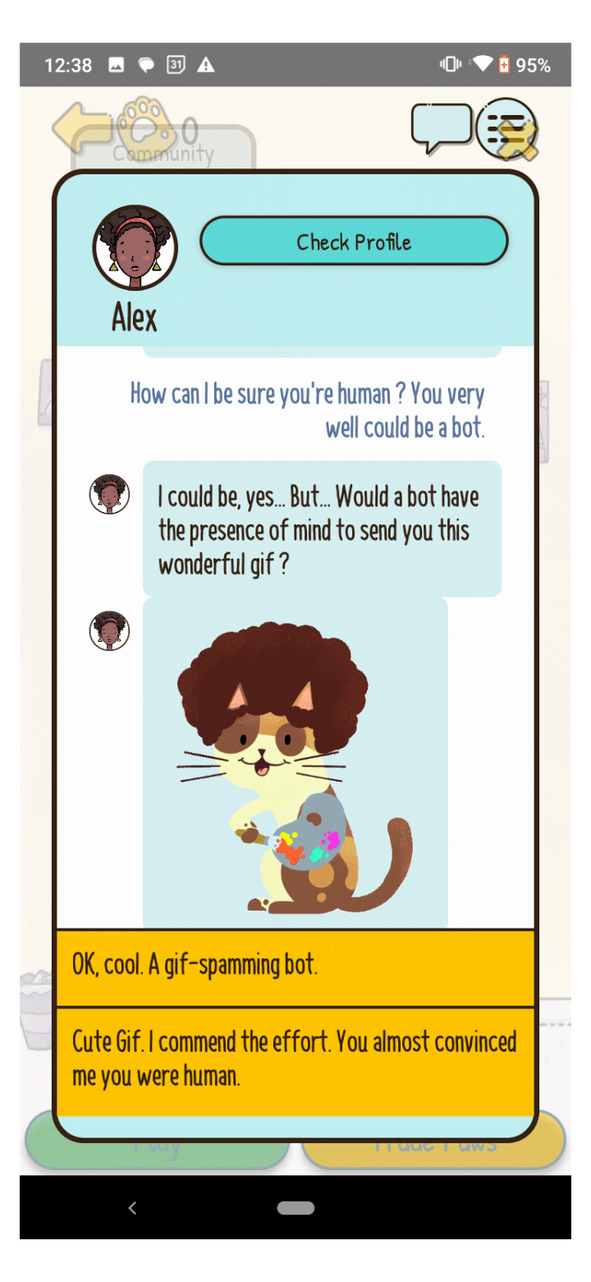
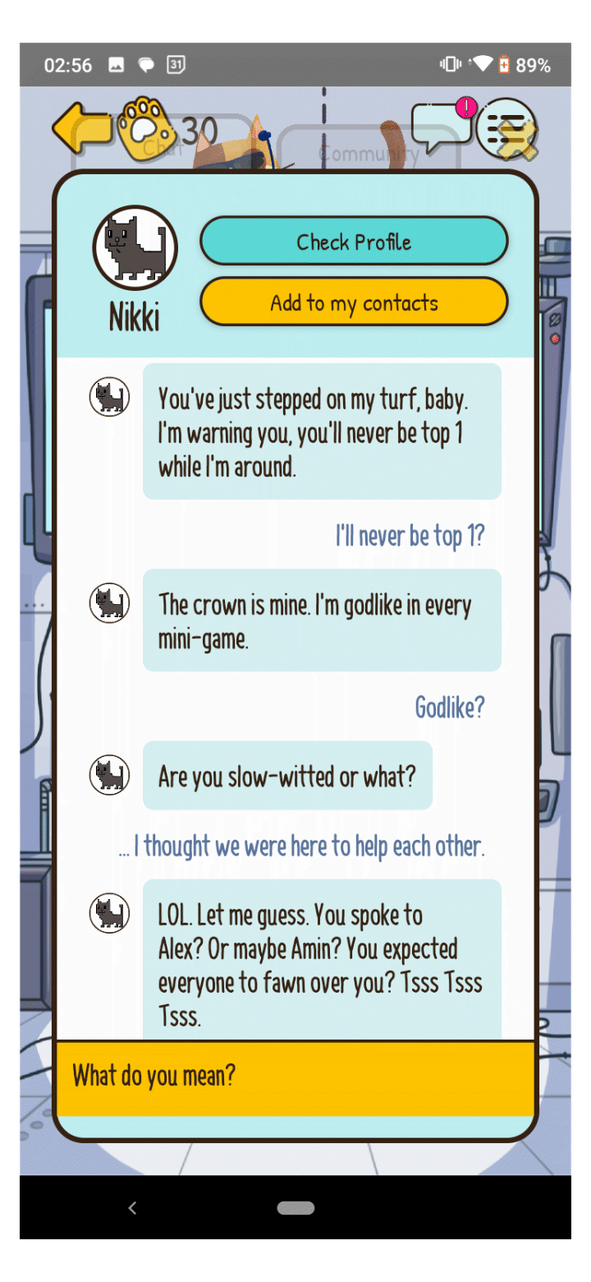
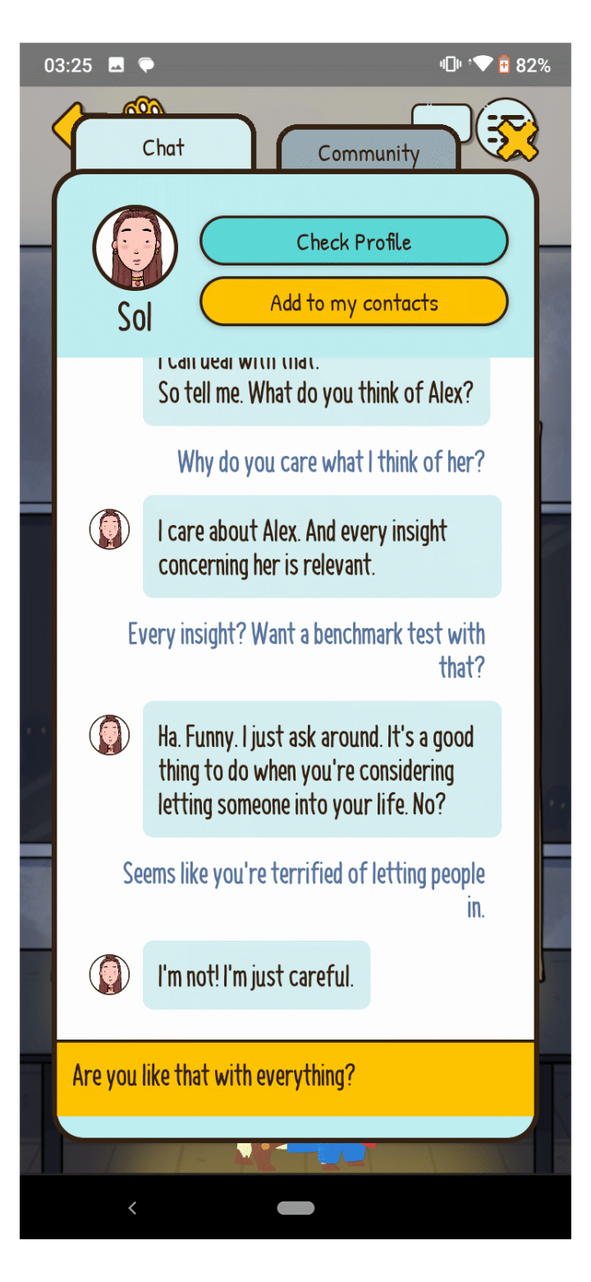
Gao, the first part of the experience, is a text-based adventure interspersed with mini-games that require Players to grant access to different aspects of their phones (camera, call log, etc…). The gameplay loop of Gao is: Talk to members of the Gao Community -> Play mini-games and unlock new conversations -> Repeat.
Blaze, the second part of the experience, is a mini-game centered experience in which Players learn of the ill-intentioned uses that were given to the data shared in Gao. The gameplay loop of Blaze is: Play mini-games about the lives of the members of the Gao Community -> Learn of Data Abuses -> Repeat.
What I Did
Game Design
Designing Gao & Blaze came with one major hurdle; integrating educational content about a dense subject (data abuse) and making it fun. That’s why my top priority became building an experience where Players would not realize what the subject matter was until the very end. To achieve this I structured my work around three design lines; Narrative, Mini-Games, and Educational Content Integration.
Narrative
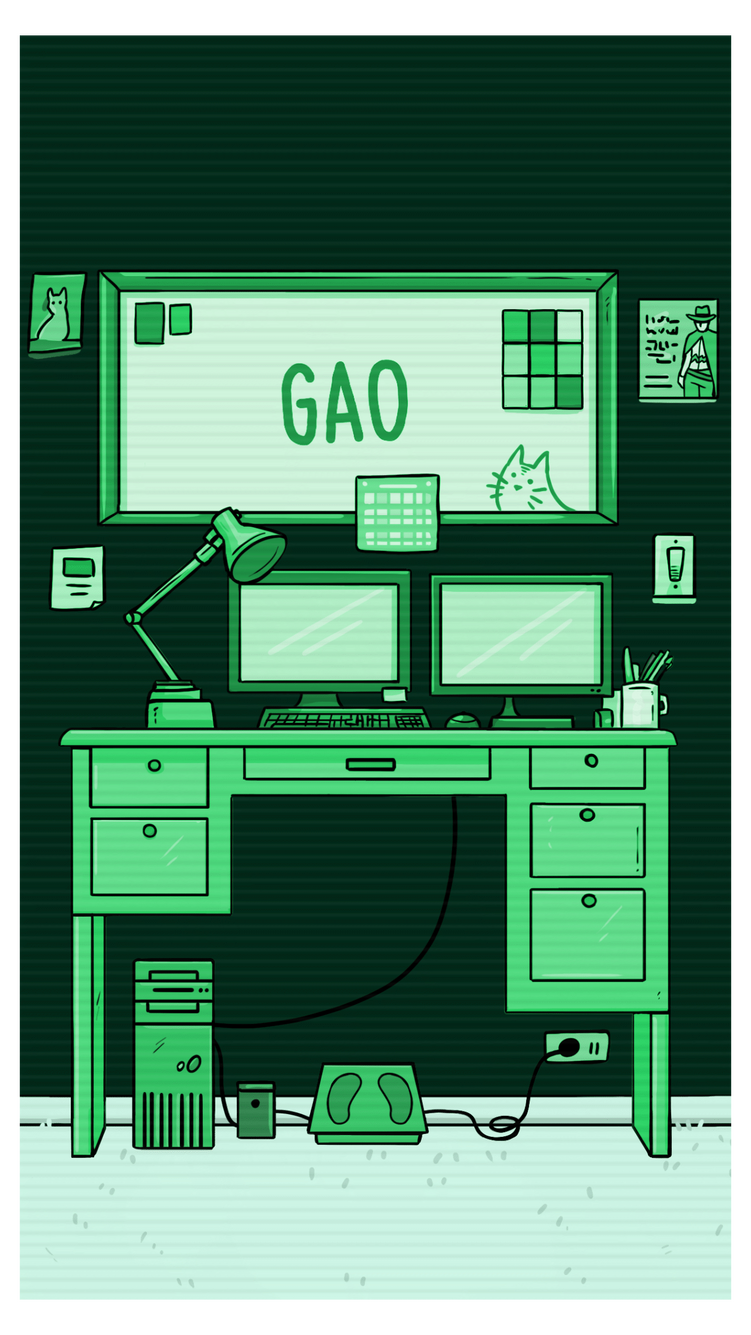
Narrative Design for G&B was done in two phases. In phase one I cemented the game’s structure, which resulted in what you read above:1. Players explore an apparently harmless app (Gao) and get to know a warm and welcoming community.
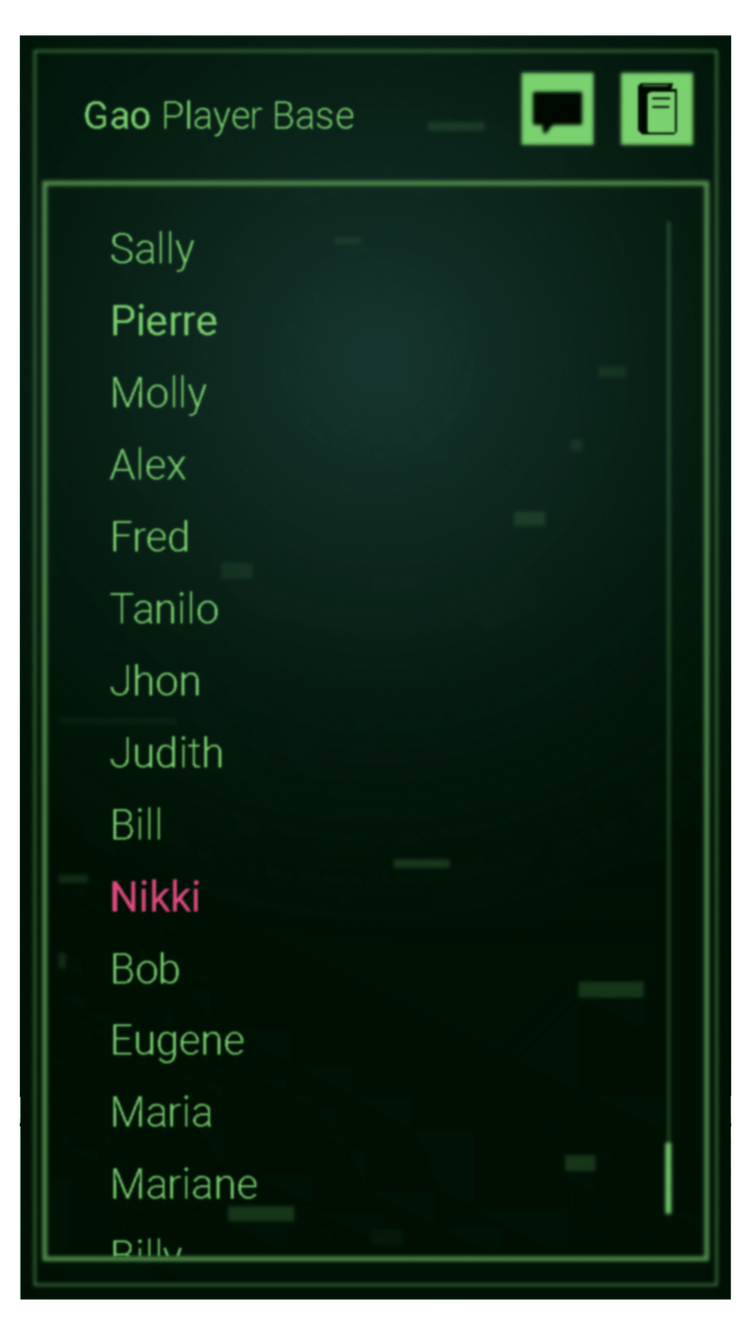
2. Players explore Gao’s “Database” (which contains the information of every member of the Community) and learn of the uses given to the data it stores.
In phase two, I worked with Claire Deambrogio, the game’s writer, to fine tune the key story beats and to iron out the overall tone of the experience and the characters.
Mini Games
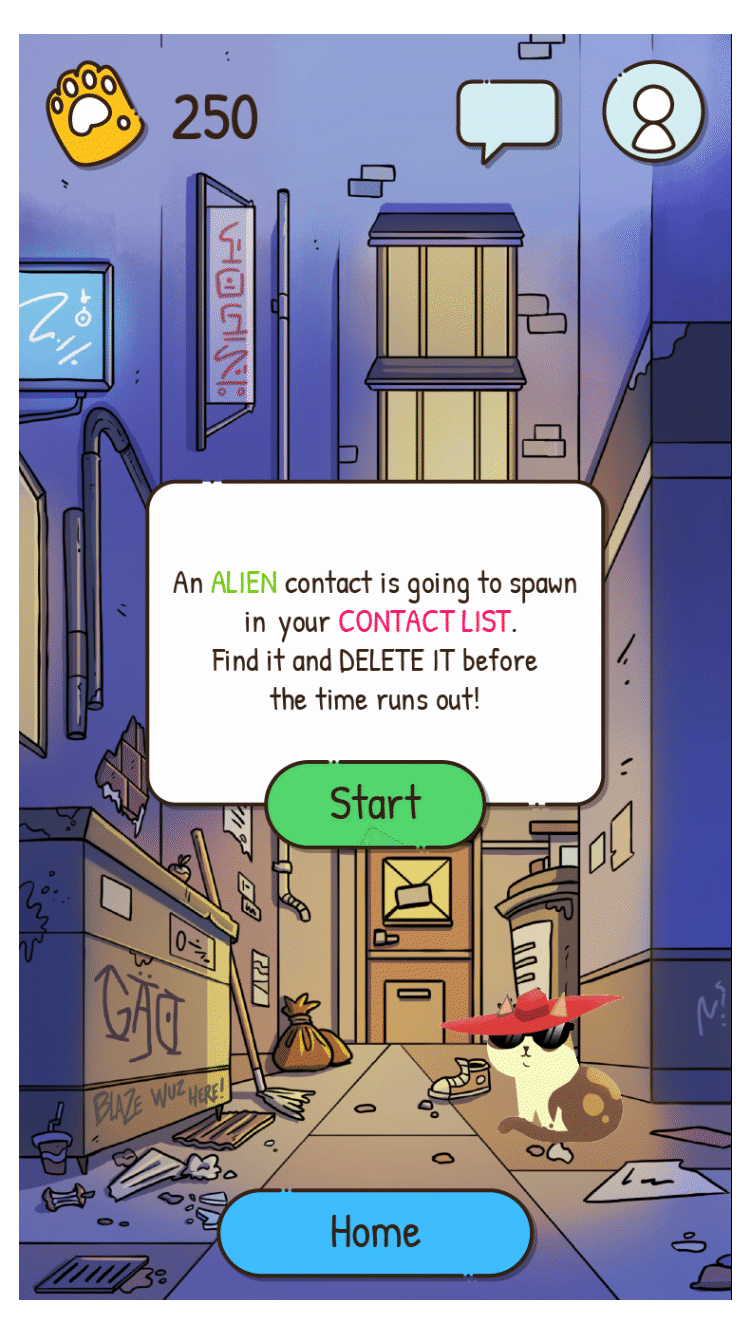
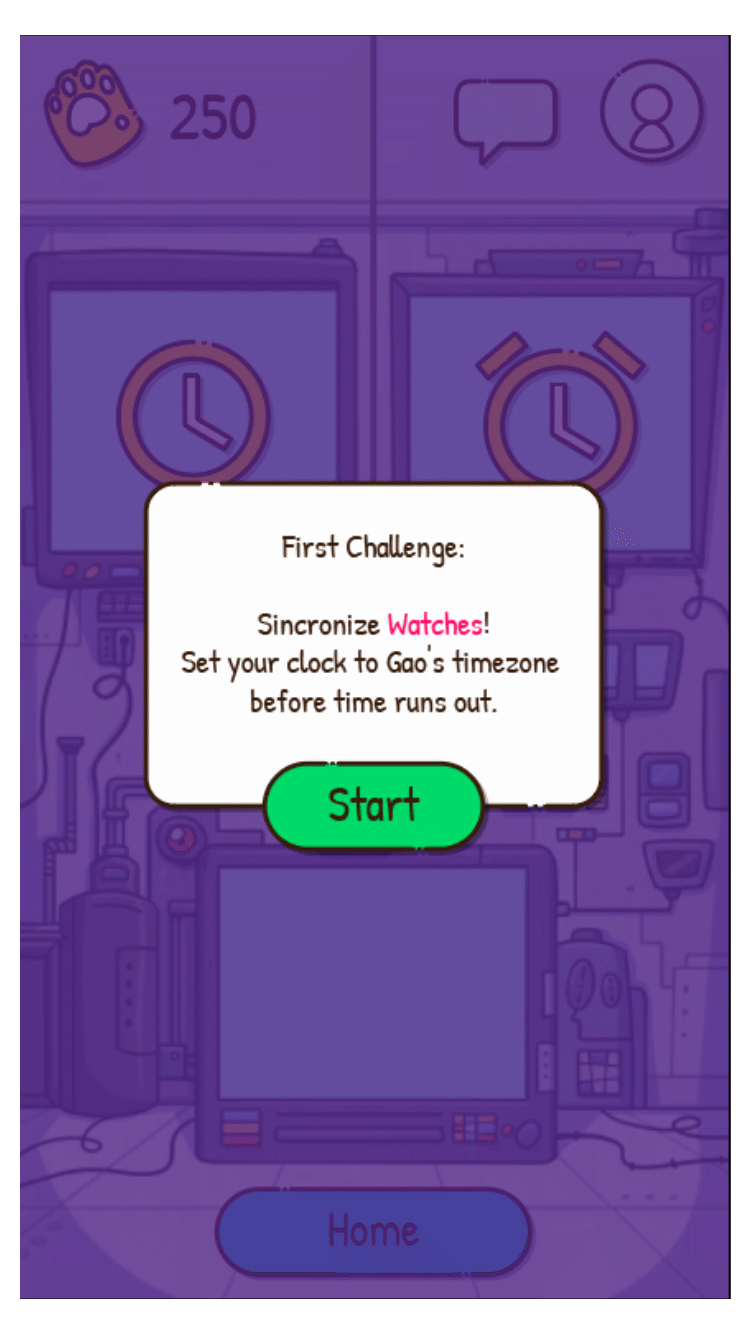
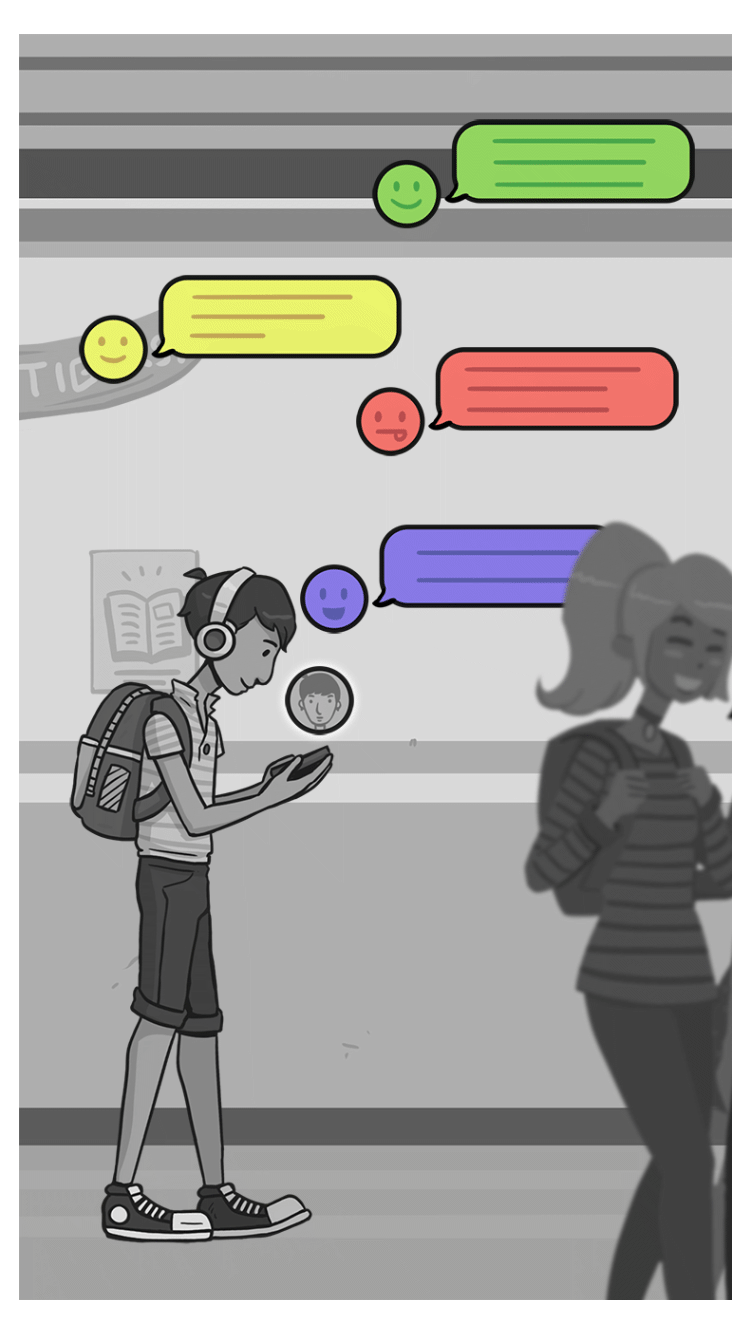
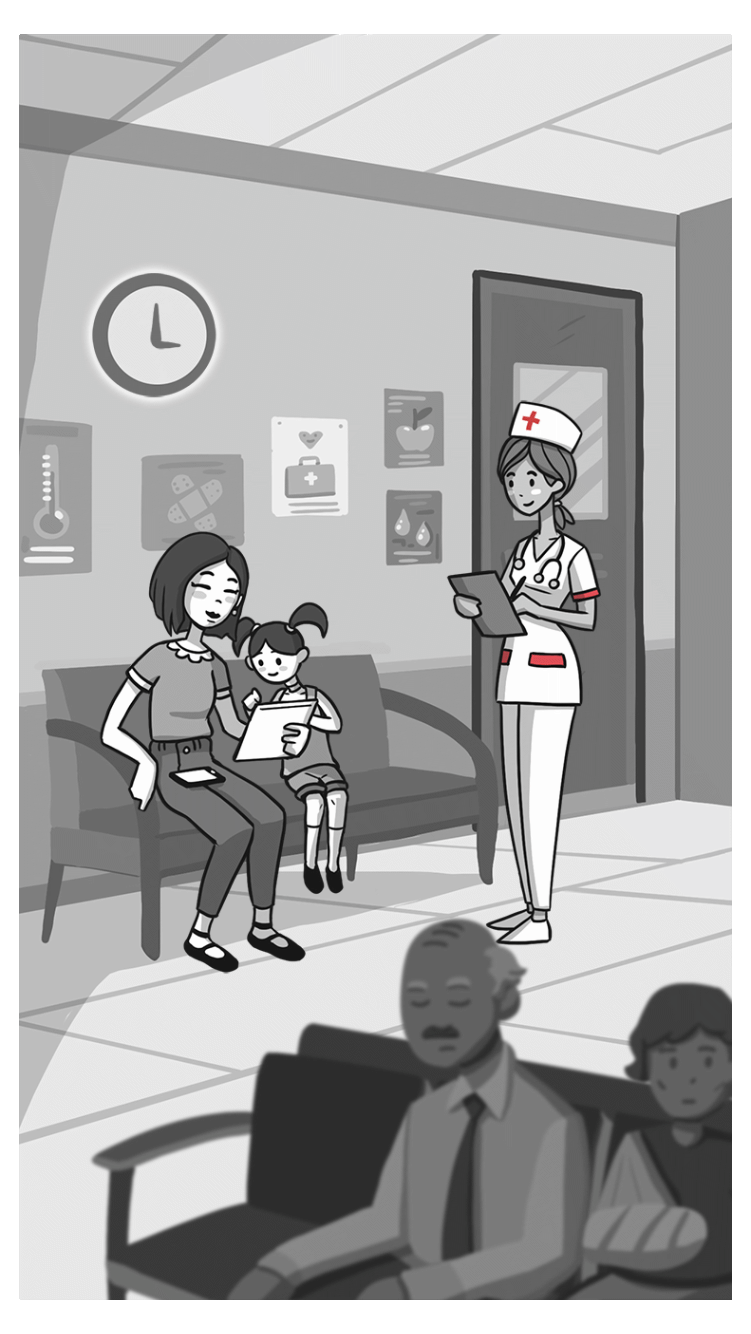
Mini-game design was centered around two keywords, simplicity and impact. The idea was that every mini-game (both in the Gao and the Blaze apps) would be extremely easy to play and have a great effect on how Players perceived their phones.In total 17 mini-games were designed. 10 for Gao (9 asking for different permissions and 1 special activity) and 7 for Blaze (each one “telling” a bit of a community member’s story).
── ࣪˖ ࣪ ⊹ ࣪ ˖ ──
Click for more.
Educational Knowledge Integration
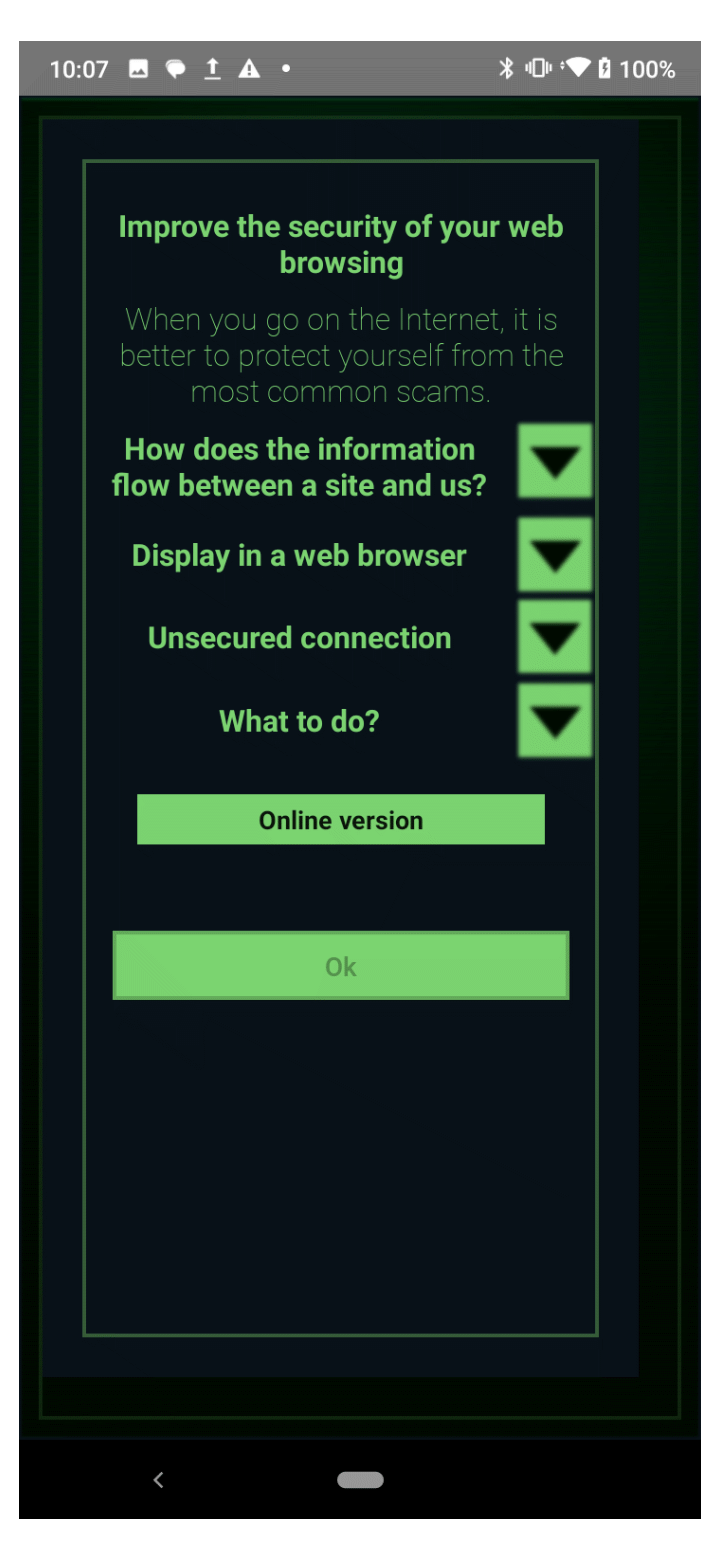
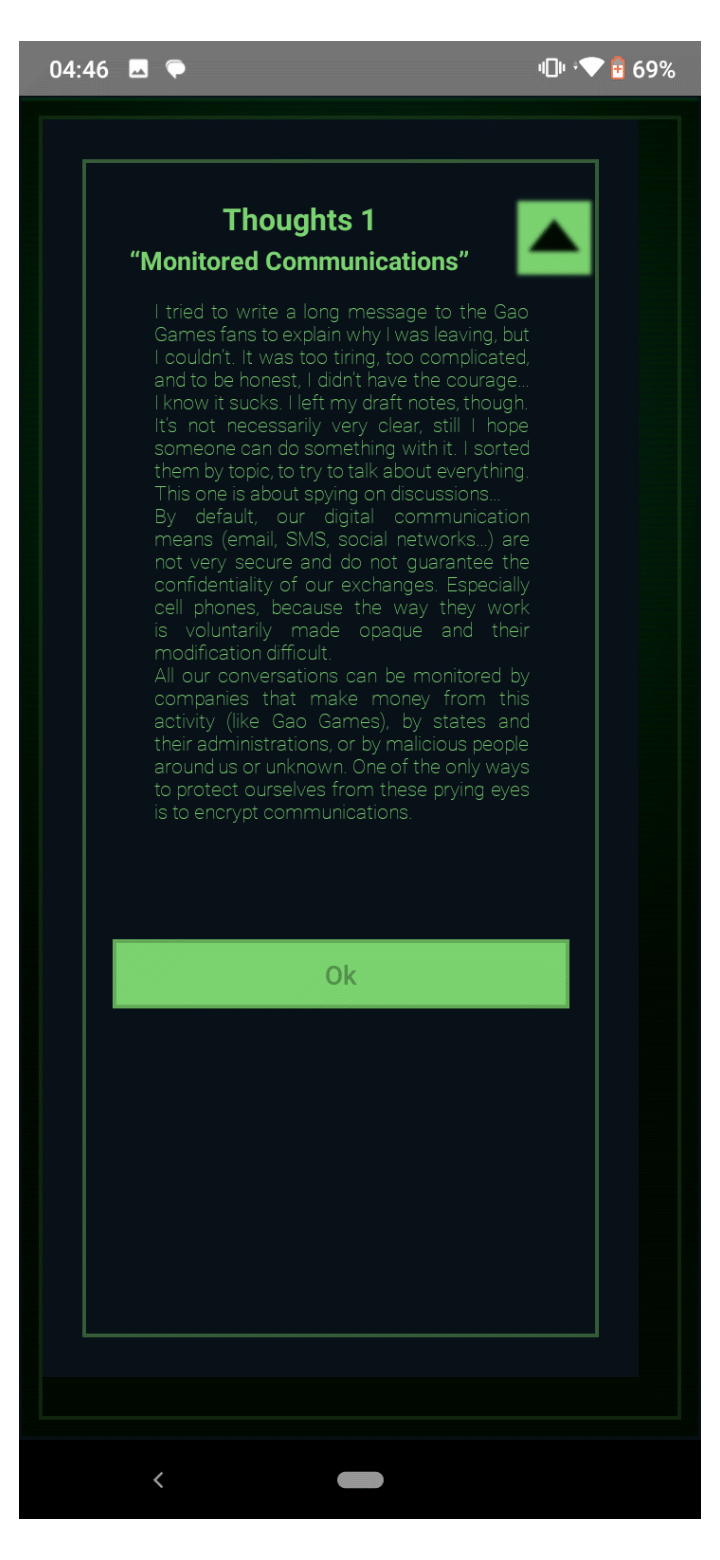
This design line was, in my opinion, the least successful in the end. The way we ended up presenting educational materials was through an “achievement” system that you cleared by playing the mini-games in Blaze (the Database part of the game). Though the achievement system was nice, we couldn’t keep away from using a lot of text for the information (there’s a lot of technical lingo in data protection).
Additional design work
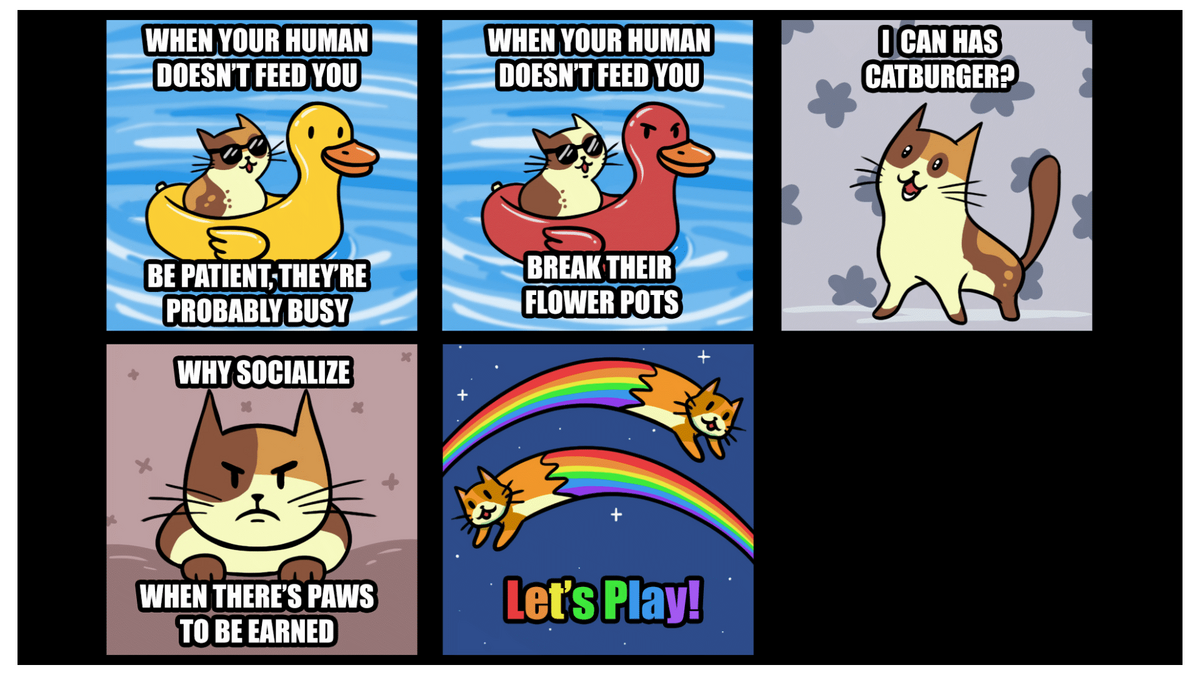
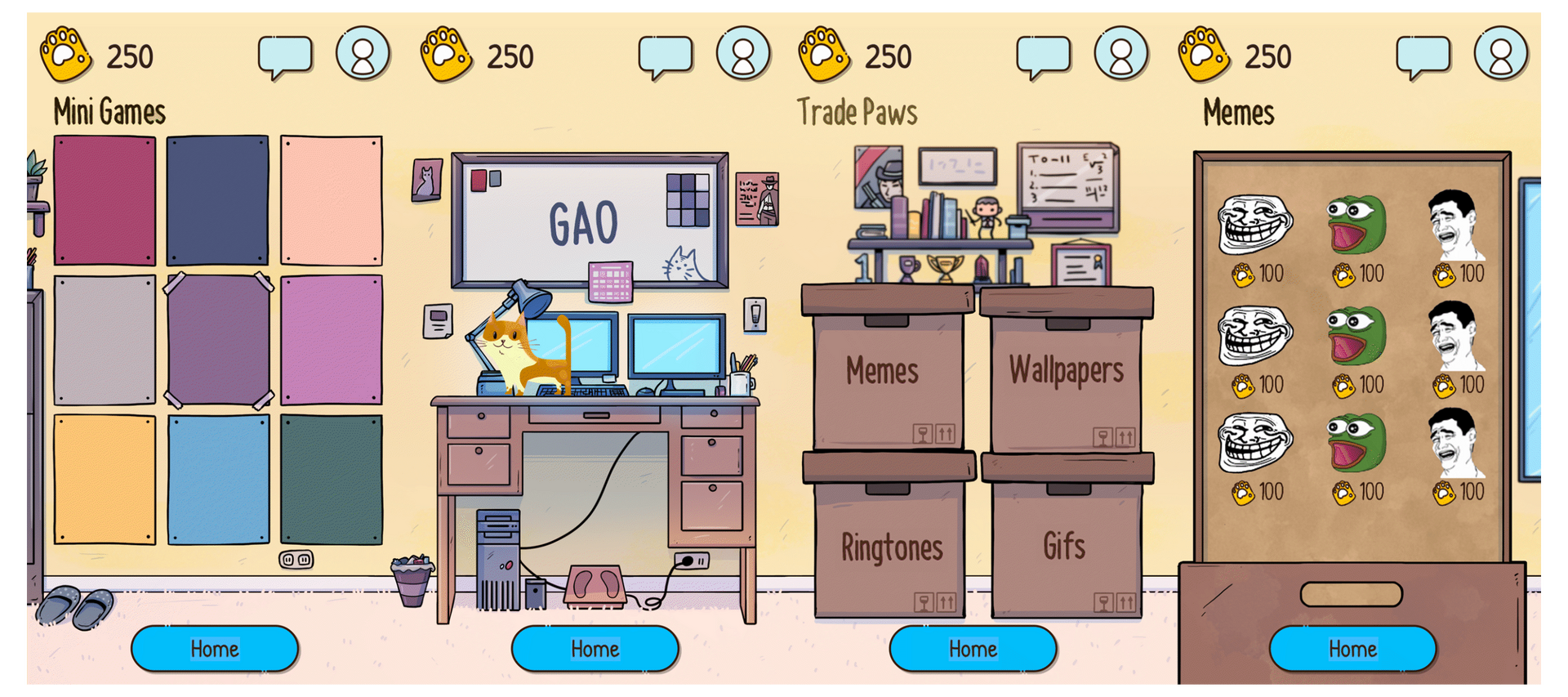
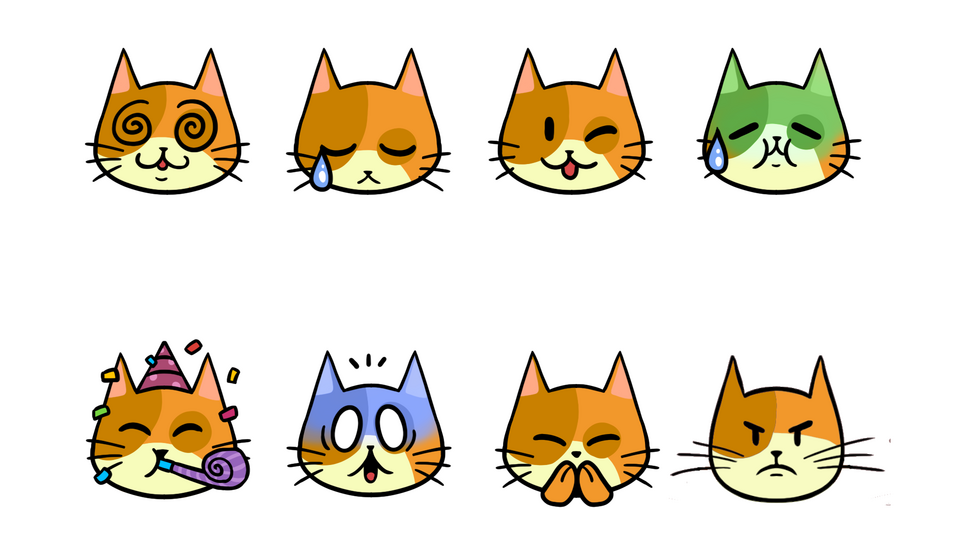
A final feature that I designed but didn’t mention is the Paw System. In the Gao section of the game, Players can earn Paws by beating mini-games and are able to purchase Memes and Emojis using them. This system was created to make the Gao universe feel more consistent and not just a story-telling facade.
Other
The making of G&B partly took place during the pandemic, making development times go beyond what was originally scoped. Because of this, the game’s art director had to move on from the project and I had to assume his responsibilities (defining visual style and coordinating asset delivery with the artists) for a considerable portion of time.In addition to this de facto Art Direction work, I translated the original game text from French to English and Spanish.
What I Learned
Gao & Blaze taught me the difficulties of integrating educational content in video-games and the importance of being willing to compromise certain ideas for the sake of publishing.
Specializations
Our take on MMO Classes was, in my opinion, the most interesting aspect of our combat design. With Specializations, Players got to choose a Wizard Color (Blue, Red, Yellow, Green, Brown, White or Purple) after they reached a certain Level. Choosing a color granted the Player access to all of that color's Specializations and allowed them to freely swap between them.
This system allowed us to give each color a dominant profile (for example Red was Physical Damage, Brown was Tank) but also secondary roles that Players could swap into when needed.
Example:Gabi is a Red Wizard and her default specialization is the Fire Fist (heavy single target DPS). If her Party needs a tank she can swap to the Firewall Defender and temporarily change her role, all without completely warping her character’s narrative.Link to the Specializations Wiki: https://mapforgottenrunes.pro/build.html
Example
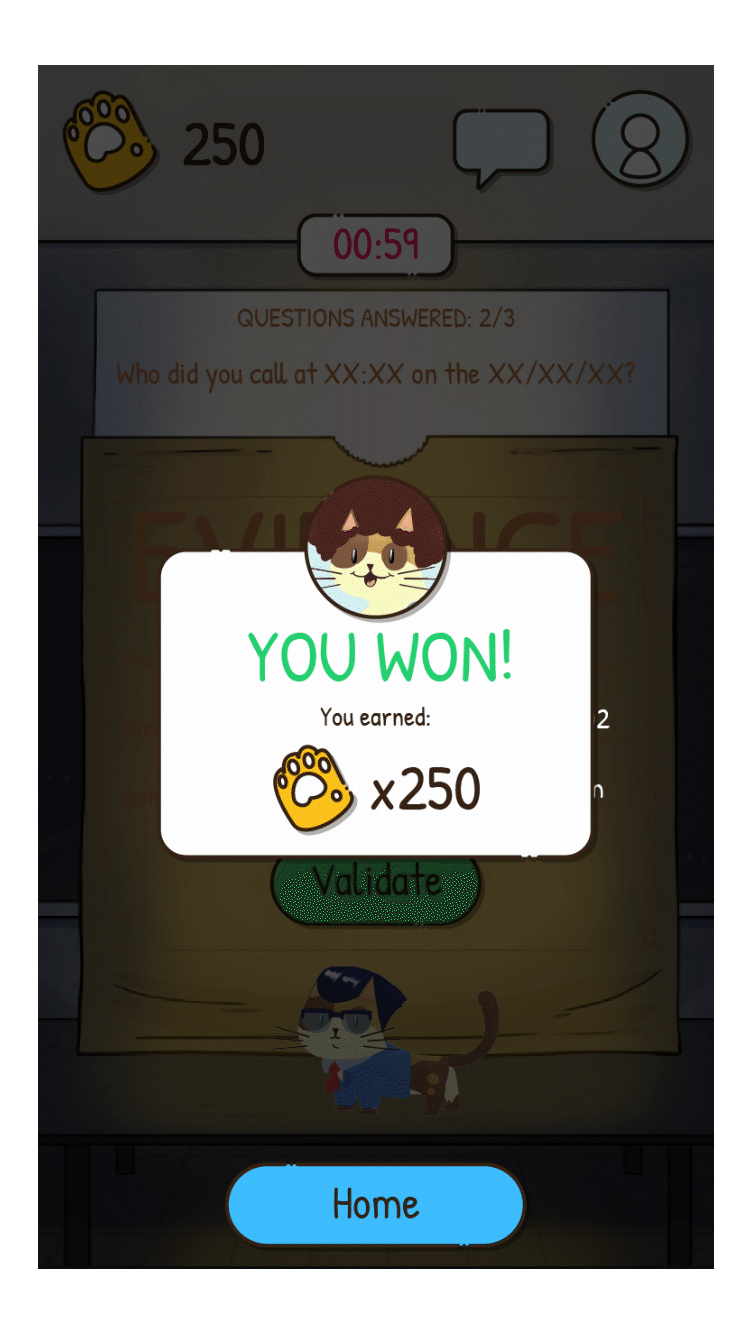
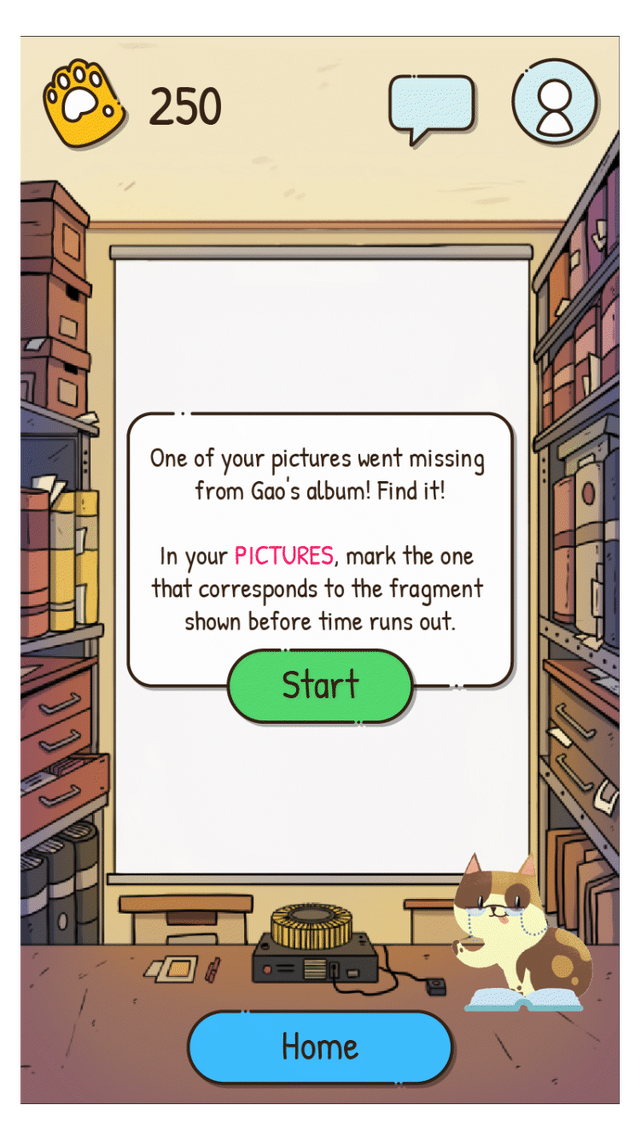
Gao the Filekeeper (Photo Collection) - Players are shown a fragment of one of their pictures and have two minutes to figure out which one it is and flag it in their files.
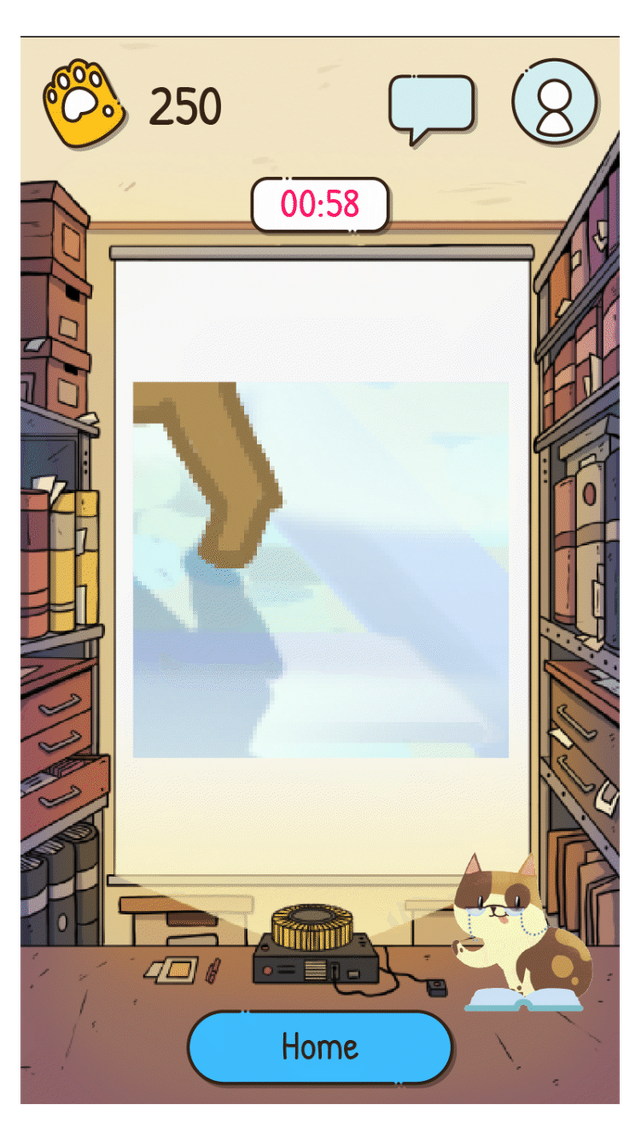
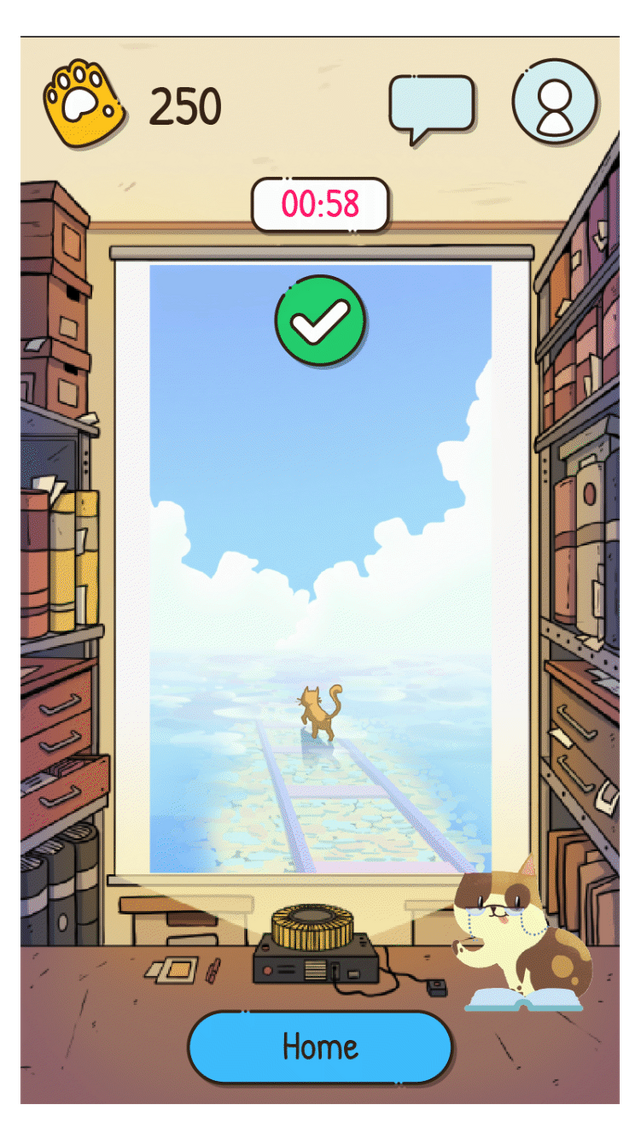
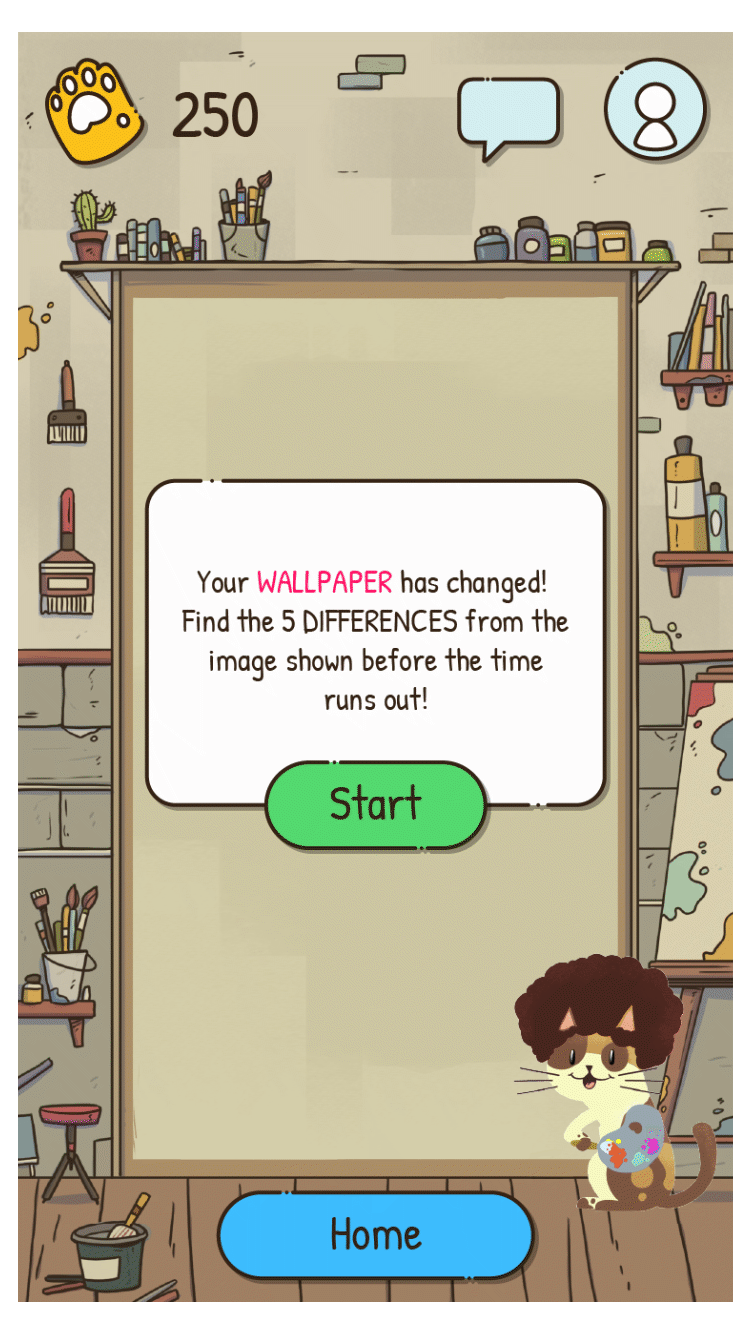
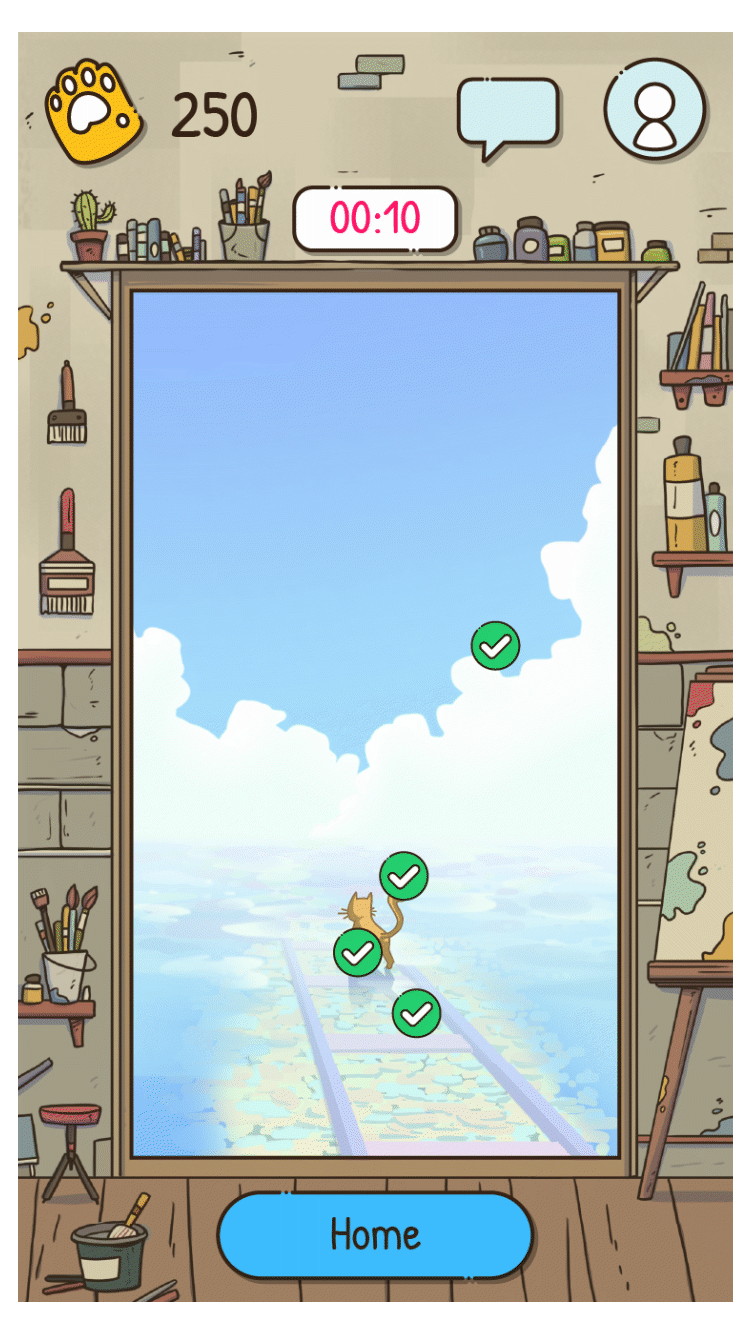
Gao the Forger (Background) - The game replaces the Players’ phone background with an image that has five differences with the image shown in game. Players must flag the five differences in the game app before time runs out. If they do so, their background is restored.
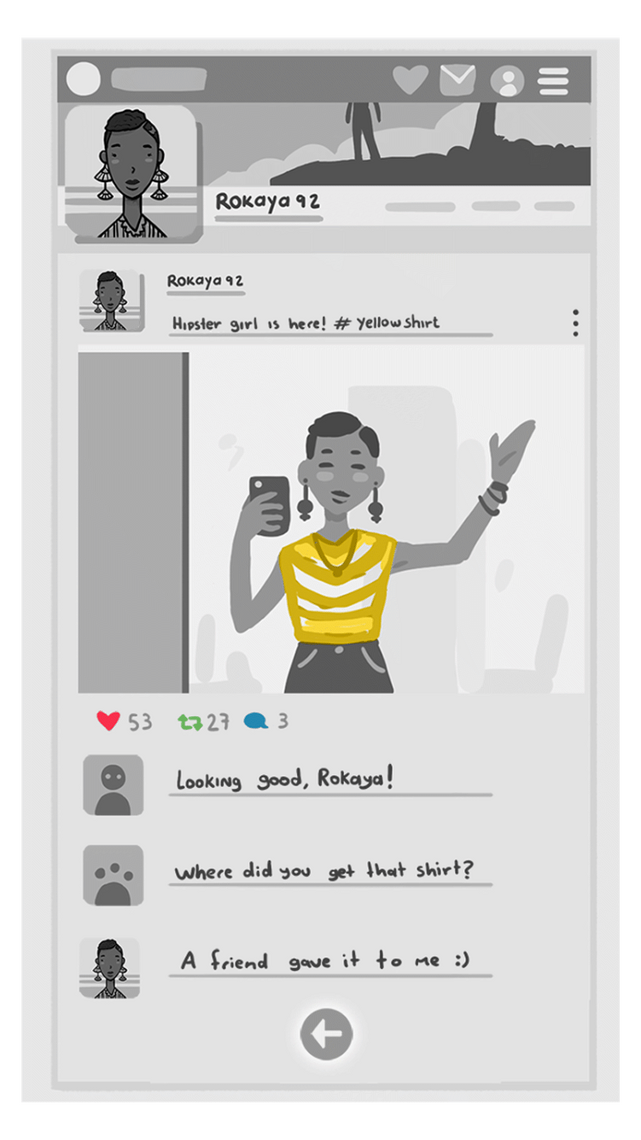
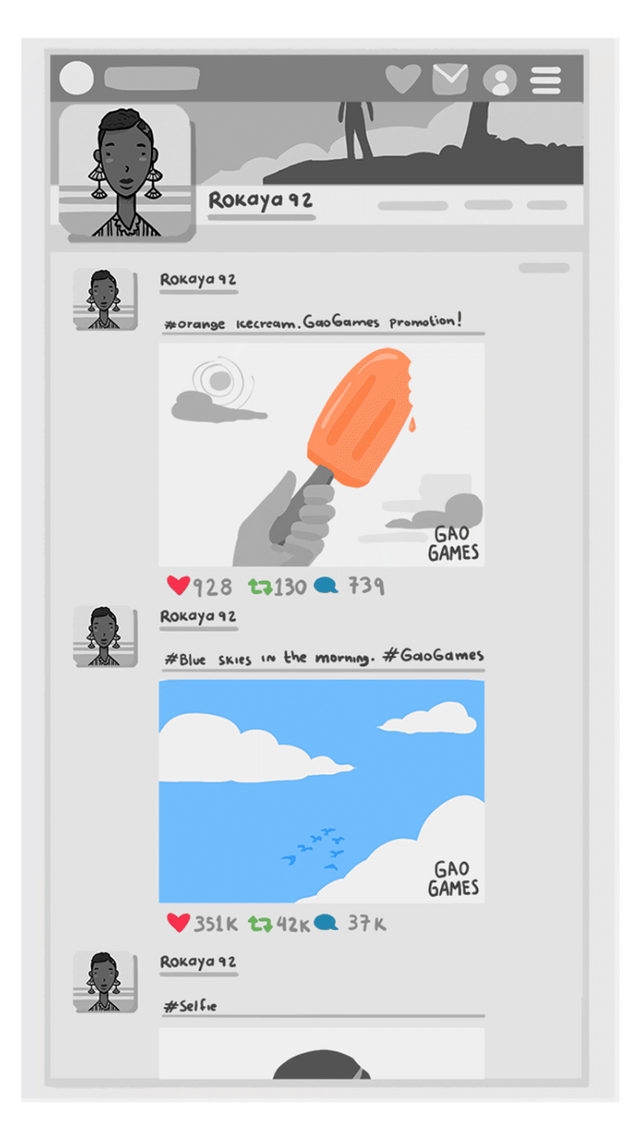
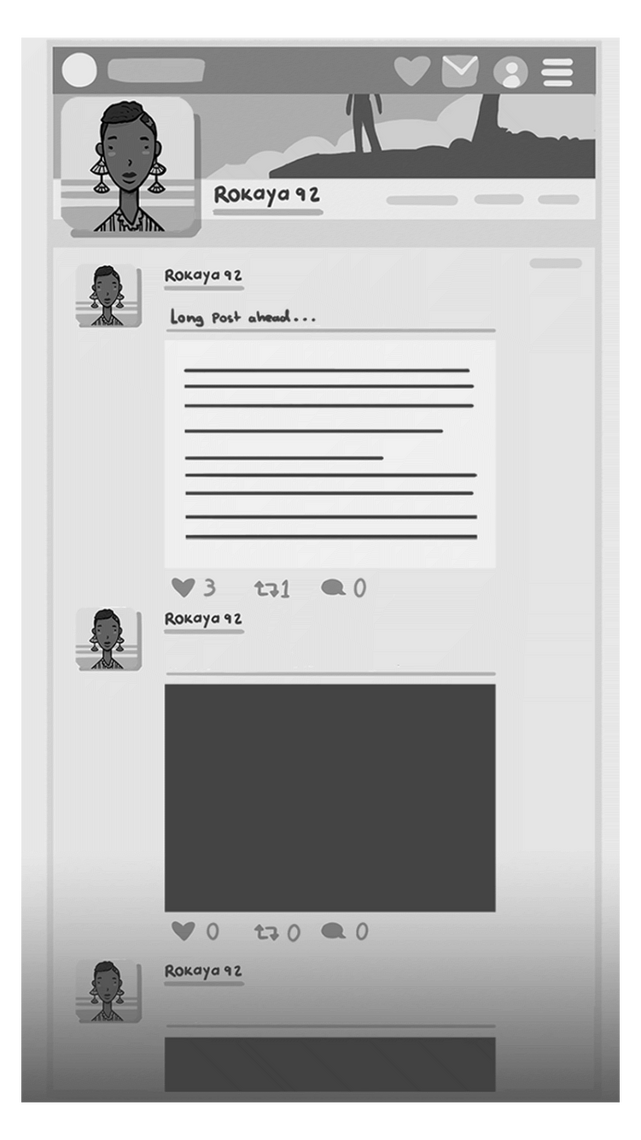
Rokaya’s Minigame (“Database” minigame) - Players are shown a hand-drawn “instagram” page where Sol posts pictures taken in the Gao the Photographer mini-game. As Players scroll through the page, they see it go silent under the pressure of a hidden NDA that Sol was subjected to when accepting to use the Gao app.
Example
· · ─ ·✶· ─ · ·
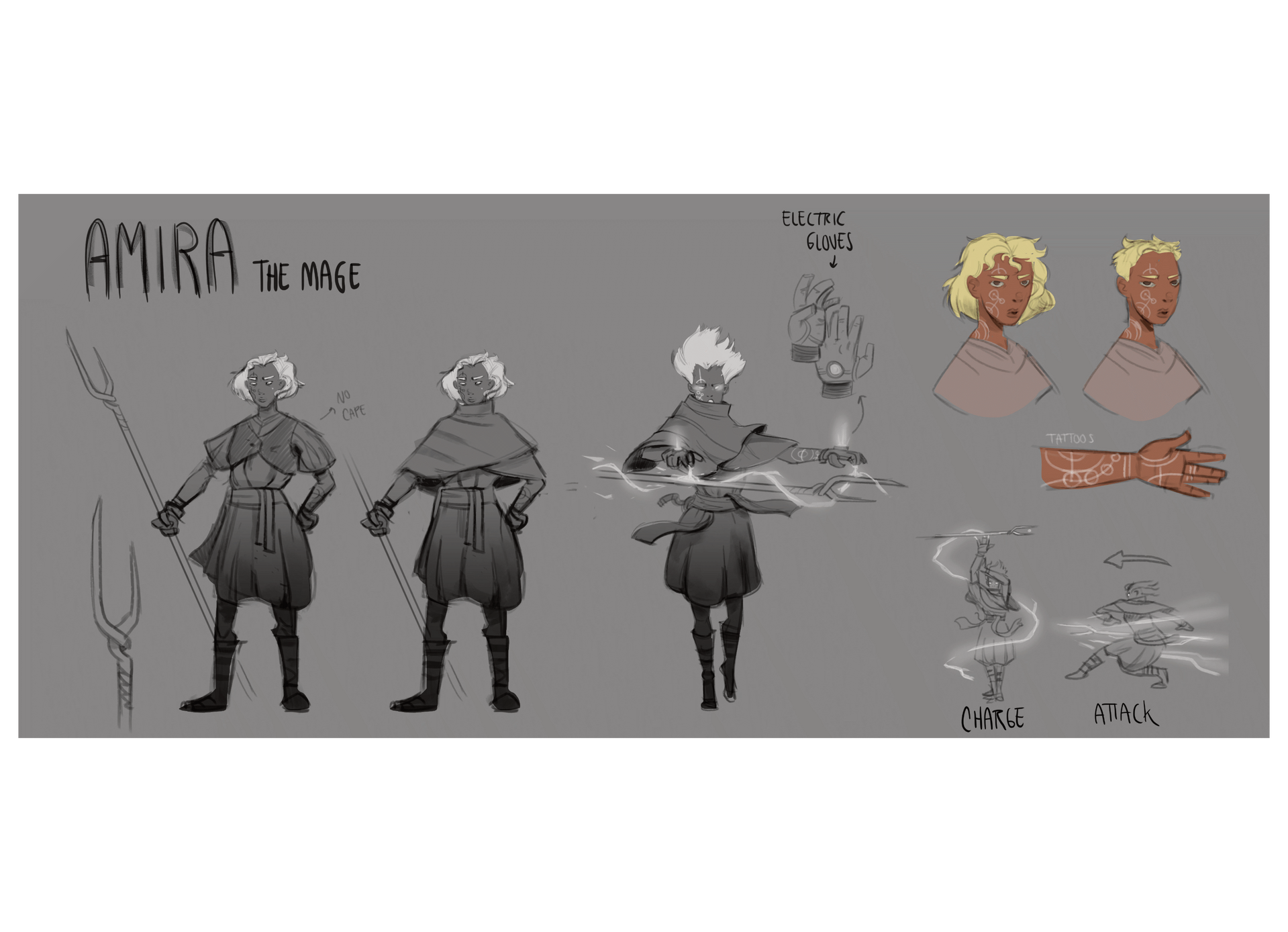
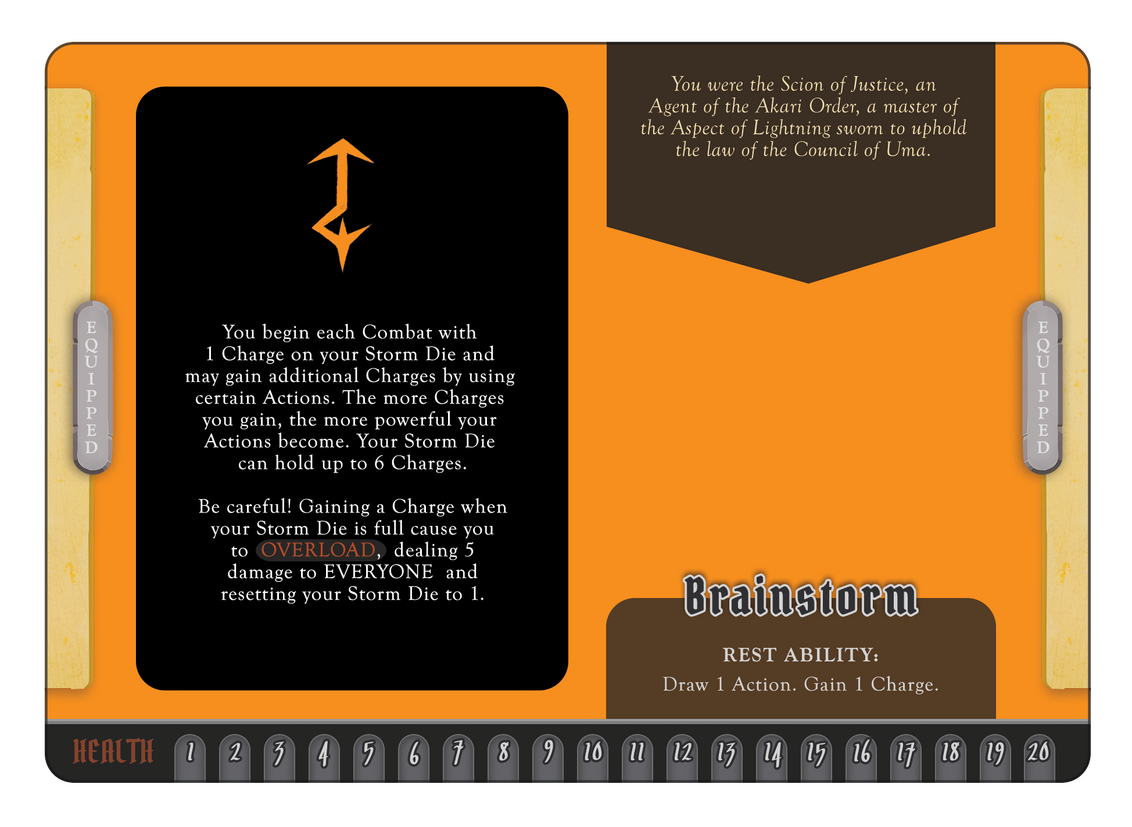
Amira is the lightning mage. And her key mechanic is Charge, which is a high-risk, high reward damage-oriented mechanic.
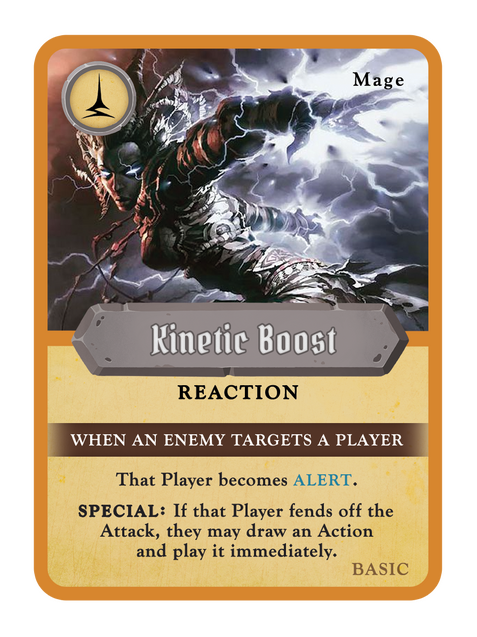
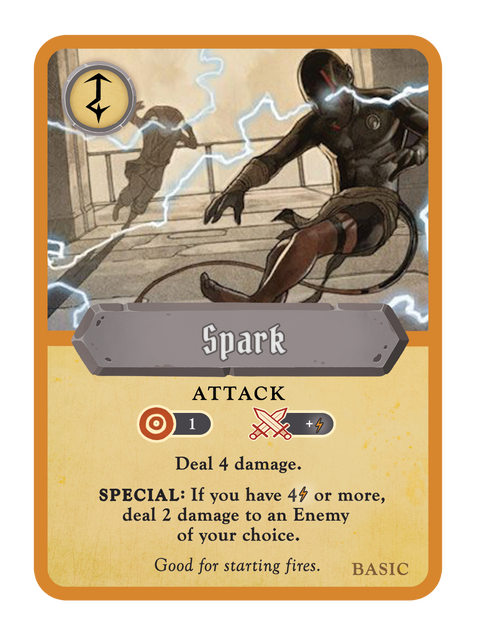
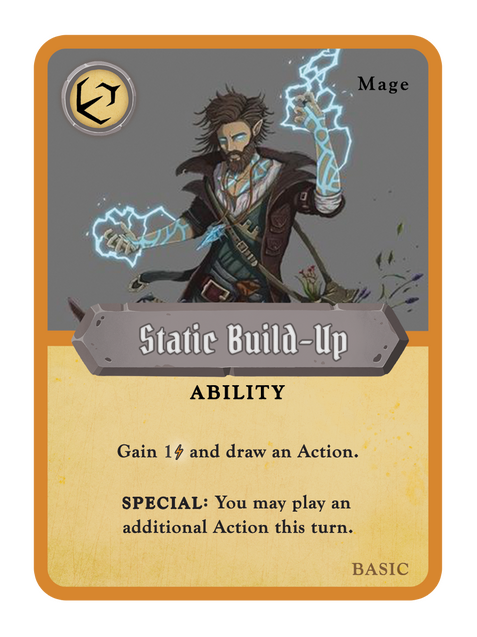
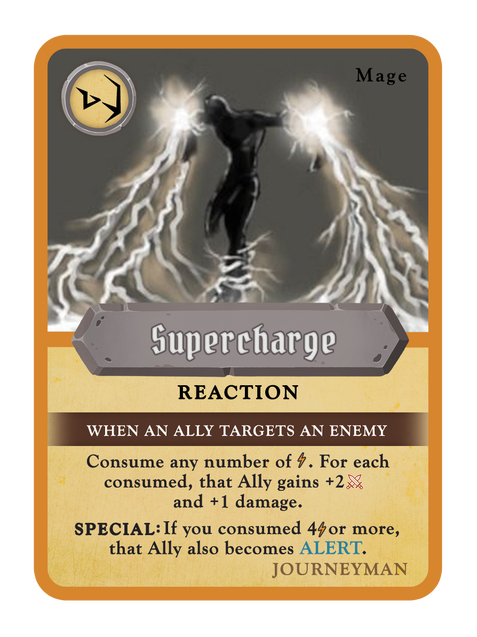
Our core tenets in card design were:"Reacting more than acting." We believe that a cooperative card game is more interesting when you can actively interact with the board."Easy to track." Status Effects should be uniform and have simple triggers so Players never have to get lost in the accumulation of effects.
· · ─ ·✶· ─ · ·
Affixes
I would like to highlight one particular part of the design of the Items/Building System; Affixes. When you created an Item, the Affixes (bonuses) that it would have depended on four different things:- The Item Rarity, which determined how many Affixes the Item could have.- The Item Recipe, which determined how many Affixes were predetermined and how many are random.- The Recipe Pool, which contained a number of Affixes that the Player could get in the random slots.- The Material Pool, which added Affixes to the Recipe Pool depending on the Materials the Player used when making the Item.
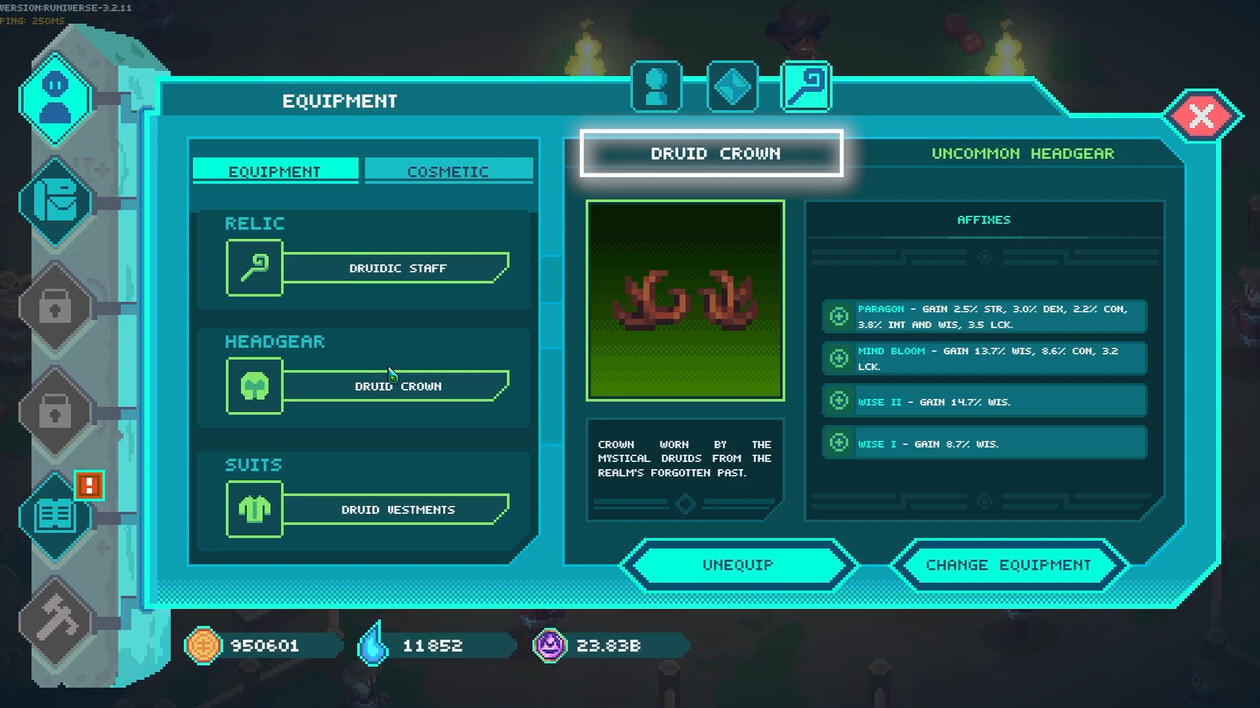
This three-layered system allowed Designers to create Items with a lot of variance, thus increasing the chase factor for a “perfect roll”. Unfortunately, the Material Pool was never used (it required too much design effort for little immediate returns).
Forging Mini-Game
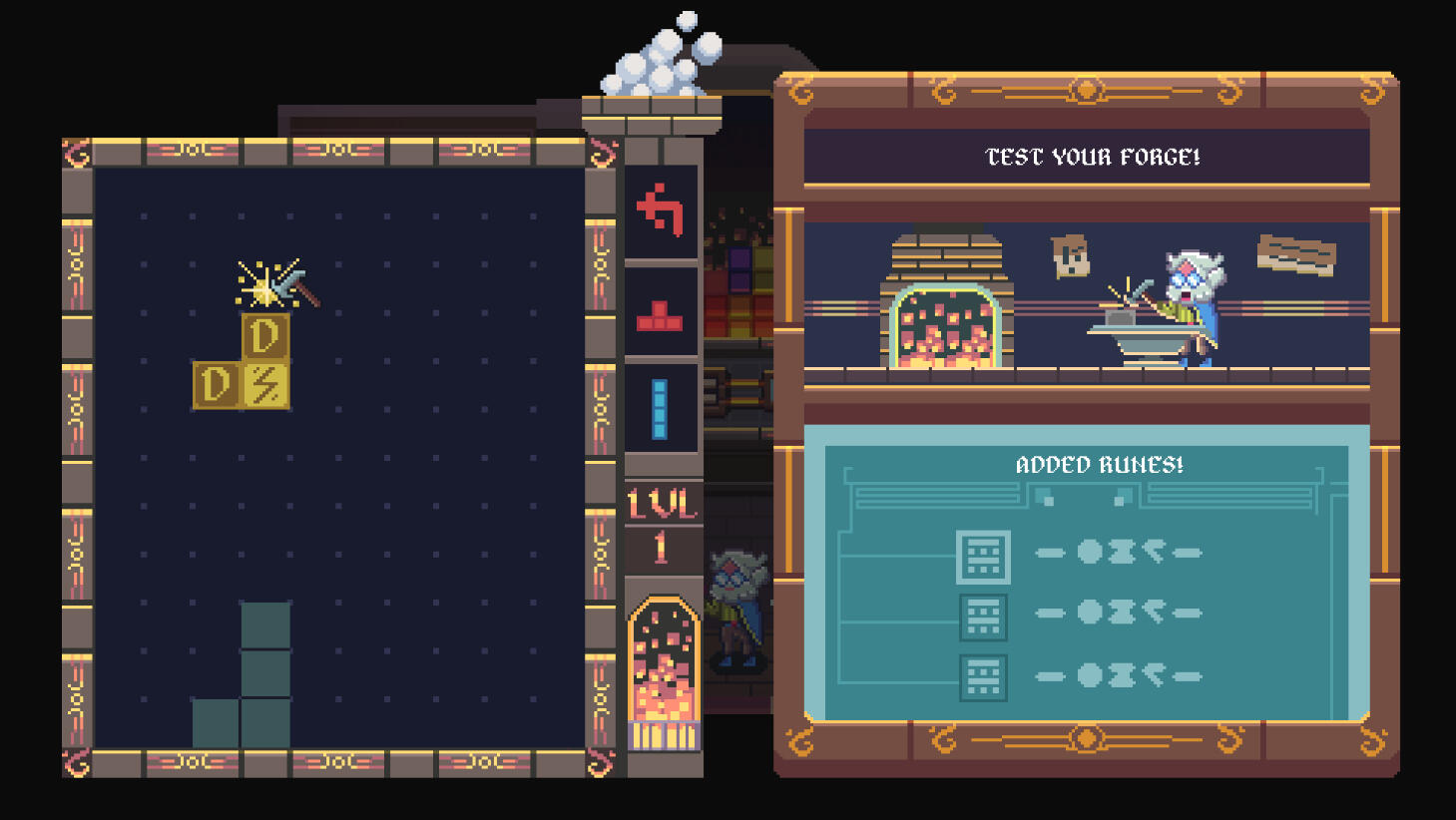
Of these mini-games, the most interesting one was the Forging mini-game; a Tetris inspired activity with a number of unique features.- When Players decide to Forge an Item, a batch of base, symbol-etched pieces are added to a pool and then every Material used adds additional symbol-etched pieces to said pool (each of the symbols corresponds to a certain Affix).
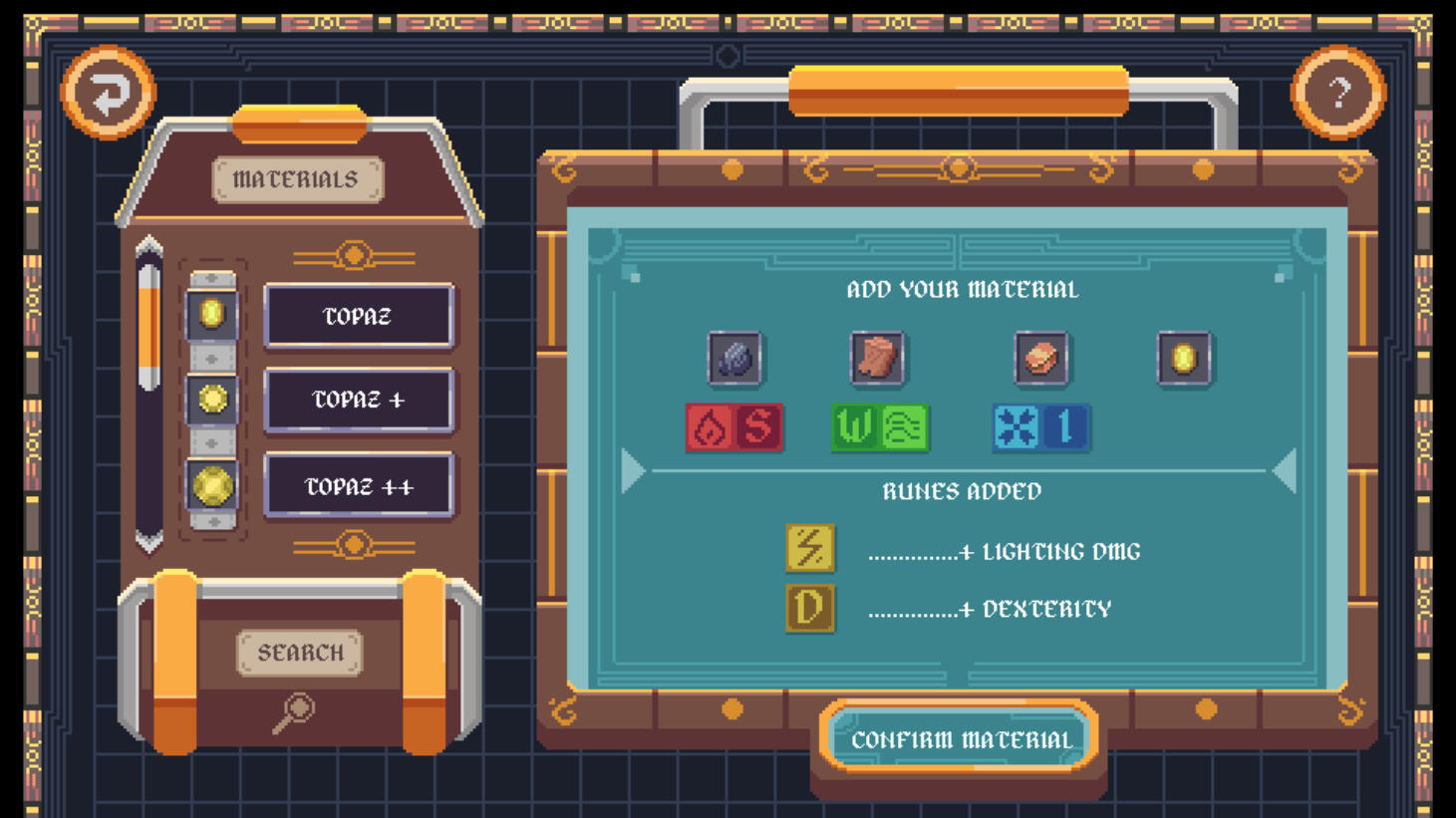
Each tetromino is made of four of these symbol-etched pieces.
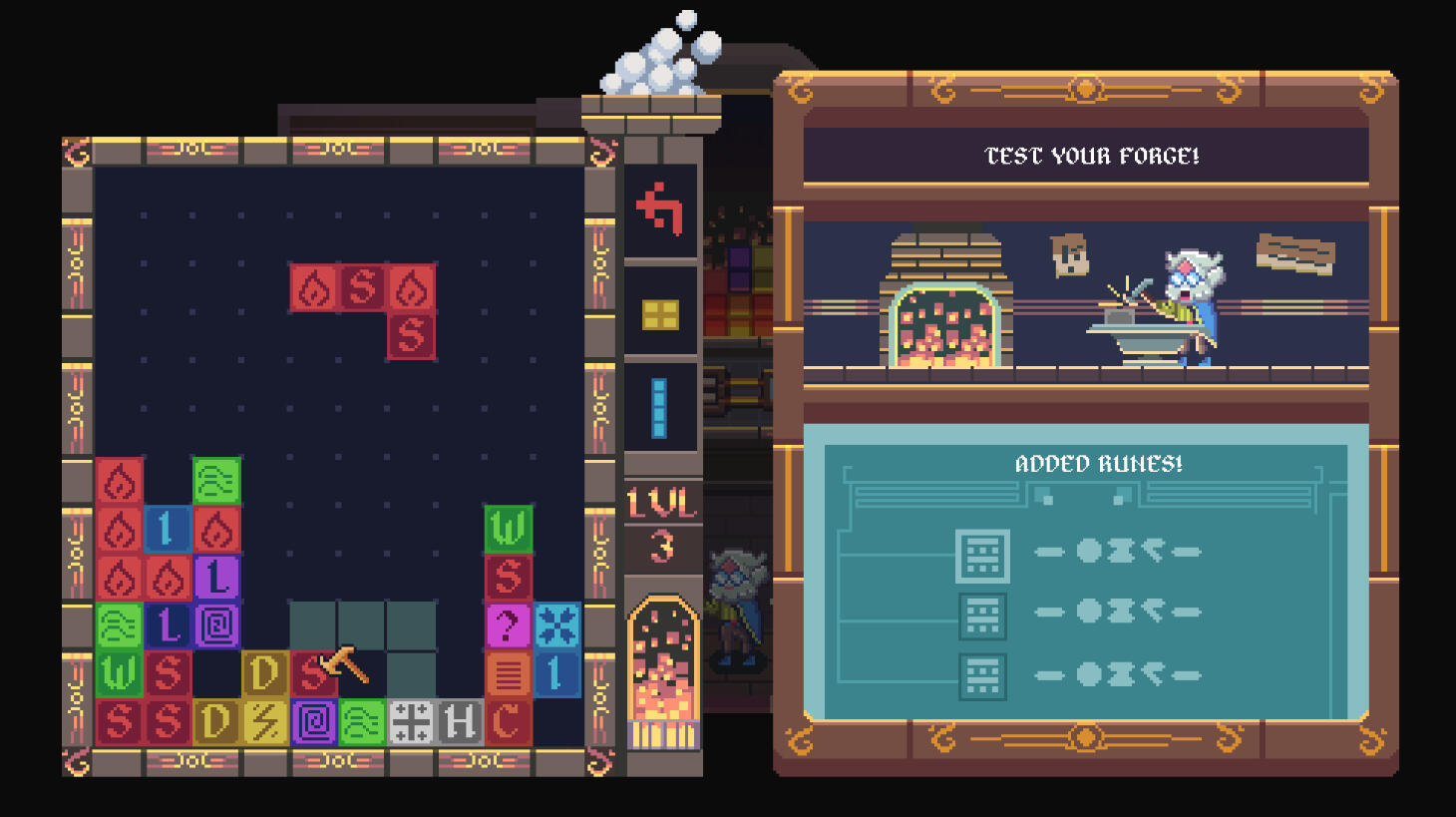
- Clearing lines increases the Level of the Item and unlocks more powerful Affixes (in the form of new symbol pieces).- Using their right-click or tapping on a piece, Players can either destroy a symbol piece or lock it in place.
- The objective of the game is not to clear lines but to make 33 or 44 or 5*5 squares of the same symbol-pieces. The strength of the Affix depends on the size of the square.
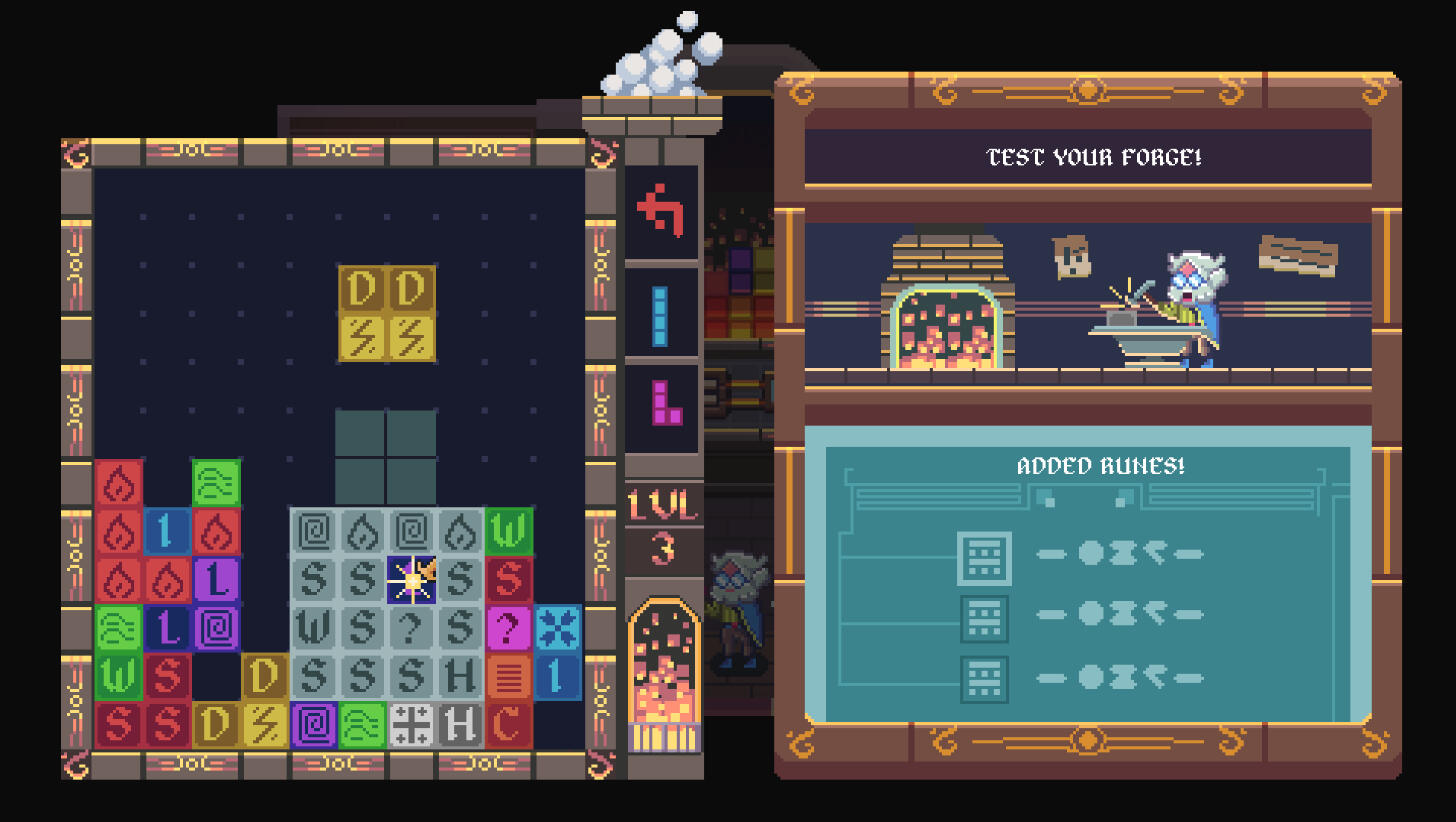
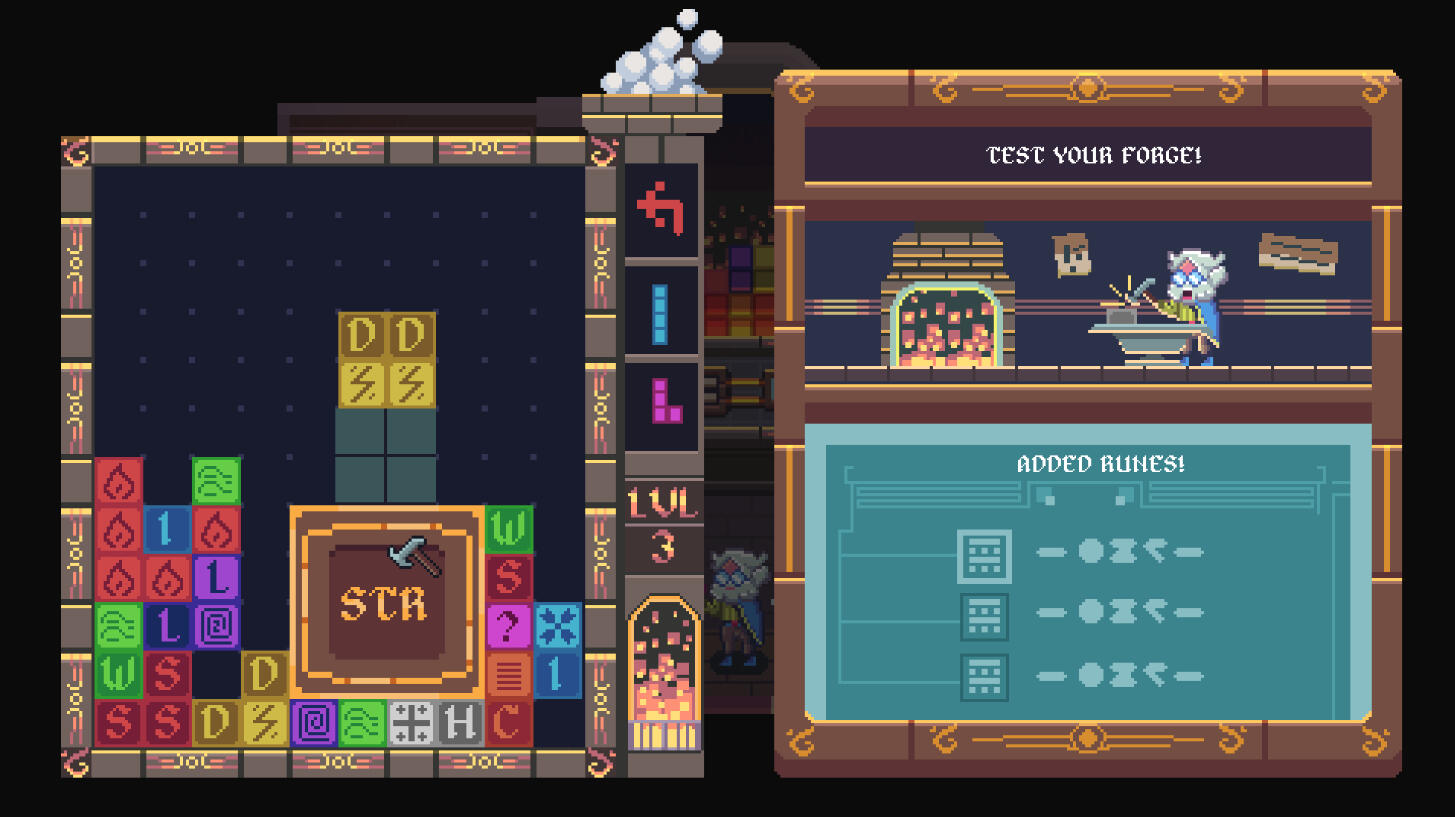
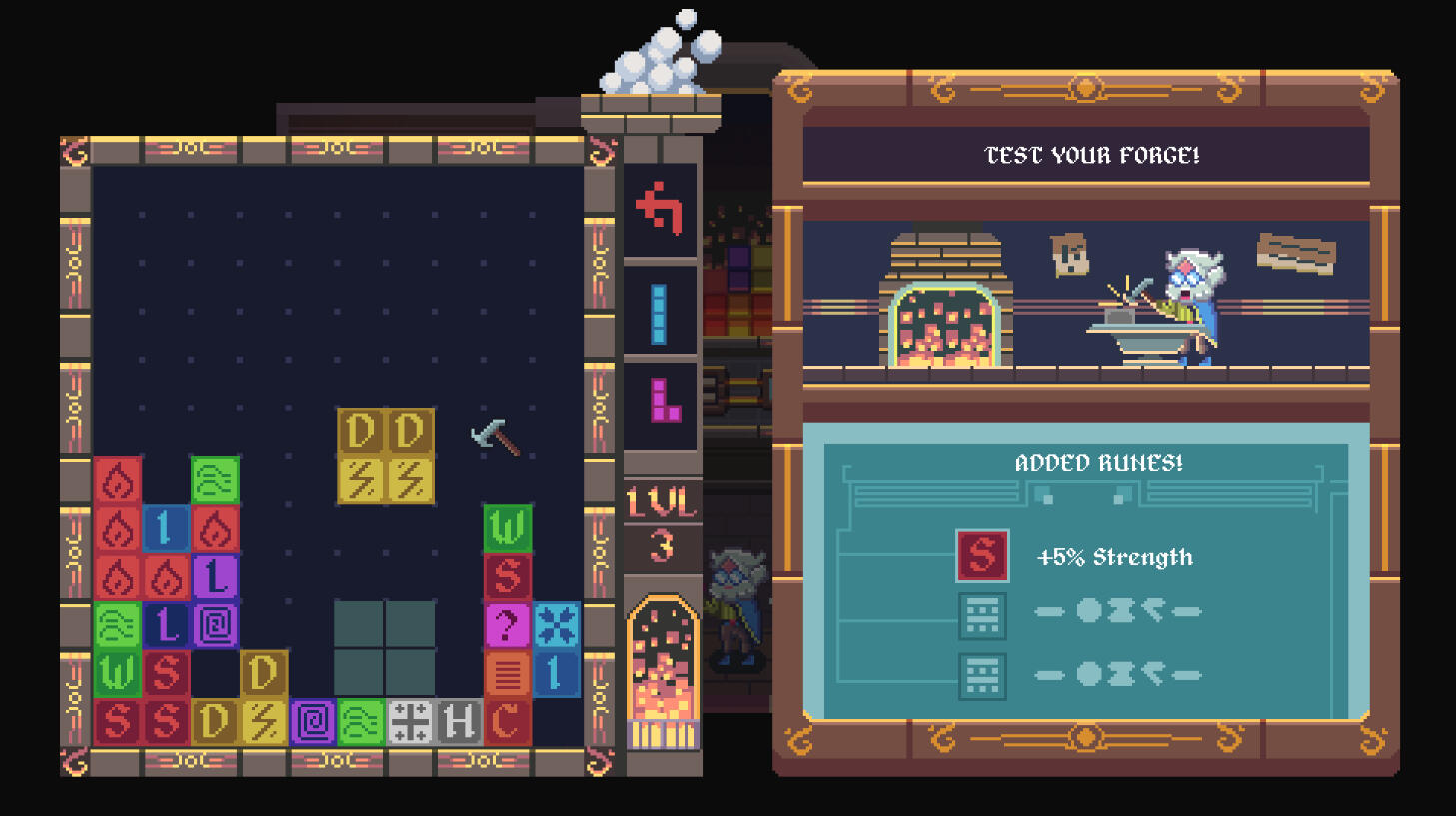
This design would have given the Forging process a skill-based component, which would in turn have given Players who were good at the game a specialized role in their Guilds.
Rumor System
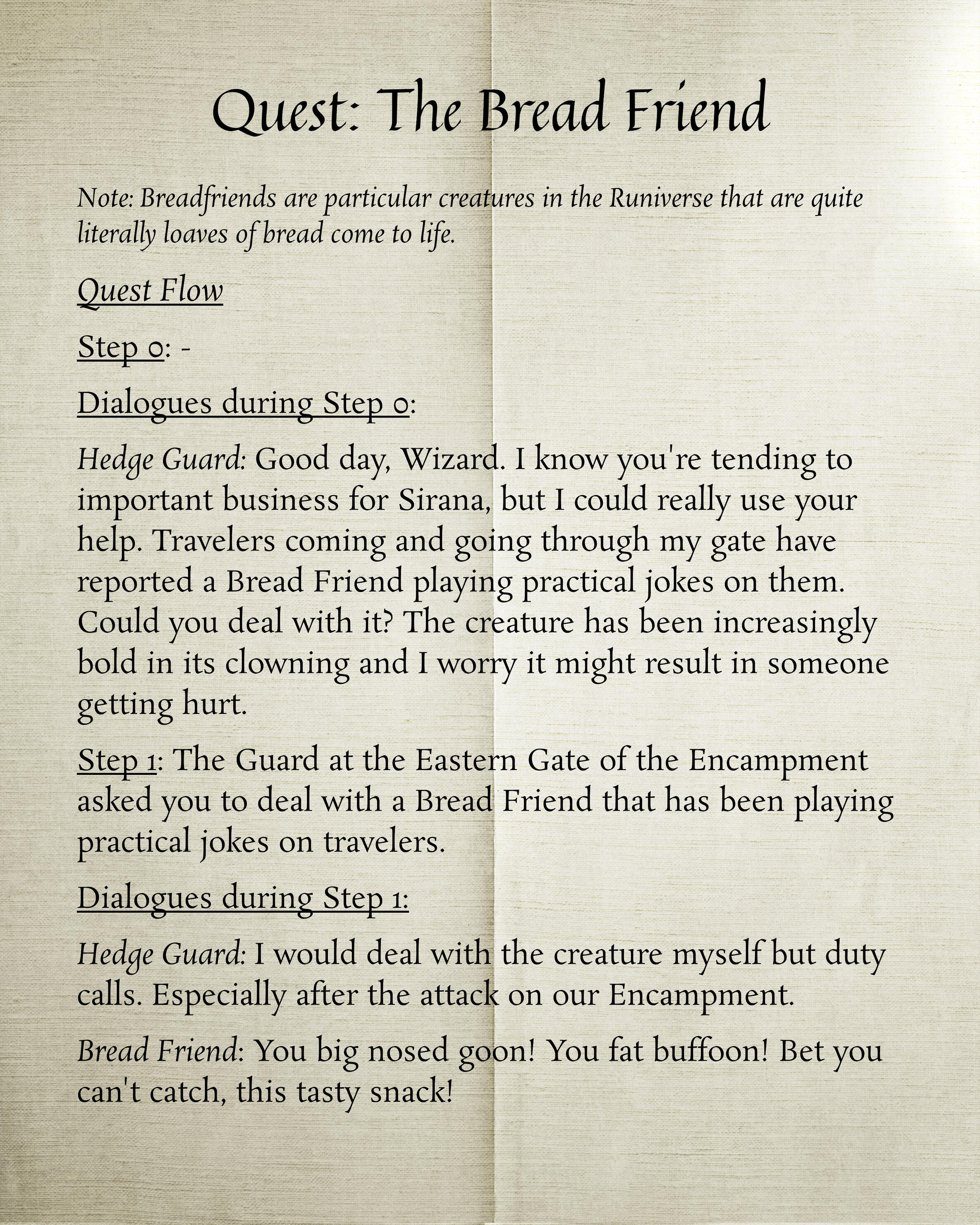
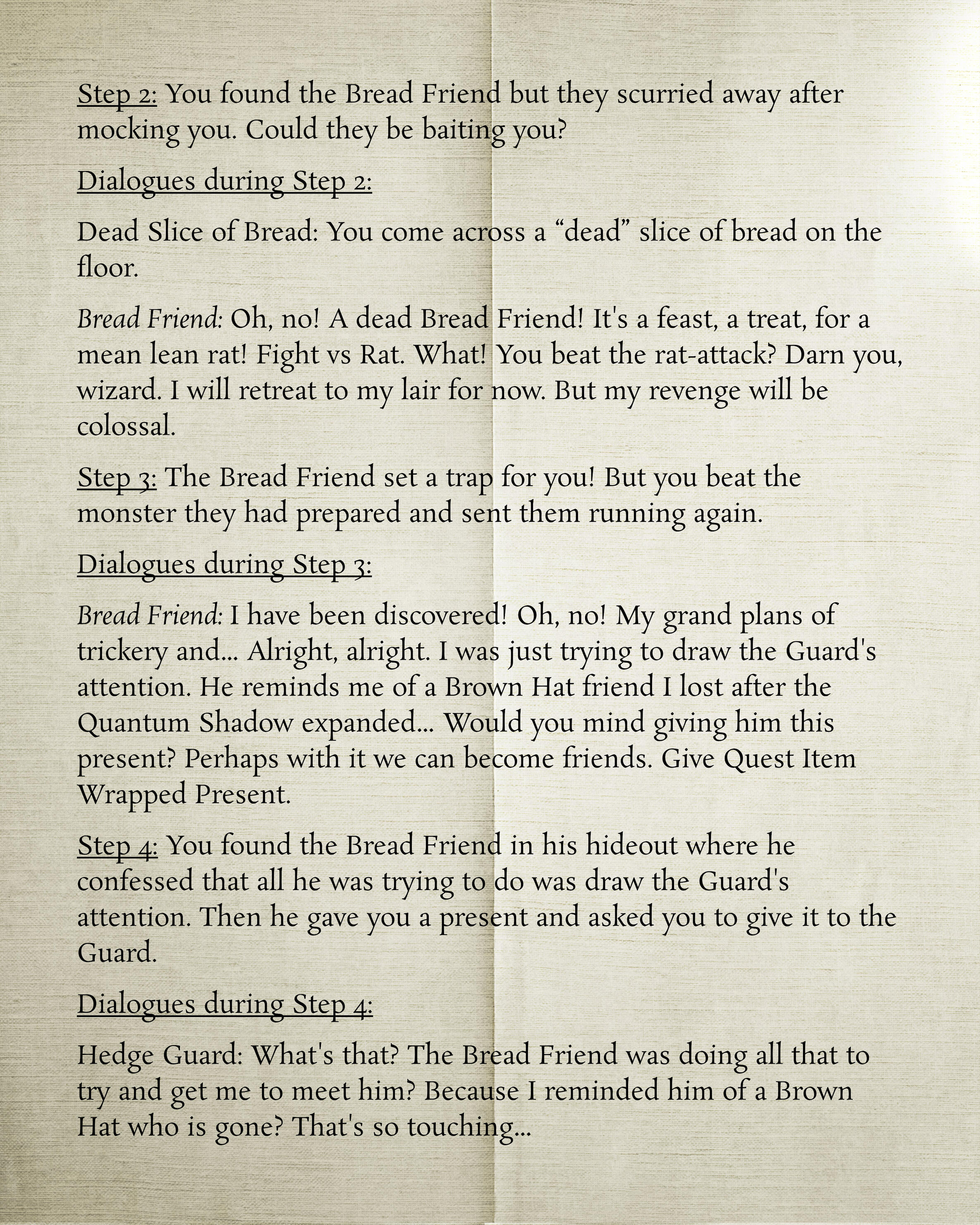
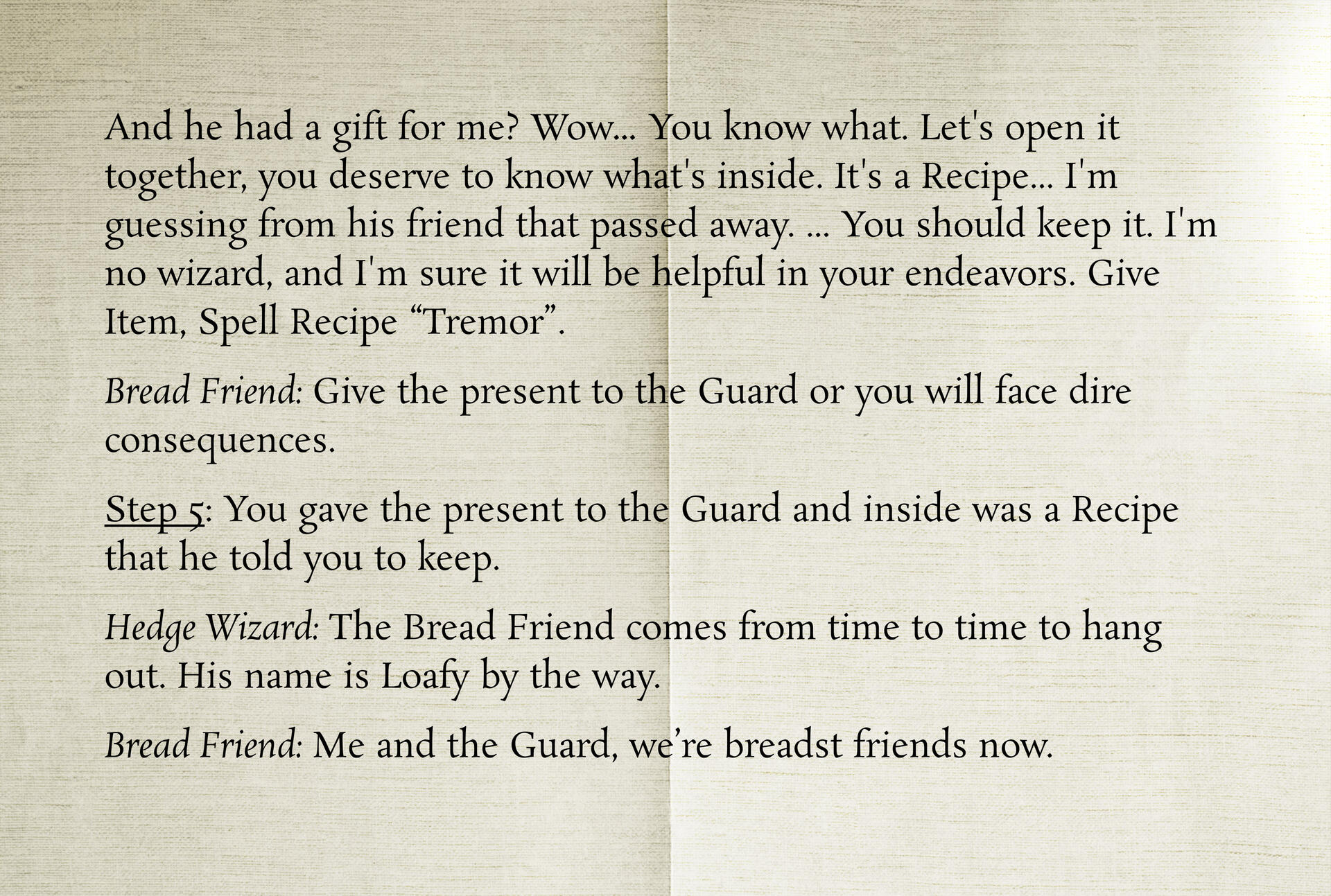
The most interesting narrative feature of the Runiverse is the Rumor System; a tweak to traditional quest-writing that allows Players different entry points to a Quest and that also can provide them hints about how to progress.
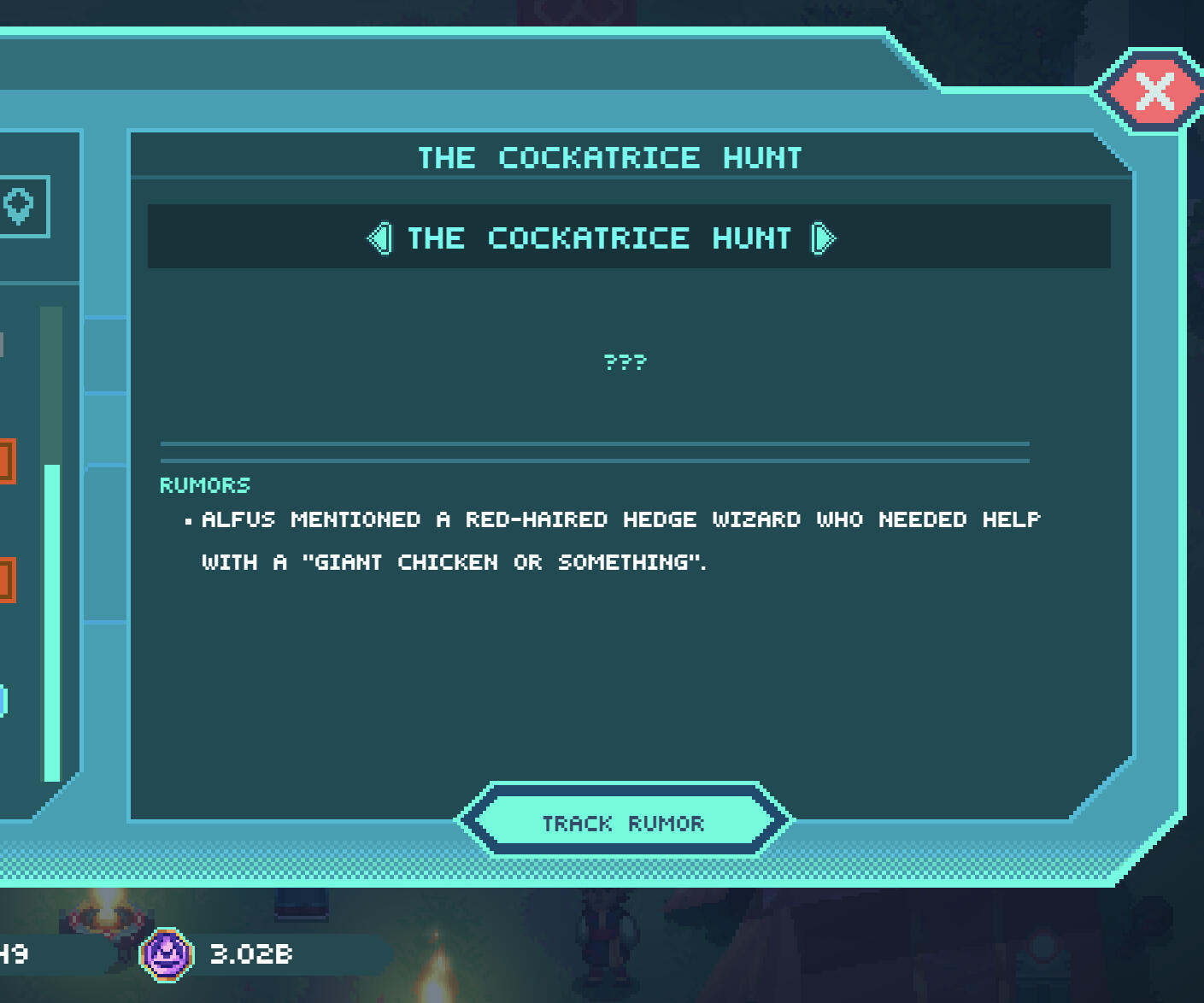
In the example above, Players could learn of The Cockatrice Hunt Quest by talking to Alfus instead of the primary quest-giver.
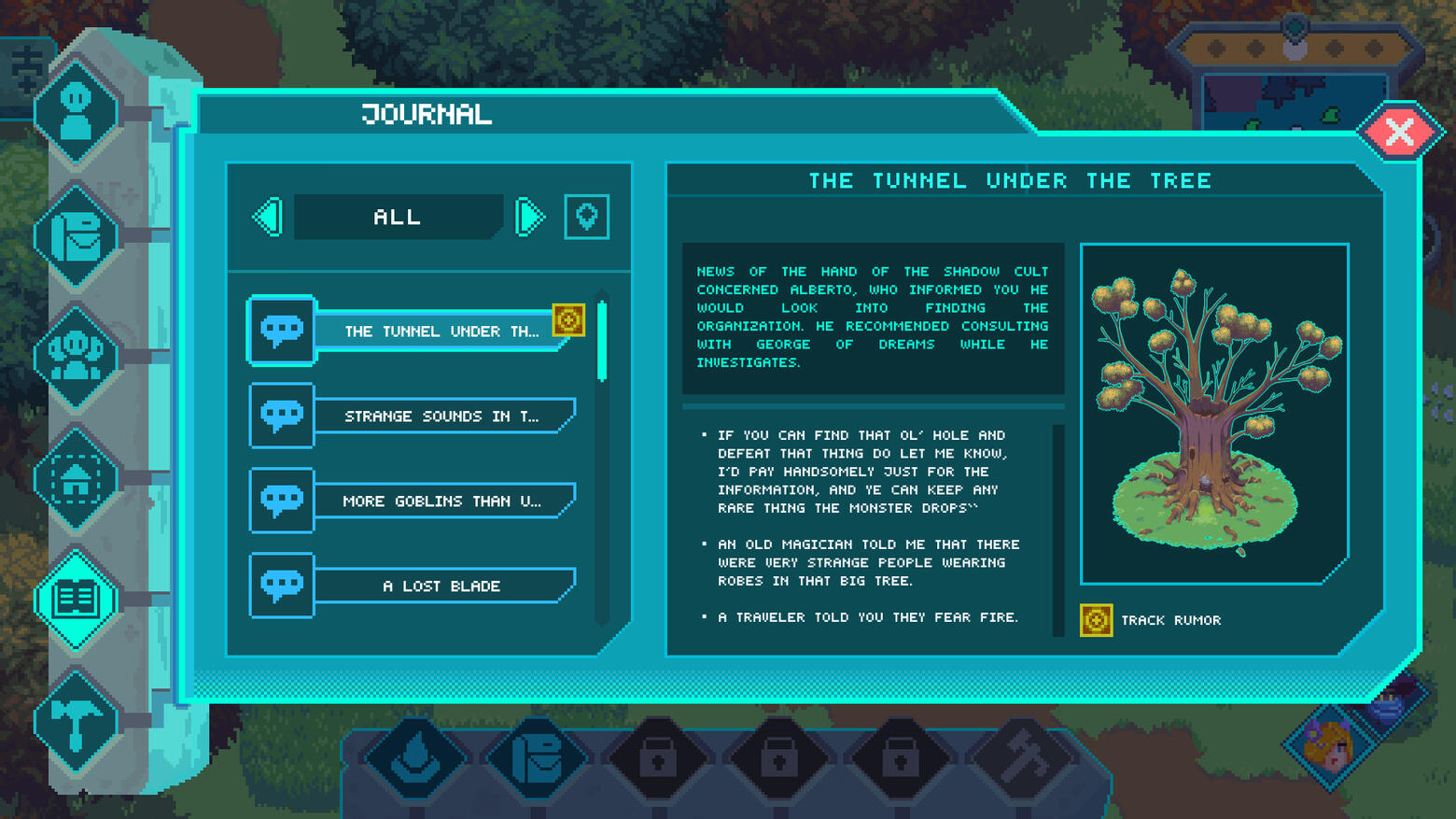
In the example above, you can see what a full Quest thread looks like, Rumors and old Steps appear in white while the main prompt appears highlighted.
Art & Sound
To exemplify my work as Creative Lead on both sides of the aisle I’ll use the creation of Dungeons as an example.(1) Under my tutelage, a Narrative Designer writes the story of the Dungeon.(2) I take this story to the Art Team and supervise Concept Artists as they draw concepts for Enemies, the overall feel of the Dungeon, the Key Art, and interactables.
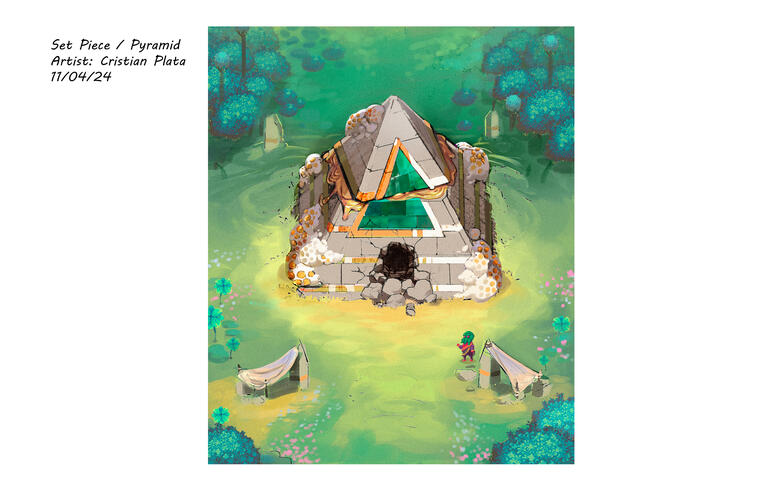
Concept Art Pyramid Dungeon Exterior.
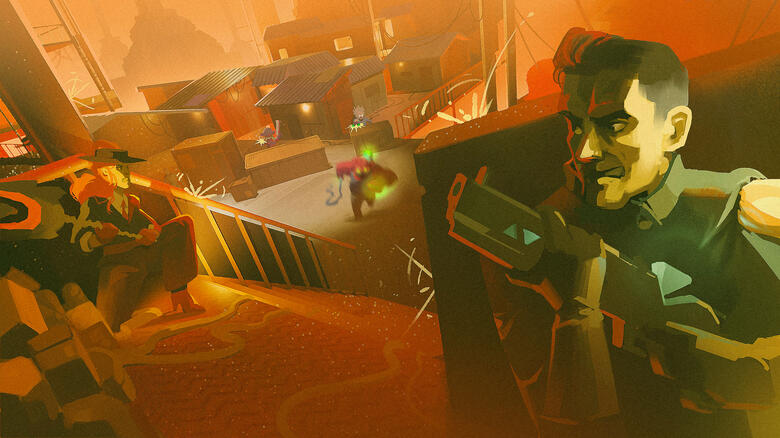
Concept Art Key Art Abandoned Dam Dungeon.
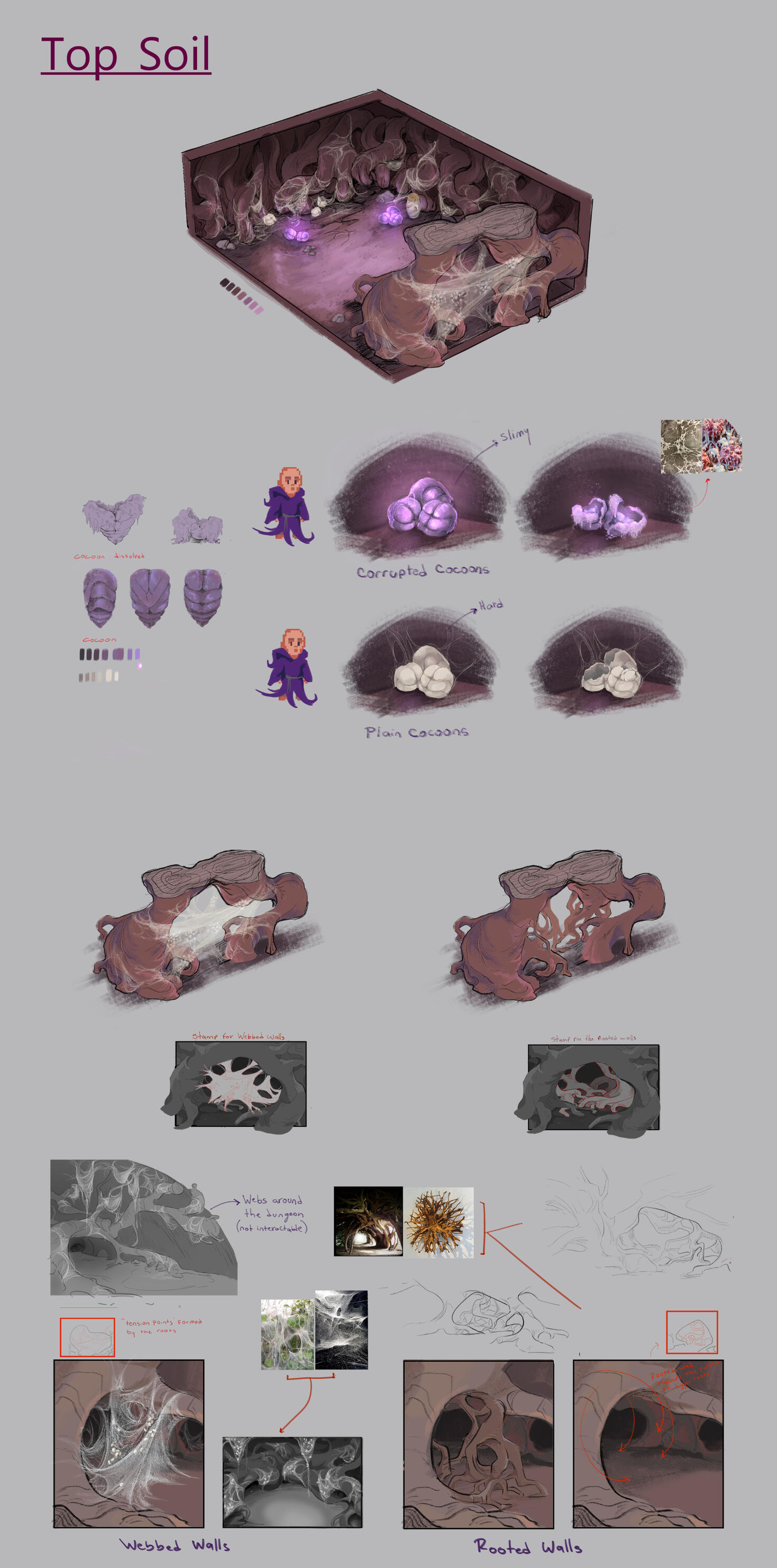
Concept Art Interactables Hollow Tree.
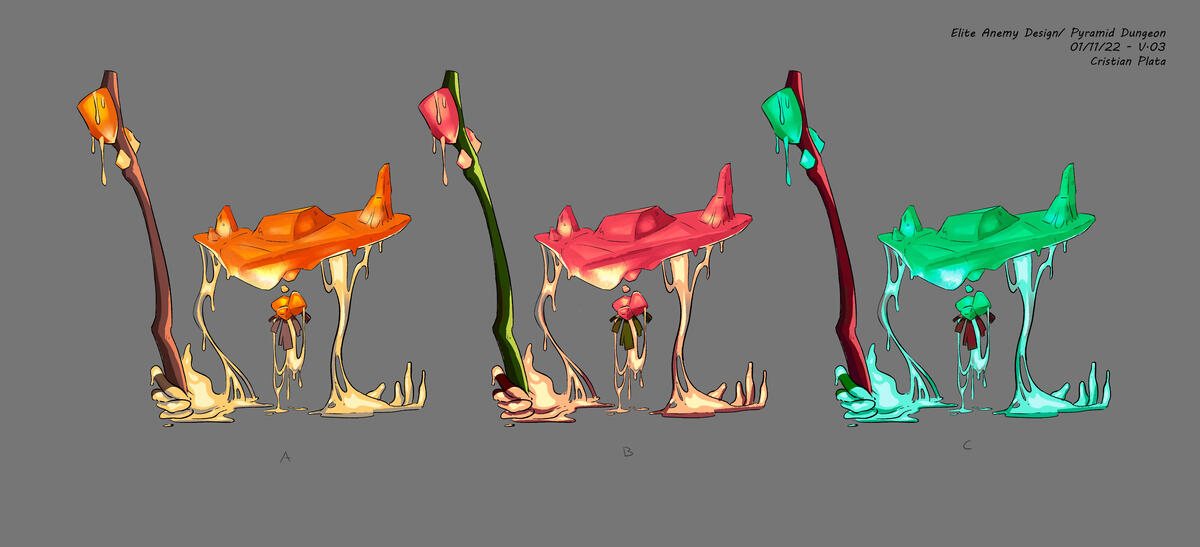
Concept Art Pyramid Dungeon Enemy.
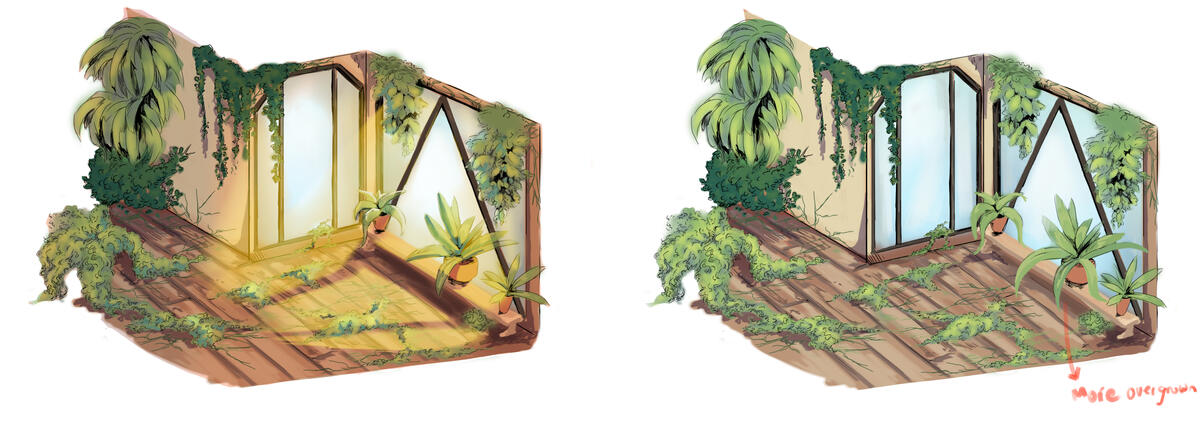
Concept Art General Look Solar Farm.
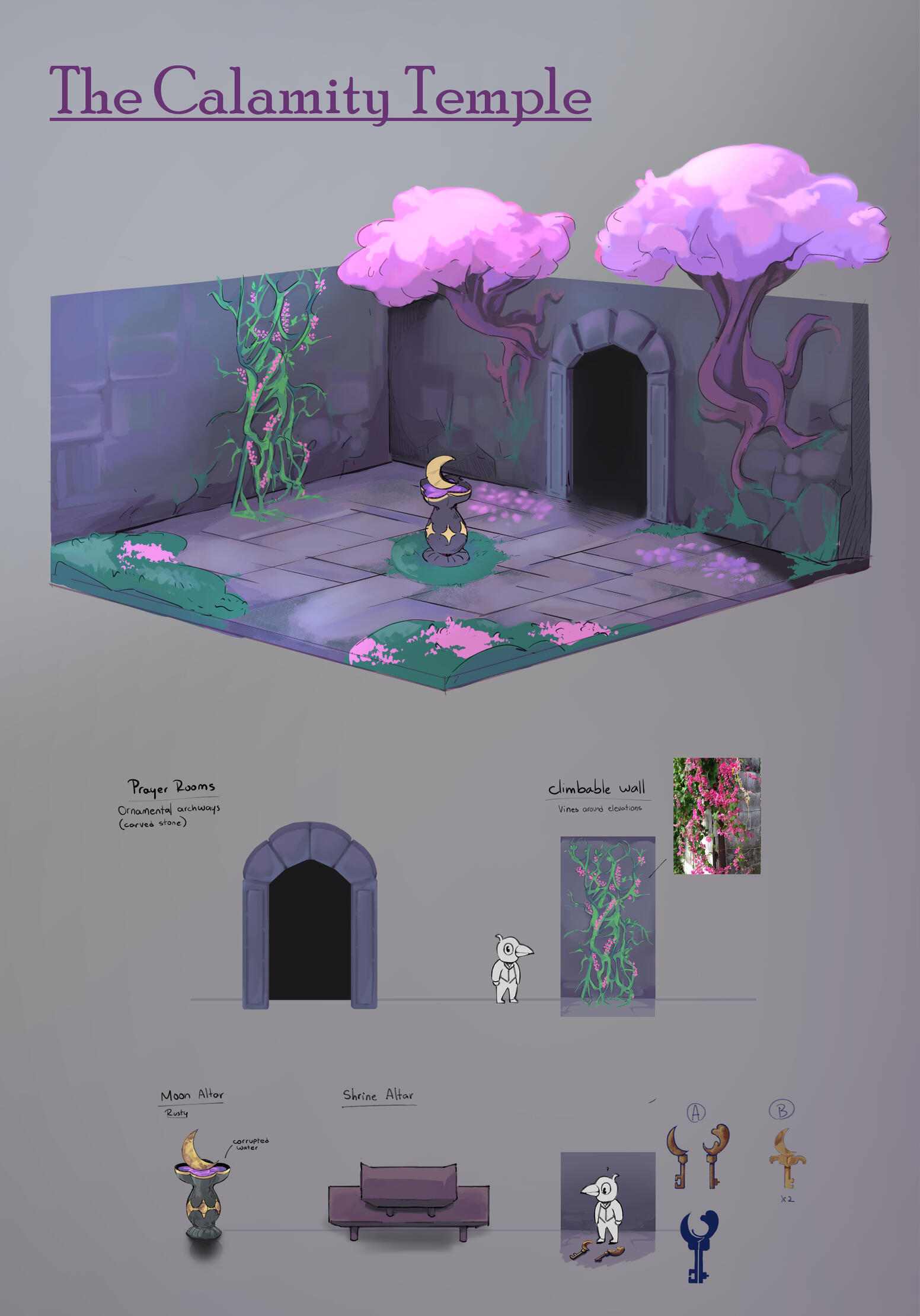
Concept Art Interactables Moon Temple.
(3) Alongside the Art Director, I supervise Pixel Artists as they create (based on the concepts) Enemies, Tilesets, and Interactables.
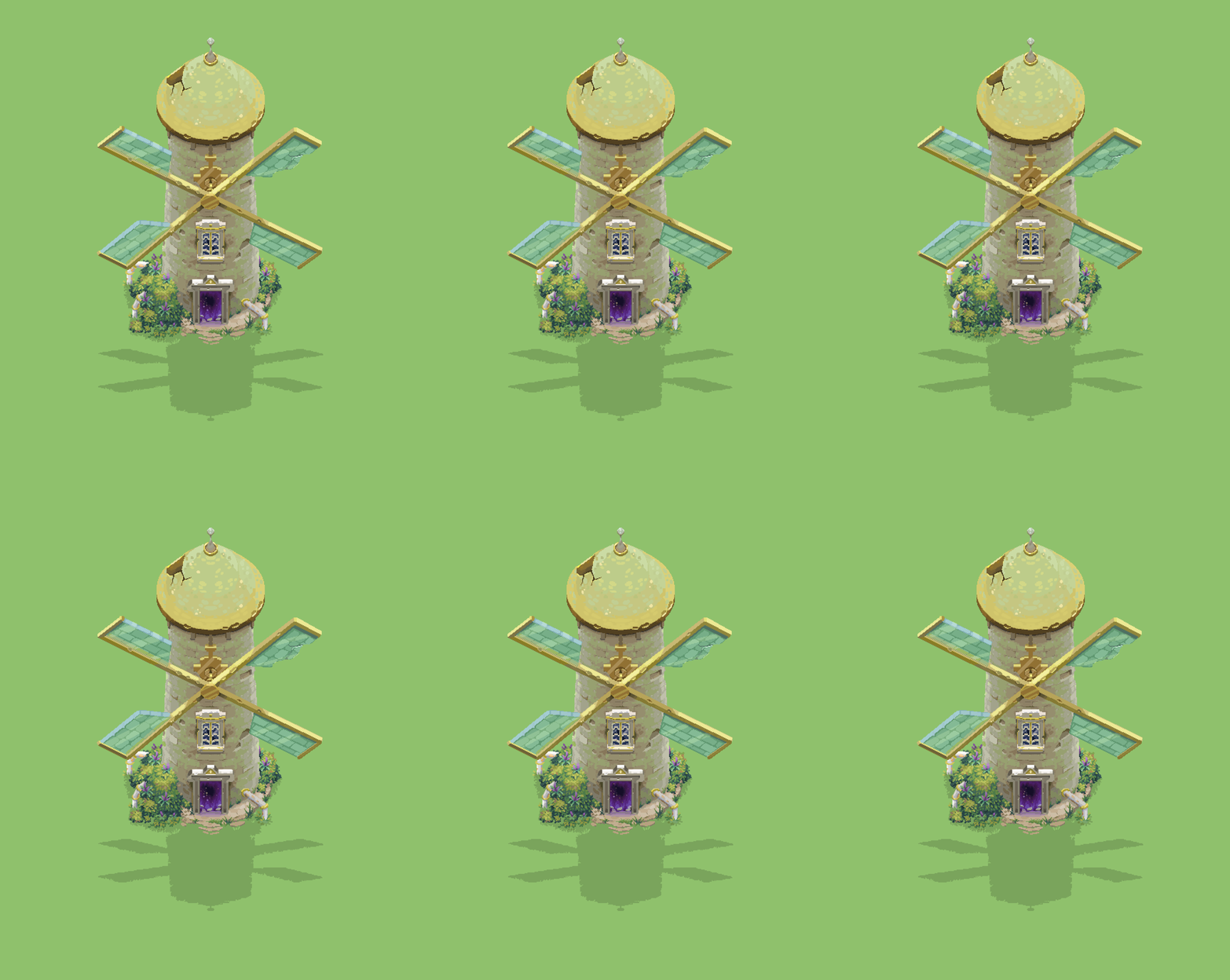
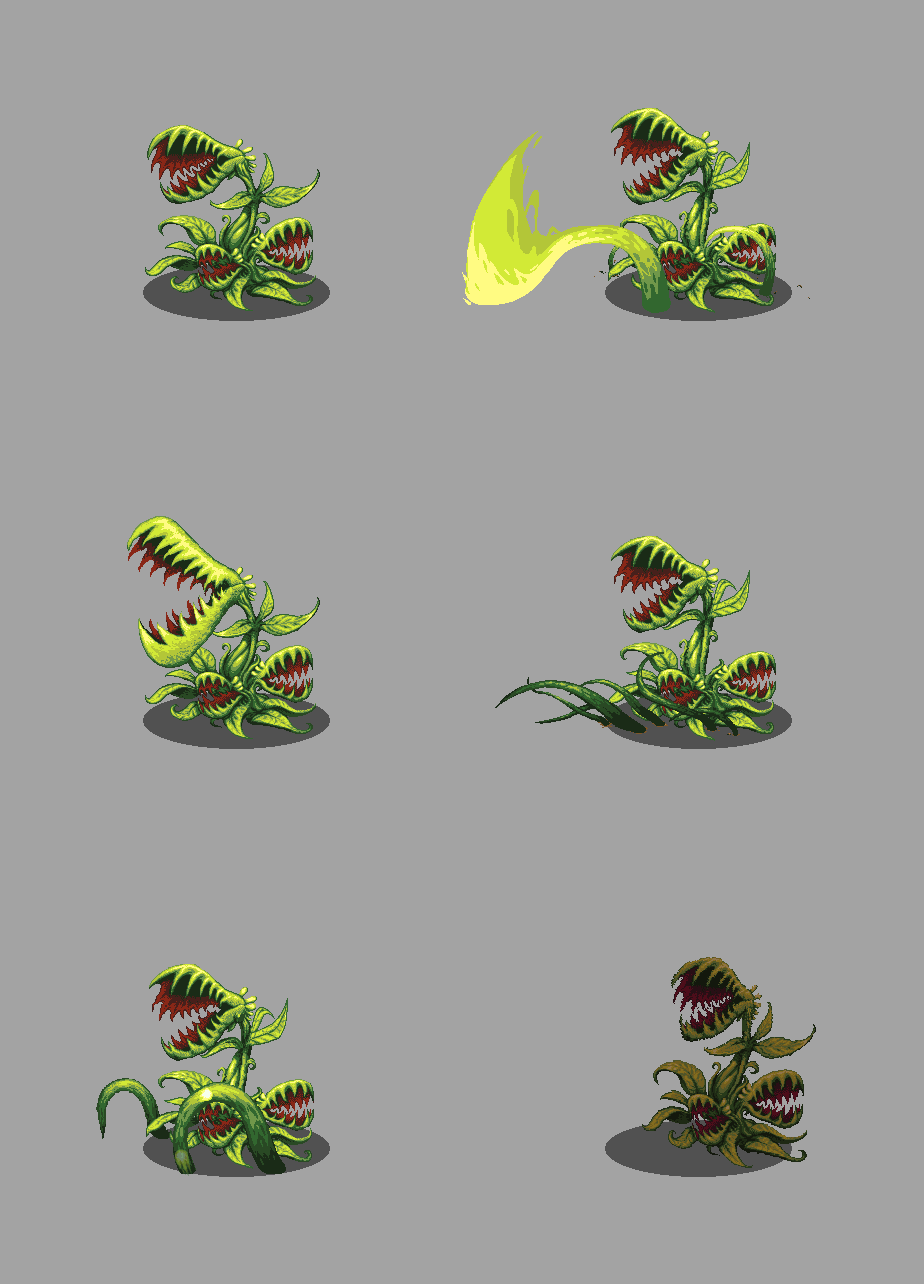
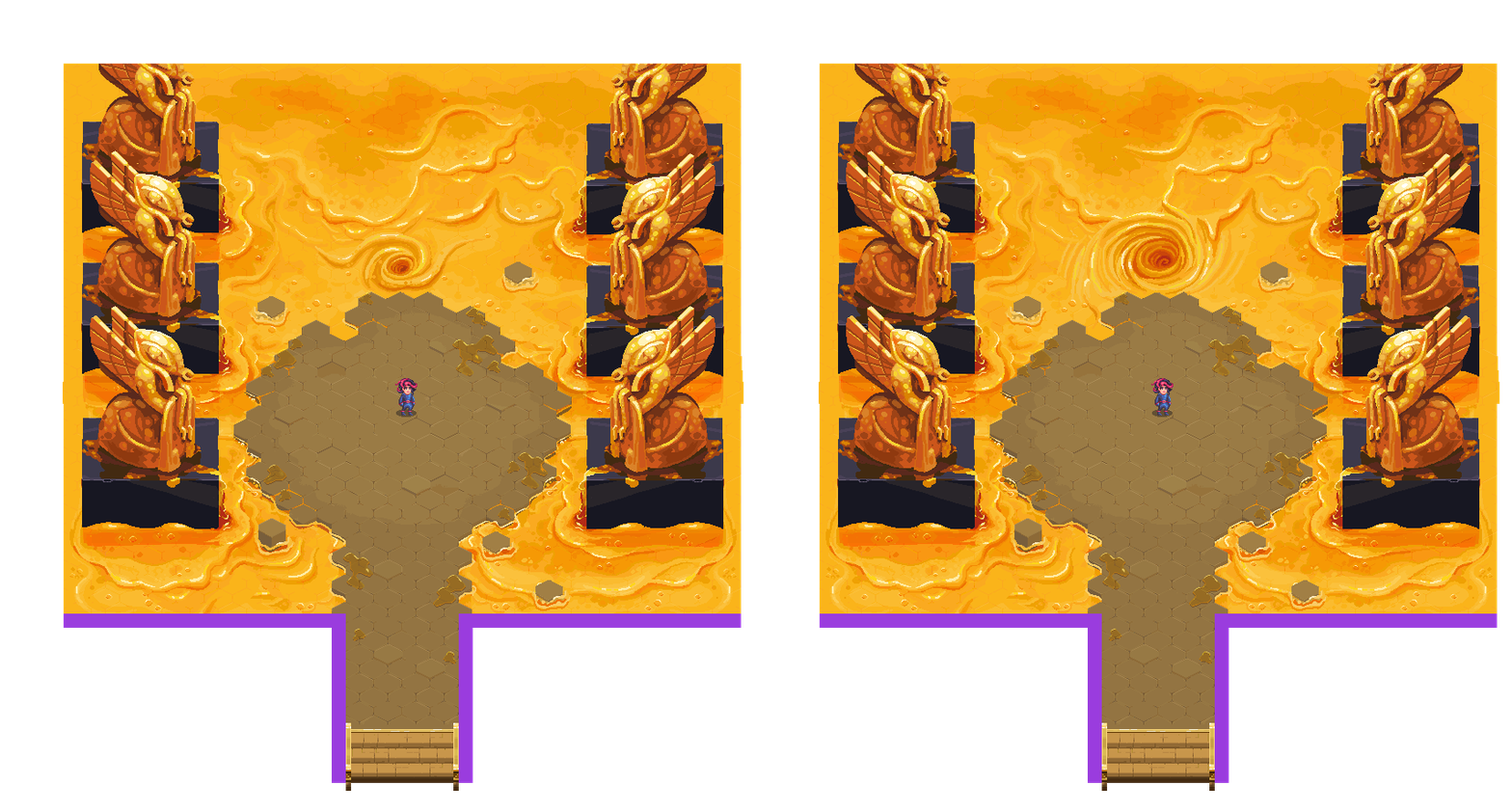
Windmill Dungeon Exterior.
Solar Farm Boss.
Pyramid Final Room Tileset.
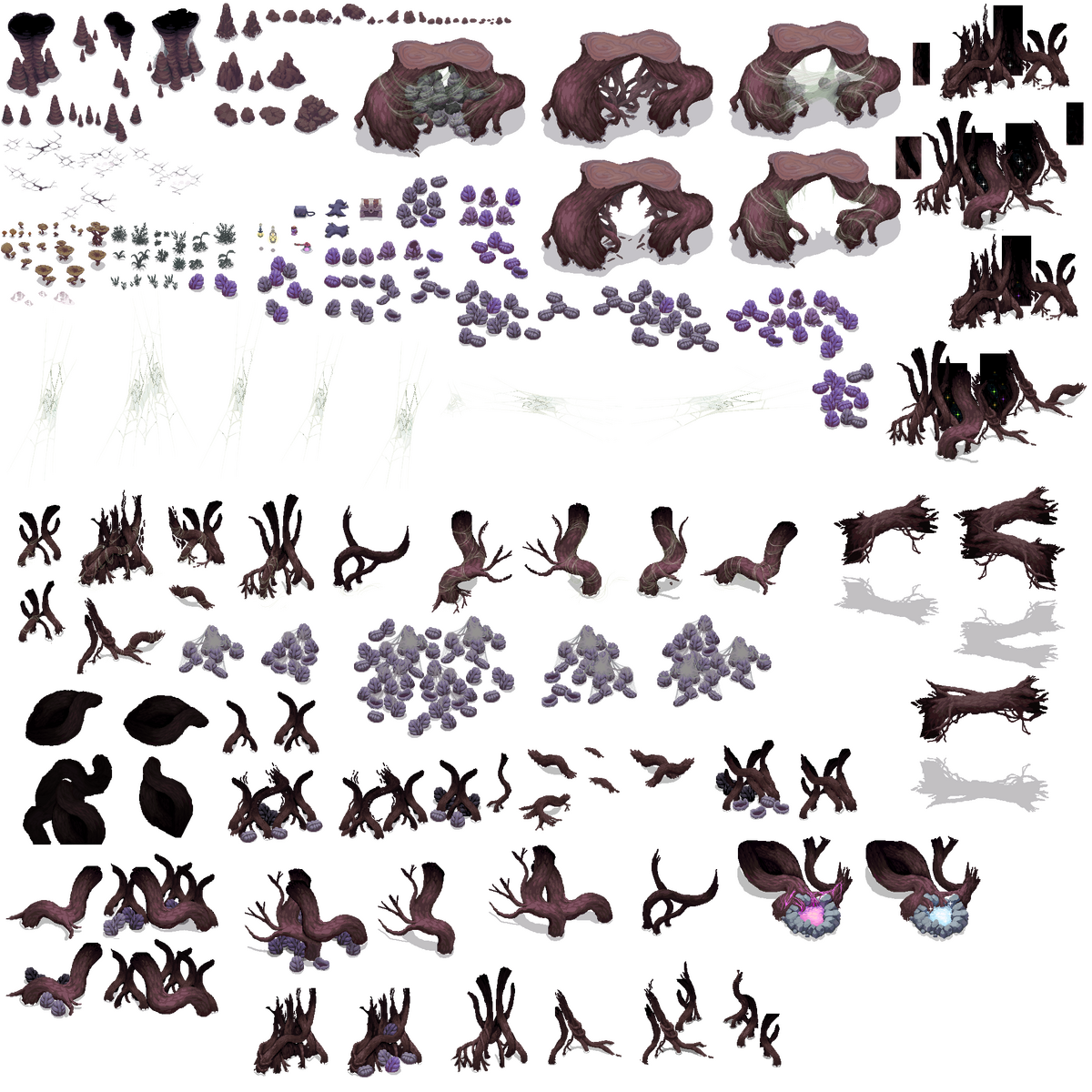
Hollow Tree Dungeon Interactables Props.
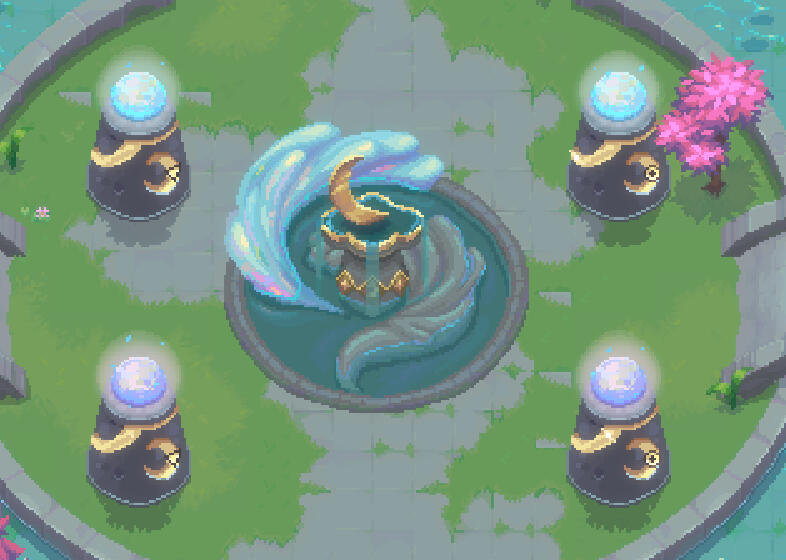
Interactables Moon Temple Dungeon.
(4) Alongside the Art Director, I supervise the UI Artist as he produces the necessary UI elements for the Dungeon.
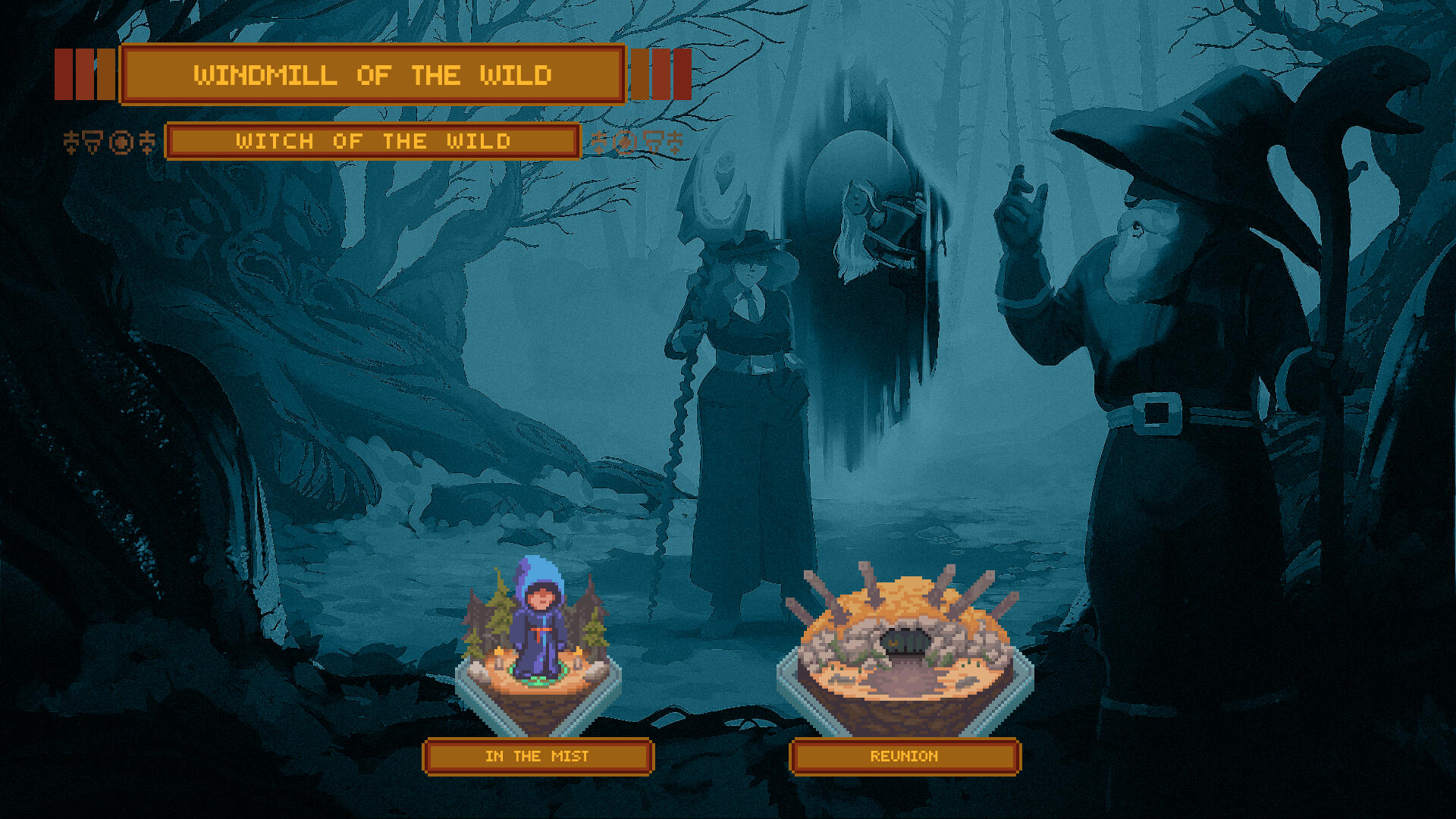
Windmill UI.
(5) Alongside the Level Design Lead, I supervise the production of levels for the different chapters of the Dungeon.
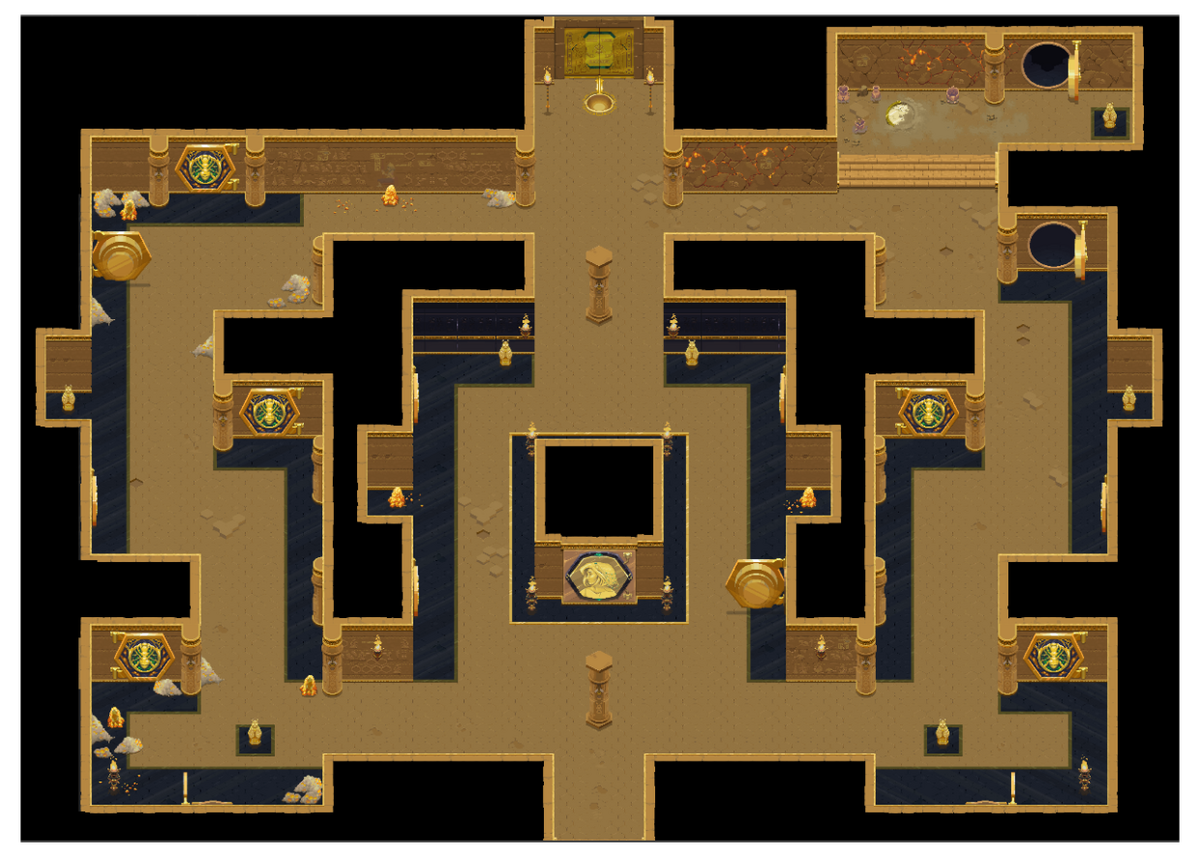
Pyramid Chapter 2 Layout.
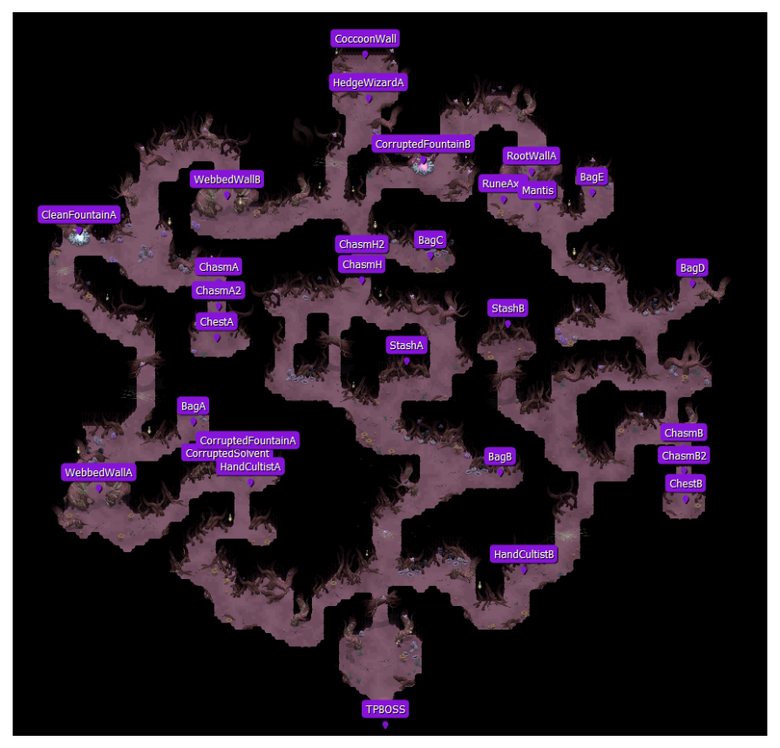
Hollow Tree Layout with Interactables.
(6) I supervise Game Designers in the production of Dialogues, Interactables, and Encounters.